

The budget discussed was the Union Budget for the fiscal year 2021-22.
GK and monthly revision
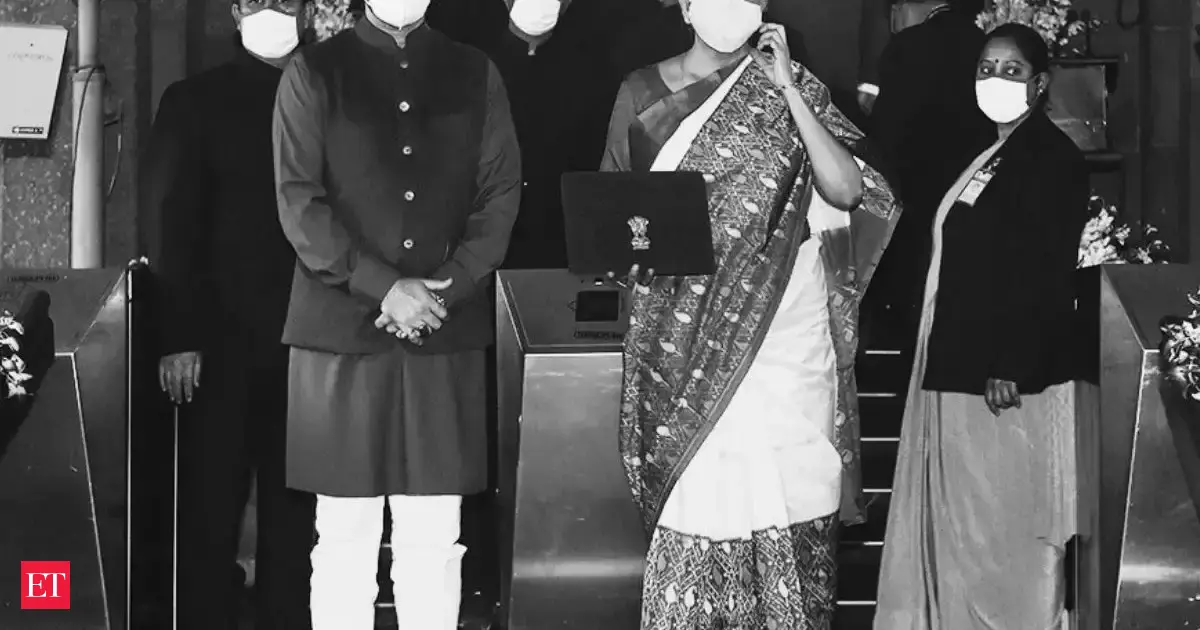
Budget 2021-22: Health gets big leg-up, PLI makes debut, major infra push
The Union Budget 2021-22, presented by Finance Minister Nirmala Sitharaman, marked India's first fully digital budget amidst the Covid-19 pandemic. It outlined a forward-looking vision aligned with Aatmanirbhar Bharat, prioritizing six pillars including health, infrastructure, and inclusive development, with a significant focus on vaccination and nutrition. This budget is highly relevant for competitive exams as it details major economic policy, government priorities, and key initiatives like the PLI scheme.
Revision structure
Monthly events and exam calendar context
Static GK and one-liner notes
Quiz and mock-test revision path
Key points
Exam-ready takeaways
It was presented by Finance Minister Nirmala Sitharaman.
It was India's first fully digital Union Budget.
The budget outlined a vision aligned with Aatmanirbhar Bharat and prioritised six pillars, including health, infrastructure, and inclusive development.
The budget marked the debut of the Production Linked Incentive (PLI) scheme and a major infrastructure push.
Detailed analysis
Full exam-oriented breakdown
The Union Budget 2021-22, presented by Finance Minister Nirmala Sitharaman on February 1, 2021, was a landmark event for several reasons, primarily being India's first-ever fully digital Union Budget. This technological leap reflected the government's commitment to 'Digital India' and adapting to the new normal brought about by the COVID-19 pandemic. The budget was not merely an accounting exercise but a strategic document aimed at steering India's economy out of the pandemic-induced slowdown and setting a trajectory for long-term growth, aligned with the overarching vision of 'Aatmanirbhar Bharat' (Self-Reliant India). The background to this budget was exceptionally challenging. The Indian economy, like global economies, had been severely impacted by the COVID-19 pandemic and the subsequent lockdowns in 2020. Economic activity had contracted sharply, supply chains were disrupted, and there was immense pressure on the healthcare system. The government had already announced several stimulus packages under the Aatmanirbhar Bharat Abhiyan to mitigate the immediate economic fallout. The 2021-22 budget, therefore, was anticipated to provide a strong push for recovery, focusing on both demand generation and supply-side reforms. The budget prioritised six key pillars: Health & Wellbeing; Physical & Financial Capital & Infrastructure; Inclusive Development for Aspirational India; Reinvigorating Human Capital; Innovation & R&D; and Minimum Government & Maximum Governance. A significant 'leg-up' was given to the health sector, with a substantial increase in allocation, reflecting the lessons learned from the pandemic. This included a focus on vaccination, nutrition, and a new centrally sponsored scheme, PM Atmanirbhar Swasth Bharat Yojana, aimed at strengthening primary, secondary, and tertiary healthcare systems. This multi-year scheme, with an outlay of approximately Rs. 64,180 crore over six years, was designed to build capacity to detect and cure new and emerging diseases. Another critical highlight was the major infrastructure push, with a significant increase in capital expenditure. This was seen as a crucial step to create jobs, boost demand, and enhance the economy's productive capacity. Projects across roads, railways, ports, and urban infrastructure received substantial allocations. The budget also marked the debut of the Production Linked Incentive (PLI) scheme, a transformative policy initiative designed to boost domestic manufacturing and make India a global manufacturing hub. The PLI scheme, initially announced for 10 key sectors with an outlay of Rs. 1.97 lakh crore over 5 years, aimed to create champions in manufacturing, generate employment, and reduce import dependence by offering incentives on incremental sales of products manufactured in India. Key stakeholders involved in this budgetary exercise included the Ministry of Finance, which prepared the budget; the Parliament, which debated and approved it (as mandated by Article 112 of the Constitution, which requires the government to lay an 'Annual Financial Statement' before both Houses); various Union Ministries and Departments, whose allocations were determined; state governments, who receive grants and a share of central taxes; and ultimately, the citizens and businesses of India, who are directly impacted by the economic policies and schemes. The budget's focus on capital expenditure and the PLI scheme directly benefited industries and aimed at job creation, while the health and inclusive development pillars targeted the broader populace. This budget matters for India profoundly. Economically, it provided a clear roadmap for post-pandemic recovery and aimed at achieving a sustained 8-9% growth rate. The emphasis on capital expenditure was a strategic shift towards growth-enhancing spending rather than revenue expenditure. Socially, the increased focus on health and nutrition was vital for building a resilient population. Politically, the budget reinforced the government's commitment to the Aatmanirbhar Bharat vision and its resolve to use fiscal policy as a tool for economic transformation. The digital format also showcased India's technological prowess and commitment to e-governance. Historically, Indian budgets have evolved from being mere accounting statements to powerful instruments of economic policy, especially since the economic reforms of 1991. The move to a digital budget aligns with the broader 'Digital India' initiative launched in 2015. The emphasis on public health infrastructure draws parallels with past public health campaigns, but with an unprecedented scale given the pandemic. The PLI scheme marks a significant departure from traditional industrial policies, signaling a targeted approach to boost specific manufacturing sectors. Looking ahead, the future implications of this budget are significant. The sustained infrastructure push is expected to create a virtuous cycle of investment and growth. The PLI scheme has the potential to transform India into a global manufacturing powerhouse, integrate it deeper into global supply chains, and create millions of jobs, thereby boosting exports and reducing the trade deficit. The strengthened healthcare system aims to make India more resilient to future health crises. The budget's emphasis on fiscal consolidation, guided by the Fiscal Responsibility and Budget Management (FRBM) Act, 2003, also indicates a commitment to long-term macroeconomic stability, although the pandemic necessitated a temporary deviation from strict targets. The success of these initiatives will largely depend on effective implementation and a supportive global economic environment, shaping India's economic landscape for decades to come.
How to study
Turn news into exam marks
Revise monthly events by exam family instead of reading random updates.
Pair one-liners with mock tests so mistakes become the next revision list.
Keep state job pages, calendar pages and GK packs connected in one path.