

The Union Budget for the fiscal year 2018-19 was presented, outlining key economic policies.
GK and monthly revision
Budget 2018-19: Kharif MSP boost, a landmark healthcare upgrade, LTCG shock, DDT dampener
The Union Budget 2018-19 introduced significant policy changes, including a boost to Kharif MSP for farmers, a landmark healthcare upgrade, and notable tax alterations like the Long-Term Capital Gains (LTCG) tax and Dividend Distribution Tax (DDT). It aimed for 8%+ GDP growth, prioritizing agriculture, rural prosperity, healthcare, and job creation. This budget is crucial for competitive exams covering economic policy, taxation, and government initiatives, reflecting key shifts in fiscal strategy.
Revision structure
Monthly events and exam calendar context
Static GK and one-liner notes
Quiz and mock-test revision path
Key points
Exam-ready takeaways
A significant boost was announced for the Minimum Support Price (MSP) of Kharif crops to support farmers.
The budget included provisions for a landmark upgrade in India's healthcare sector.
The Long-Term Capital Gains (LTCG) tax was a major tax policy change introduced, impacting investors.
The budget also addressed the implications and impact of the Dividend Distribution Tax (DDT).
Detailed analysis
Full exam-oriented breakdown
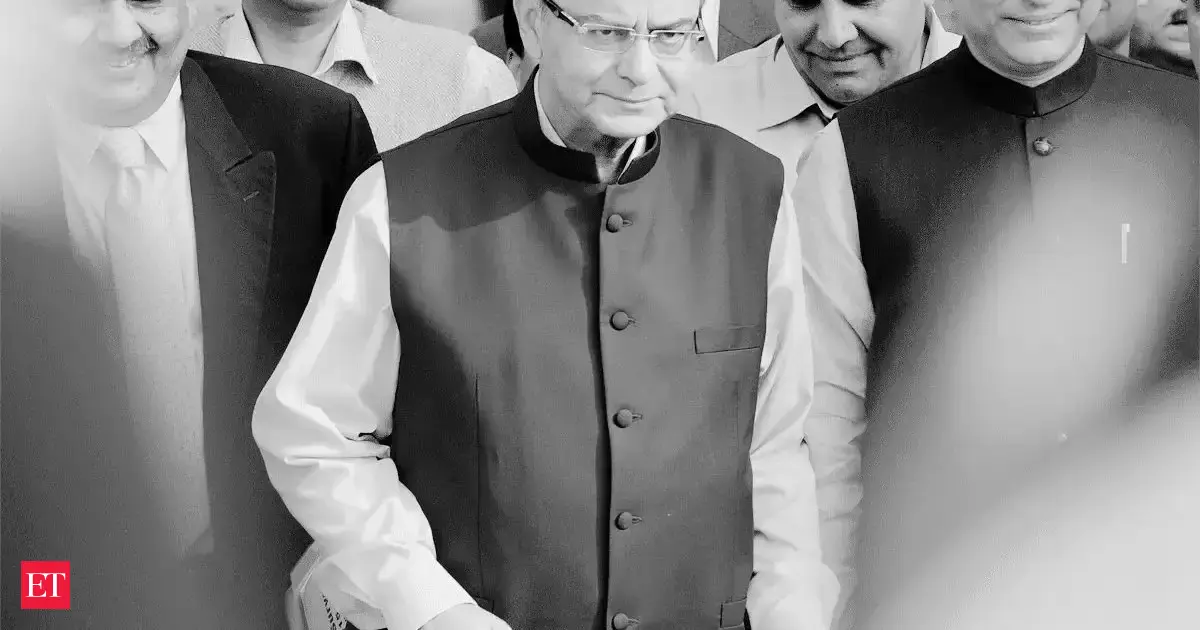
The Union Budget 2018-19, presented by then Finance Minister Arun Jaitley, was a pivotal fiscal document that outlined the government's economic priorities and policy direction. It came at a time when India was navigating a complex global economic landscape while striving for robust domestic growth and inclusive development. The government, under the 'Sabka Saath, Sabka Vikas' mantra, was particularly keen on addressing rural distress, boosting agricultural income, and strengthening social safety nets, especially in healthcare, while simultaneously pushing for higher GDP growth, aiming for over 8%. One of the most significant announcements was the **boost to the Minimum Support Price (MSP) for Kharif crops**. This policy decision was a direct response to persistent agrarian distress, which had seen farmers facing challenges like volatile market prices, climate change impacts, and rising input costs. The budget formally committed to ensuring that farmers would receive an MSP of at least 1.5 times the cost of production (A2+FL), a long-standing recommendation from the Swaminathan Commission. This move was intended to provide a remunerative price for farmers, reduce their vulnerability to market fluctuations, and contribute to the government's ambitious target of doubling farmers' income by 2022. Key stakeholders here were millions of farmers, particularly those engaged in Kharif cultivation, and consumers who would eventually bear the cost through potentially higher food prices or increased government subsidies. Another landmark initiative was the **major upgrade in India's healthcare sector**, primarily through the announcement of what would become the Ayushman Bharat – Pradhan Mantri Jan Arogya Yojana (PMJAY). This scheme aimed to provide health insurance coverage of up to Rs 5 lakh per family per year for secondary and tertiary care hospitalization to over 10 crore poor and vulnerable families (approximately 50 crore beneficiaries). It was envisioned as a significant step towards achieving Universal Health Coverage (UHC) and reducing catastrophic out-of-pocket health expenditures, which push millions into poverty annually. This policy was built upon previous initiatives like the Rashtriya Swasthya Bima Yojana (RSBY) but scaled up significantly. The beneficiaries were the economically weaker sections, while the government, public and private healthcare providers, and insurance companies were key implementers and stakeholders. The budget also brought significant changes to the taxation regime, particularly impacting the capital markets. The reintroduction of **Long-Term Capital Gains (LTCG) tax** on equity investments was perhaps the most talked-about 'shock' for investors. After being abolished in 2004, a 10% tax was imposed on LTCG exceeding Rs 1 lakh arising from the sale of equity shares or equity-oriented mutual fund units, without the benefit of indexation. This move was aimed at broadening the tax base and ensuring that wealth creation in the stock market also contributed to government revenues. Investors, stockbrokers, and fund managers were the primary stakeholders affected, with initial concerns about its impact on market sentiment and foreign portfolio investment (FPI) inflows. Historically, capital gains tax has seen various iterations in India, reflecting evolving fiscal priorities and economic conditions. Furthermore, the budget addressed the **Dividend Distribution Tax (DDT)**. While the budget did not abolish DDT, it maintained its existing structure, which meant that companies continued to pay tax on dividends declared, leading to a 'dampener' effect on investor returns as the dividend income was already taxed at the company level. This led to calls for its rationalization or abolition to boost investor confidence and simplify the tax structure, especially for foreign investors. Ultimately, DDT was abolished in Budget 2020-21, shifting the tax incidence from the company to the recipient, highlighting the ongoing evolution of India's tax policies. **Significance for India:** These budget provisions collectively aimed to steer India towards more inclusive and sustainable growth. The MSP hike was crucial for addressing social equity and agricultural sustainability, key components of India's large rural economy. Ayushman Bharat represented a monumental shift in public health policy, aiming to protect the most vulnerable and improve human development indicators. The tax changes, particularly LTCG, signified a recalibration of fiscal policy towards greater revenue mobilization from capital markets, impacting the investment climate and government's ability to fund welfare schemes. These policies are deeply intertwined with constitutional provisions. Article 112 mandates the presentation of the Annual Financial Statement (Budget). Directive Principles of State Policy (DPSP) like Article 38 (social order for welfare), Article 39 (distribution of material resources), Article 47 (duty to improve public health), and Article 48 (organisation of agriculture and animal husbandry) provide the guiding principles for such welfare and economic policies. The government's fiscal choices reflect its commitment to these constitutional directives. **Future Implications:** The MSP policy continues to be a subject of debate regarding its fiscal sustainability, market distortion, and effectiveness in truly doubling farmers' income. Ayushman Bharat's success hinges on robust implementation, adequate funding, and strengthening of primary healthcare infrastructure. The tax changes, while initially causing ripples, eventually integrate into the market's expectations, and future budgets often fine-tune such policies based on their economic impact and revenue collection performance. These budgetary decisions from 2018-19 laid foundational elements for subsequent government policies, demonstrating a consistent focus on agriculture, health, and responsible fiscal management, even as specific mechanisms evolve over time.
How to study
Turn news into exam marks
Revise monthly events by exam family instead of reading random updates.
Pair one-liners with mock tests so mistakes become the next revision list.
Keep state job pages, calendar pages and GK packs connected in one path.