


Relevant for Exams
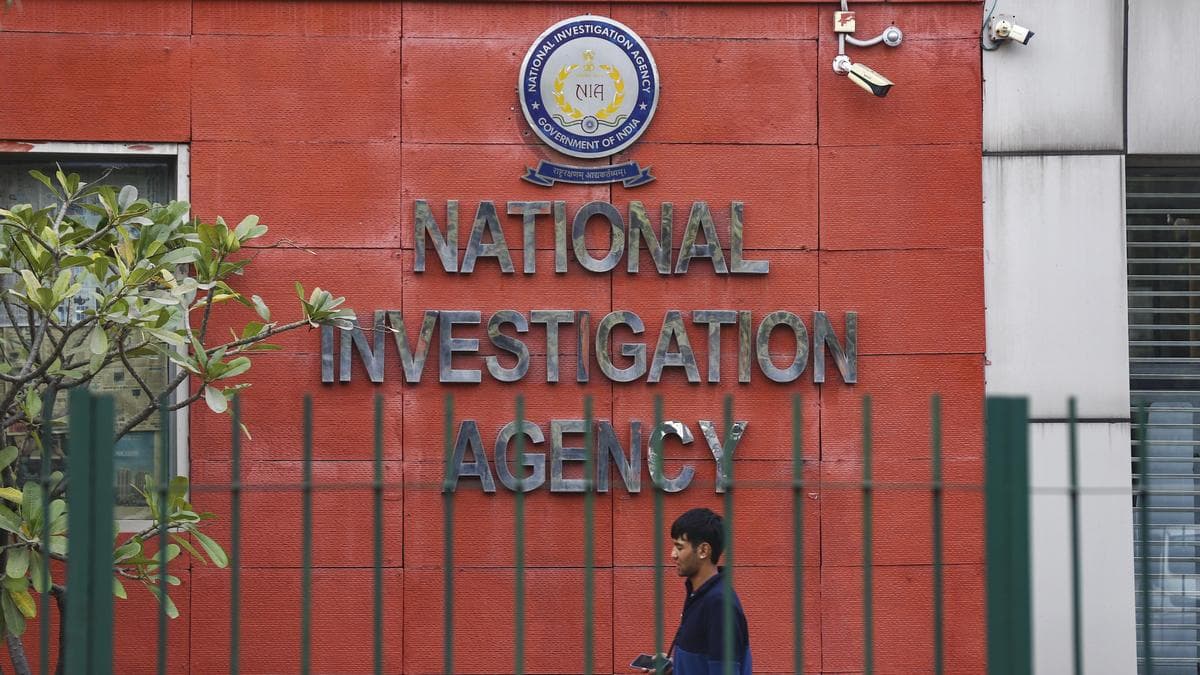
NIA reports over 92% conviction rate, cracks major terror cases including 2008 Mumbai attacks accused extradition in 2025.
Summary
The National Investigation Agency (NIA) reported significant achievements in 2025, securing over a 92% conviction rate in terror-related cases. Key successes include the extradition of Tahawwur Rana, an accused in the 2008 Mumbai terror attacks, from the U.S., and arrests related to the Pahalgam and Delhi attacks. This demonstrates NIA's enhanced capabilities in combating terrorism and its international cooperation, making it crucial for internal security and institutional topics in competitive exams.
Key Points
- 1The National Investigation Agency (NIA) achieved over a 92% conviction rate in terror cases.
- 2These achievements, including cracking key terror cases, were reported for the year 2025.
- 3A major success involved the extradition of Tahawwur Rana from the U.S.
- 4Tahawwur Rana is an accused in the 2008 Mumbai terror attacks.
- 5NIA also made arrests of terrorists and their associates involved in the Pahalgam and Delhi attacks.
In-Depth Analysis
The National Investigation Agency (NIA) reporting a conviction rate exceeding 92% in terror-related cases for 2025, along with significant breakthroughs like the extradition of Tahawwur Rana and arrests related to the Pahalgam and Delhi attacks, underscores India's evolving and strengthening counter-terrorism framework. This achievement is not just a statistical success but a testament to enhanced investigative capabilities, inter-agency coordination, and crucial international cooperation.
The genesis of the NIA lies in the tragic events of the 2008 Mumbai terror attacks (26/11). Prior to 26/11, India lacked a dedicated central agency to investigate terror crimes with a pan-India jurisdiction, often facing challenges due to the federal structure where 'police' is a state subject (Seventh Schedule, State List, Entry 2). The Mumbai attacks exposed critical gaps in intelligence sharing and coordinated response. In response, the Parliament swiftly enacted the National Investigation Agency Act, 2008, establishing the NIA as a central agency to investigate and prosecute offenses affecting the sovereignty, security, and integrity of India, friendly relations with foreign states, and international treaties. This move was pivotal in creating a unified and specialized approach to combating terrorism.
What happened, as per the report, showcases the NIA's operational effectiveness. The over 92% conviction rate is remarkably high for complex terror cases, which often involve intricate networks, cross-border elements, and sophisticated modus operandi. This rate indicates thorough investigation, robust evidence collection, and effective prosecution. A significant highlight is the extradition of Tahawwur Rana from the U.S. Rana, a Pakistani-Canadian, is accused of conspiring with Lashkar-e-Taiba (LeT) in planning the 2008 Mumbai attacks that claimed over 160 lives. His extradition, a culmination of years of legal and diplomatic efforts, signifies successful international judicial cooperation, particularly under the Extradition Act, 1962, and bilateral extradition treaties. Furthermore, arrests in connection with the Pahalgam and Delhi attacks demonstrate NIA's ongoing vigilance and proactive measures against domestic terror modules and their associates.
Key stakeholders in this ecosystem include the NIA itself, functioning under the administrative control of the Ministry of Home Affairs (MHA). Its investigators, often drawn from various police forces, undergo specialized training. The Indian judiciary, from trial courts to the Supreme Court, plays a critical role in delivering justice. International agencies and governments, particularly the U.S. in Rana's case, are crucial partners in intelligence sharing and extradition processes, often facilitated by organizations like Interpol. State police forces and Anti-Terrorism Squads (ATS) are also vital, as NIA often collaborates with them, especially in initial stages or for local support.
This matters immensely for India. Firstly, it bolsters internal security by dismantling terror networks and deterring potential perpetrators. A high conviction rate strengthens the rule of law and public confidence in the state's ability to protect its citizens. Secondly, it enhances India's international standing as a responsible nation committed to combating global terrorism. Effective extradition and cooperation demonstrate India's diplomatic leverage and adherence to international legal norms (relevant to Article 253, which allows Parliament to legislate for implementing international treaties). Economically, a secure environment is vital for investment and growth, while socially, it fosters peace and stability, reducing fear and communal discord often fueled by terror acts. The NIA's successes also send a strong message to state and non-state actors that India has the resolve and capability to pursue justice across borders.
Historically, the evolution of anti-terror laws, from TADA to POTA (both repealed) and finally the Unlawful Activities (Prevention) Act (UAPA), 1967 (significantly amended in 2004, 2008, and 2019), reflects India's continuous efforts to strengthen its legal arsenal against terrorism. The NIA primarily operates under the UAPA, which provides for stronger provisions to prevent unlawful activities and deal with terrorist acts. The 2019 amendment to UAPA notably allowed the central government to designate individuals as terrorists, not just organizations, further empowering agencies like NIA.
Looking ahead, these achievements have several future implications. The NIA will likely continue to strengthen its intelligence gathering, forensic capabilities, and cyber-crime investigation units, given the evolving nature of terror threats. International cooperation will remain a cornerstone, with India pushing for greater collaboration on intelligence sharing, extradition, and combating terror financing (PMLA, 2002). There might be debates surrounding further amendments to anti-terror laws to address emerging challenges, balancing security imperatives with civil liberties. Ultimately, a strong NIA with a high success rate contributes to a more secure and stable India, reinforcing its position as a key player in global counter-terrorism efforts and a proponent of a zero-tolerance policy towards terrorism. This also feeds into broader themes of good governance, national security, and diplomatic relations.
Exam Tips
This topic primarily falls under the 'Internal Security' section of the UPSC Civil Services Mains General Studies Paper III syllabus. For other exams like SSC, Banking, Railways, and State PSCs, it's relevant for 'General Awareness' and 'Current Affairs' sections, often appearing as direct questions on NIA's role or recent achievements.
When studying, link the NIA's formation to the 2008 Mumbai attacks and the need for a federal counter-terrorism agency. Understand the provisions of the National Investigation Agency Act, 2008, and its relationship with the Unlawful Activities (Prevention) Act (UAPA), 1967. Also, study the Extradition Act, 1962, and how it facilitates international cooperation.
Common question patterns include: 'Discuss the role and importance of the NIA in India's counter-terrorism efforts.' 'Analyze the challenges faced by central investigating agencies like NIA in a federal structure.' 'Examine the significance of international cooperation in combating cross-border terrorism, citing recent examples.' 'What are the key provisions of UAPA and how do they empower agencies like NIA?'
Related Topics to Study
Full Article
Major achievements include extradition of 2008 Mumbai terror attacks accused Tahawwur Rana from the U.S., and the arrest of several terrorists and their associates involved in the Pahalgam and Delhi attacks