


Relevant for Exams
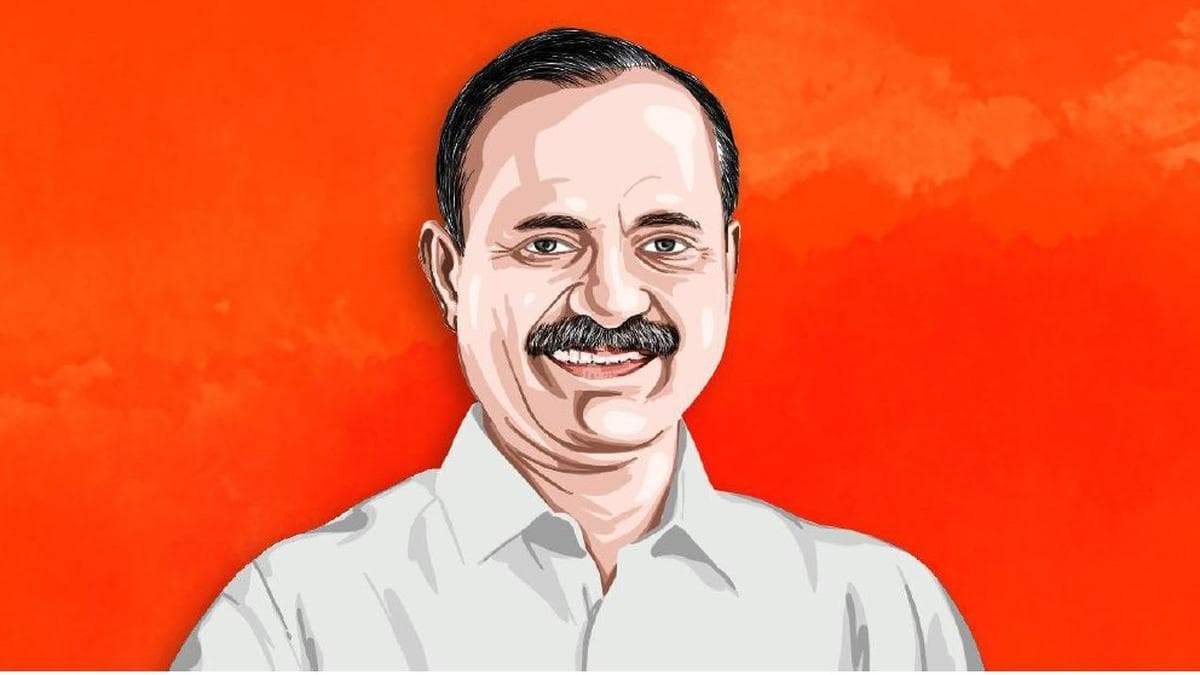
BJP secures first Kerala Corporation win; V.V. Rajesh named Thiruvananthapuram Mayor.
Summary
The BJP achieved its first Corporation election victory in Kerala, leading to the appointment of V.V. Rajesh as the Mayor of Thiruvananthapuram. This landmark win signifies a notable political entry for the party into local governance in a state traditionally dominated by LDF and UDF. It's crucial for understanding evolving regional political landscapes and BJP's expansion efforts, making it relevant for general awareness sections in competitive exams.
Key Points
- 1The BJP won its first Corporation election in the state of Kerala.
- 2The election victory was specifically for the Thiruvananthapuram Corporation.
- 3V.V. Rajesh was chosen as the Mayor of Thiruvananthapuram.
- 4This marks a significant political entry for the BJP into local governance in Kerala.
- 5Kerala is a state traditionally dominated by the Left Democratic Front (LDF) and United Democratic Front (UDF) coalitions.
In-Depth Analysis
The political landscape of Kerala, traditionally a bastion of the Left Democratic Front (LDF) and United Democratic Front (UDF), witnessed a significant shift with the Bharatiya Janata Party's (BJP) landmark victory in the Thiruvananthapuram Corporation election. This event, which led to the appointment of V.V. Rajesh as the Mayor, marked the BJP's first-ever Corporation election win in the state, signaling a notable entry into local governance and challenging the entrenched bipolar political structure.
**Background Context and What Happened:**
Kerala's politics has historically been dominated by two major coalitions: the LDF, led by the Communist Party of India (Marxist) (CPI(M)), and the UDF, led by the Indian National Congress. Both fronts have alternated in power, creating a unique political equilibrium. The BJP, despite its national prominence, has struggled to make significant inroads in Kerala, often facing challenges due to the state's distinct socio-political demographics, including a significant proportion of minority communities and a strong legacy of communist and socialist movements. However, the BJP has been steadily increasing its vote share in various local body elections and assembly segments over the past decade, particularly in urban centres like Thiruvananthapuram, which has a comparatively higher presence of Hindu voters and a growing middle class. The victory in the Thiruvananthapuram Corporation was a culmination of persistent efforts, strategic campaigning, and perhaps a degree of voter fatigue with the traditional fronts, alongside focused efforts on local issues and organisational strengthening.
**Key Stakeholders Involved:**
* **Bharatiya Janata Party (BJP):** As the winning party, the BJP and its state leadership are primary stakeholders. This victory provides a morale boost and concrete evidence of their growing acceptance in Kerala, crucial for their 'Look South' electoral strategy. V.V. Rajesh, as the chosen Mayor, becomes a prominent face of the party's local governance efforts. The national leadership will view this as a significant step towards expanding its footprint.
* **Left Democratic Front (LDF) and United Democratic Front (UDF):** These traditional powerhouses are directly impacted. The BJP's success indicates a potential erosion of their vote bases, particularly in urban areas. They now face the challenge of introspection and devising strategies to counter the BJP's rise, especially in a state where political narratives are often sharply contested.
* **Local Electorate of Thiruvananthapuram:** The voters are crucial stakeholders, as their mandate facilitated this change. Their choices reflect evolving political preferences, local concerns, and potentially a desire for alternative governance models.
**Why This Matters for India and Historical Context:**
This event holds immense significance for India's political landscape. Firstly, it underscores the BJP's ambitious national expansion strategy, aiming to break traditional regional strongholds. Kerala, along with Tamil Nadu and Andhra Pradesh, has been a difficult state for the BJP to penetrate significantly. This win in a state capital is symbolic and practical, demonstrating that the party can win local elections in new territories. Historically, local body elections often serve as a barometer for public sentiment and can influence state assembly and even parliamentary elections. For India's federal structure, the rise of a third significant political force in a state like Kerala could lead to more dynamic and competitive politics, potentially altering power equations and resource allocation. It also signals a broader trend of regional political realignment across various states, where national parties are attempting to consolidate power at the grassroots level.
**Constitutional Provisions and Future Implications:**
The entire framework of local self-governance in India is enshrined in the Constitution, primarily through the **73rd and 74th Constitutional Amendment Acts of 1992**. While the 73rd Amendment deals with Panchayati Raj Institutions (rural local bodies), the **74th Amendment** specifically pertains to Urban Local Bodies (ULBs), including Municipal Corporations, Municipal Councils, and Nagar Panchayats. These amendments mandate the establishment of such bodies, their composition, powers, functions, and the conduct of elections. Key articles include **Article 243P to 243ZG**, which outline the powers of Municipalities, the reservation of seats for Scheduled Castes, Scheduled Tribes, and women, the constitution of Ward Committees, and the role of the State Election Commission and State Finance Commission. The BJP's victory in Thiruvananthapuram Corporation directly operates within this constitutional framework, highlighting the importance of democratic decentralization and local self-governance.
Looking ahead, this victory could have several implications. It provides the BJP a platform to showcase its governance model at the local level, potentially influencing future state assembly elections. It will compel the LDF and UDF to recalibrate their strategies, possibly leading to intensified political competition and new alliances. The BJP will aim to leverage this success to expand its organisational base and appeal beyond its traditional voter groups. However, the challenge for the BJP will be to sustain this momentum and translate local body success into broader electoral gains in a state with complex socio-political dynamics. This event is a testament to the evolving nature of Indian democracy, where even traditionally impenetrable political bastions are witnessing shifts, making the study of regional politics crucial for understanding national trends.
Exam Tips
This topic falls under the 'Indian Polity and Governance' section (UPSC GS-II, State PSCs) and 'Current Affairs' for all competitive exams. Focus on the structure and functions of Urban Local Bodies.
Study the 73rd and 74th Constitutional Amendment Acts in detail, including relevant Articles (243P to 243ZG), the role of the State Election Commission, and the State Finance Commission. Understand the concept of democratic decentralization.
Analyze the political landscape of Indian states, particularly those with unique political histories like Kerala. Questions often test your understanding of regional political parties, electoral trends, and the impact of national parties on state politics. Be prepared for analytical questions on the significance of such events for federalism and party systems.
Factual questions might ask about the specific city/corporation, the name of the Mayor, or the party. Conceptual questions will delve into the implications of such a win for the state and national politics.
Relate this event to broader themes like the 'Look South' policy of major national parties, the challenges of coalition politics, and the role of local governance in development.
Related Topics to Study
Full Article
The BJP, which won its first Corporation election in Kerala, has chosen a familiar local face to be the Mayor of Thiruvananthapuram