


Relevant for Exams
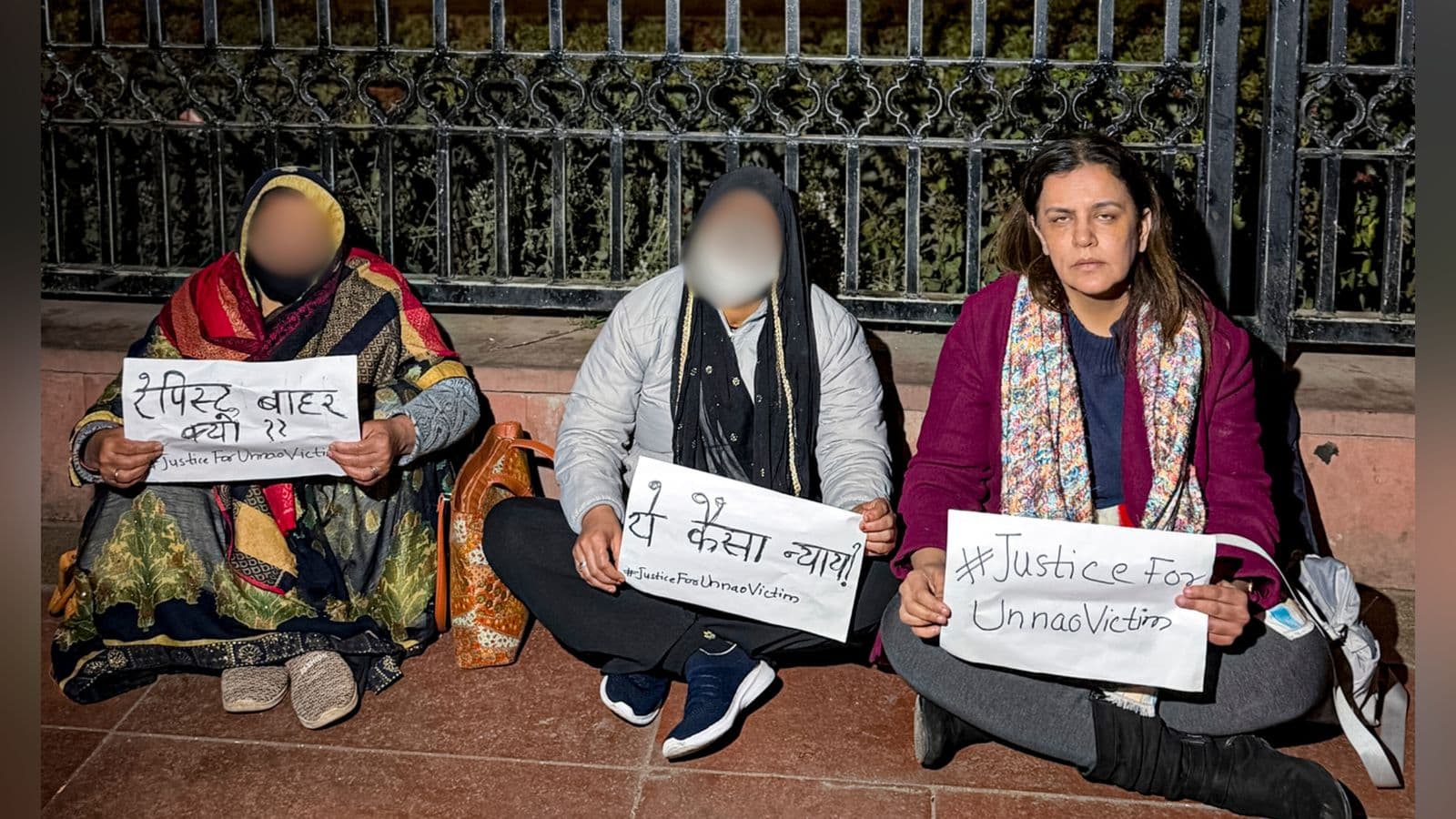
Unnao victim files CBI complaint, alleging IO collusion with Sengar in ongoing high-profile case.
Summary
The Unnao rape victim has reportedly filed a complaint with the Central Bureau of Investigation (CBI), alleging collusion between the case's Investigating Officer (IO) and former MLA Kuldeep Singh Sengar. This development highlights ongoing concerns regarding the integrity of investigations in high-profile cases, making it relevant for competitive exams focusing on governance, legal processes, and social justice issues in India.
Key Points
- 1The complaint was filed by the Unnao rape victim.
- 2The complaint was lodged with the Central Bureau of Investigation (CBI).
- 3The primary allegation is that the case's Investigating Officer (IO) is colluding with Sengar.
- 4Sengar refers to Kuldeep Singh Sengar, a former MLA and key accused in the Unnao rape case.
- 5The Unnao rape case has been a high-profile legal matter, drawing national attention since 2017-2018.
In-Depth Analysis
The Unnao rape case has been a grim saga highlighting the multifaceted challenges within India's justice delivery system, particularly when powerful individuals are involved. This latest development, where the victim has filed a complaint with the Central Bureau of Investigation (CBI) alleging collusion between the case's Investigating Officer (IO) and former MLA Kuldeep Singh Sengar, adds another layer of complexity and concern to an already high-profile and deeply troubling matter.
**Background Context of the Unnao Case:**
The Unnao rape case first came to national attention in 2017-2018. It involved allegations of rape by a minor girl against Kuldeep Singh Sengar, a powerful politician and then a sitting MLA from the Bharatiya Janata Party (BJP) in Uttar Pradesh. The victim and her family faced immense pressure and intimidation from the outset. Her father was allegedly beaten and died in police custody in April 2018, leading to accusations against Sengar and his associates for his death. Subsequently, in July 2019, the victim and her family were involved in a severe road accident, in which two of her aunts died, and she and her lawyer were critically injured. This accident was also alleged to be an attempt on her life, leading to the Supreme Court's intervention. The initial investigation by the Uttar Pradesh police faced widespread criticism for its perceived inaction and attempts to shield Sengar, leading to the transfer of the case to the CBI.
**The Latest Development: Allegations of Collusion:**
The current complaint filed by the Unnao rape victim with the CBI alleges that the investigating officer assigned to her case is colluding with Kuldeep Singh Sengar. This is a critical accusation, suggesting that even within the premier investigative agency, the integrity of the process is compromised. While the specifics of the alleged collusion are yet to be revealed publicly, such a complaint implies that the victim perceives a deliberate attempt to undermine the investigation, potentially to favor the accused or weaken the prosecution's case. This development casts a shadow on the ongoing efforts to ensure justice and fair play.
**Key Stakeholders Involved:**
1. **The Unnao Rape Victim:** She remains the central figure, a survivor fighting for justice against immense odds, including alleged attempts on her life and now, potential subversion of the investigation itself.
2. **Kuldeep Singh Sengar:** The former MLA and primary accused, who has already been convicted in the main rape case and sentenced to life imprisonment in December 2019 by a Delhi court. He faces other charges related to the father's death and the accident.
3. **Central Bureau of Investigation (CBI):** India's premier investigative agency, entrusted with handling sensitive cases. It is now directly implicated through the allegation against its own investigating officer, raising questions about its internal integrity and oversight mechanisms.
4. **The Investigating Officer (IO):** The specific individual whose conduct is under scrutiny. The credibility of the entire investigation hinges on the impartiality and diligence of the IO.
5. **The Judiciary (Supreme Court and Delhi High Court):** The Supreme Court played a pivotal role by transferring all five related cases to Delhi and directing their speedy trial, showcasing judicial activism to ensure justice when state machinery appeared to fail. The courts continue to monitor the legal proceedings.
6. **State Police (Uttar Pradesh):** Though the case was transferred, the initial handling by the UP Police and their alleged initial inaction or complicity remains a significant part of the case's history.
**Significance for India:**
This case holds profound significance for India, touching upon several critical aspects of governance, social justice, and the rule of law:
* **Integrity of Justice Delivery:** The allegation of collusion, if proven, severely undermines public faith in investigative agencies and the broader justice system. It highlights persistent challenges in ensuring impartial investigations, especially in cases involving powerful political figures.
* **Women's Safety and Rights:** The Unnao case has become a symbol of the arduous and often dangerous battle for justice faced by victims of sexual assault in India. The continuous threats and obstacles faced by the victim underscore the urgent need for robust witness protection mechanisms and a truly victim-centric approach.
* **Accountability of Institutions:** It raises serious questions about accountability within the CBI and the mechanisms to prevent and address misconduct by officers. The independence and impartiality of investigative bodies are crucial for a healthy democracy.
* **Rule of Law vs. Political Influence:** The case starkly illustrates the potential for political power to influence and obstruct legal processes, challenging the very foundation of the rule of law. It underscores the importance of checks and balances to prevent such interference.
**Historical Context and Future Implications:**
Historically, investigative agencies in India, including the CBI, have faced accusations of political interference or selective investigations, leading to concerns about their autonomy. This latest allegation resonates with these historical apprehensions. The Supreme Court, in cases like *Vineet Narain v. Union of India* (1997), has emphasized the need for CBI's functional autonomy. The Unnao case, with its twists and turns, could potentially lead to renewed calls for police reforms, strengthening the independence of investigative agencies, and more stringent oversight of their functioning.
Future implications include the potential for the CBI to launch an internal inquiry into the alleged collusion. If the allegations are substantiated, it could lead to disciplinary action against the IO and possibly a fresh investigation or re-evaluation of evidence gathered by that officer. The judiciary might also intervene to ensure the integrity of the ongoing trials and investigations. More broadly, it could reignite public discourse on witness protection (in light of the *Witness Protection Scheme, 2018*), judicial reforms, and systemic changes to protect victims and ensure justice without fear or favor.
**Related Constitutional Articles, Acts, and Policies:**
* **Article 21 (Right to Life and Personal Liberty):** This fundamental right is central, encompassing the right to a fair and speedy trial, and a fair investigation, which is a prerequisite for justice.
* **Article 32 (Right to Constitutional Remedies):** The Supreme Court's intervention in transferring the case and monitoring it exemplifies its role in upholding fundamental rights.
* **Code of Criminal Procedure (CrPC), 1973:** Governs the procedures for criminal investigation, inquiry, and trial in India. Sections related to investigation by police officers are particularly relevant.
* **Indian Penal Code (IPC), 1860:** Relevant sections include those pertaining to rape (Section 376), criminal conspiracy (Section 120B), obstruction of justice, and other related offenses that Sengar and his associates have been accused of.
* **Delhi Special Police Establishment Act, 1946:** This Act provides the legal framework for the functioning of the CBI.
* **Witness Protection Scheme, 2018:** Formulated by the Supreme Court, this scheme is crucial for safeguarding victims and witnesses in sensitive cases, a critical need highlighted by the threats faced by the Unnao victim.
Exam Tips
This topic falls under GS Paper 2 (Indian Polity, Governance, Social Justice) and GS Paper 3 (Internal Security) for UPSC. For SSC and State PSCs, it's relevant for General Awareness and Polity sections. Focus on the institutional aspects like CBI's role and challenges, and social justice issues like women's safety.
Study related topics such as police reforms (Prakash Singh judgment), the autonomy and accountability of investigative agencies (CBI, ED), judicial activism, witness protection laws, and various government initiatives for women's safety and empowerment. Understand the constitutional provisions that empower the judiciary and protect fundamental rights.
Common question patterns include case studies on institutional integrity, challenges to the rule of law, the role of investigative agencies in upholding justice, and the effectiveness of legal frameworks in protecting vulnerable sections of society. Be prepared for questions that ask for solutions or reforms to strengthen the justice system.