


Relevant for Exams
Unnao rape survivor seeks CBI FIR against IO for alleged collusion with accused Sengar.
Summary
The Unnao rape survivor has approached the Central Bureau of Investigation (CBI) seeking an FIR against the Investigative Officer (IO) in her case. She alleges the IO colluded with the accused, Sengar, and conducted a dishonest probe with deliberate lapses and manipulation of facts. This development highlights concerns regarding investigative integrity and accountability in high-profile criminal cases, crucial for understanding governance and law enforcement issues in competitive exams.
Key Points
- 1The Unnao rape survivor has filed a complaint with the Central Bureau of Investigation (CBI).
- 2The complaint seeks the registration of an FIR against the Investigative Officer (IO) in her case.
- 3The survivor alleges the IO 'colluded' with the main accused, Sengar.
- 4She claims the IO conducted the probe dishonestly, introducing deliberate lapses and manipulating facts.
- 5The alleged manipulation was intended to secure a favorable outcome for Sengar and other accused.
In-Depth Analysis
The Unnao rape case has been a harrowing saga, emblematic of the struggles faced by victims seeking justice in India, especially when powerful individuals are involved. This recent development, where the survivor has approached the Central Bureau of Investigation (CBI) seeking an FIR against the Investigative Officer (IO) for alleged collusion with the main accused, Kuldeep Singh Sengar, adds another critical layer to this complex narrative, spotlighting issues of investigative integrity and accountability.
The genesis of the Unnao case dates back to 2017 when a minor girl from Unnao, Uttar Pradesh, accused then-BJP MLA Kuldeep Singh Sengar of rape. What followed was a series of shocking events: the survivor's father was allegedly beaten in police custody and later died, her aunt and two other relatives died in a suspicious road accident, and the survivor herself and her lawyer were critically injured. These incidents, widely perceived as attempts to silence the victim and her family, drew national and international outrage, leading to the Supreme Court's intervention. In a landmark move, the Supreme Court transferred all related cases from Uttar Pradesh to Delhi, directing the CBI to complete its investigations expeditiously. Eventually, Sengar was convicted in December 2019 under the Protection of Children from Sexual Offences (POCSO) Act and the Indian Penal Code (IPC) for rape, and later for the death of the survivor's father, receiving life imprisonment in both instances.
The current accusation by the survivor against the IO is deeply troubling. She alleges that the IO conducted a dishonest probe, introducing "deliberate lapses" and "manipulation of facts" to secure a favorable outcome for Sengar and other accused. This isn't merely an administrative complaint; it's a grave charge of criminal misconduct that, if proven, directly undermines the credibility of the investigation and the broader justice system.
Key stakeholders in this unfolding drama include the **Unnao Rape Survivor**, who remains the central figure, demonstrating immense courage in her relentless pursuit of justice against overwhelming odds. Her complaint highlights the continued vulnerability of victims even after initial convictions. The **Investigative Officer (IO)**, now under scrutiny, represents the executive arm of law enforcement, whose integrity is paramount. His alleged actions betray the public trust and the fundamental duty to uphold the law impartially. **Kuldeep Singh Sengar**, the former MLA, remains the primary accused whose influence, even from behind bars, is a matter of concern. The **Central Bureau of Investigation (CBI)**, initially tasked with ensuring a fair probe, is now faced with investigating its own officer or a state police officer who was part of the earlier investigation. This situation tests the CBI's institutional independence and its commitment to internal accountability. Finally, the **Indian Judiciary**, which has already played a crucial role in bringing justice in the main case, will once again be the ultimate arbiter, ensuring due process for all parties involved.
This development holds immense significance for India. Firstly, it strikes at the very core of the **Rule of Law**. If investigative agencies, meant to be guardians of justice, can be manipulated, public faith in the entire system erodes. Secondly, it underscores the persistent challenges of **Police Accountability and Reforms**. Allegations of collusion and deliberate lapses highlight the urgent need for stringent oversight mechanisms, ethical training, and protection for whistleblowers within law enforcement. Thirdly, it has profound implications for **Women's Safety and Access to Justice**. When victims fear that even the investigators might compromise their cases, it creates an environment of distrust and discourages reporting of crimes. The political background of the accused also brings to the fore the issue of **Criminalization of Politics** and the undue influence powerful individuals can wield over administrative processes.
From a constitutional and legal perspective, this case invokes several critical provisions. **Article 21** of the Indian Constitution, guaranteeing the Right to Life and Personal Liberty, implicitly includes the right to a fair and impartial investigation and trial. Any deliberate manipulation by an IO directly violates this fundamental right. Provisions of the **Criminal Procedure Code (CrPC)**, which govern the process of investigation, arrest, and trial, are central. Sections related to the powers and duties of police officers during investigation (e.g., Section 157, 161, 173) are relevant. The **Indian Penal Code (IPC)** contains sections addressing misconduct by public servants, such as Section 166 (Public servant disobeying law, with intent to cause injury), Section 217 (Public servant disobeying direction of law with intent to save person from punishment or property from forfeiture), and Section 120B (Criminal Conspiracy), under which the IO could potentially be charged if collusion is proven. The **Delhi Special Police Establishment Act, 1946**, which established the CBI, empowers it to investigate such matters. Furthermore, the need for robust **Witness Protection Schemes** (like the one formulated by the Supreme Court in 2018) becomes evident, as the survivor's continued struggle for justice underscores the threats faced by victims and witnesses.
The future implications are multifaceted. If the CBI registers an FIR and thoroughly investigates the IO, it could lead to accountability for misconduct, potentially restoring some faith in the system. It would send a strong message that no one, irrespective of their position, is above the law. Conversely, a lack of decisive action could further deepen public cynicism. This case also reignites the debate on **police reforms**, emphasizing the need for greater autonomy, better training, and robust internal grievance redressal mechanisms to insulate investigations from external pressures. It highlights the importance of judicial activism in safeguarding justice, as seen in the Supreme Court's earlier intervention. Ultimately, the outcome of this complaint will be a litmus test for India's commitment to delivering uncompromised justice, especially to the most vulnerable sections of society.
Exam Tips
This topic falls under GS Paper II (Polity & Governance - Judiciary, Police Reforms, Accountability, Social Justice - Women's Safety) and GS Paper III (Internal Security - Role of Investigative Agencies).
Study related topics like the powers and functions of CBI, constitutional provisions for fundamental rights (especially Article 21), police reforms (Prakash Singh judgment), criminalization of politics, and the functioning of the criminal justice system (CrPC, IPC).
Expect questions on the challenges faced by the Indian justice system, the role of investigative agencies in upholding the rule of law, the importance of police accountability, and specific constitutional articles or legal provisions related to fair investigation and trial. Be prepared for analytical questions on the impact of political interference on governance.
Related Topics to Study
Full Article
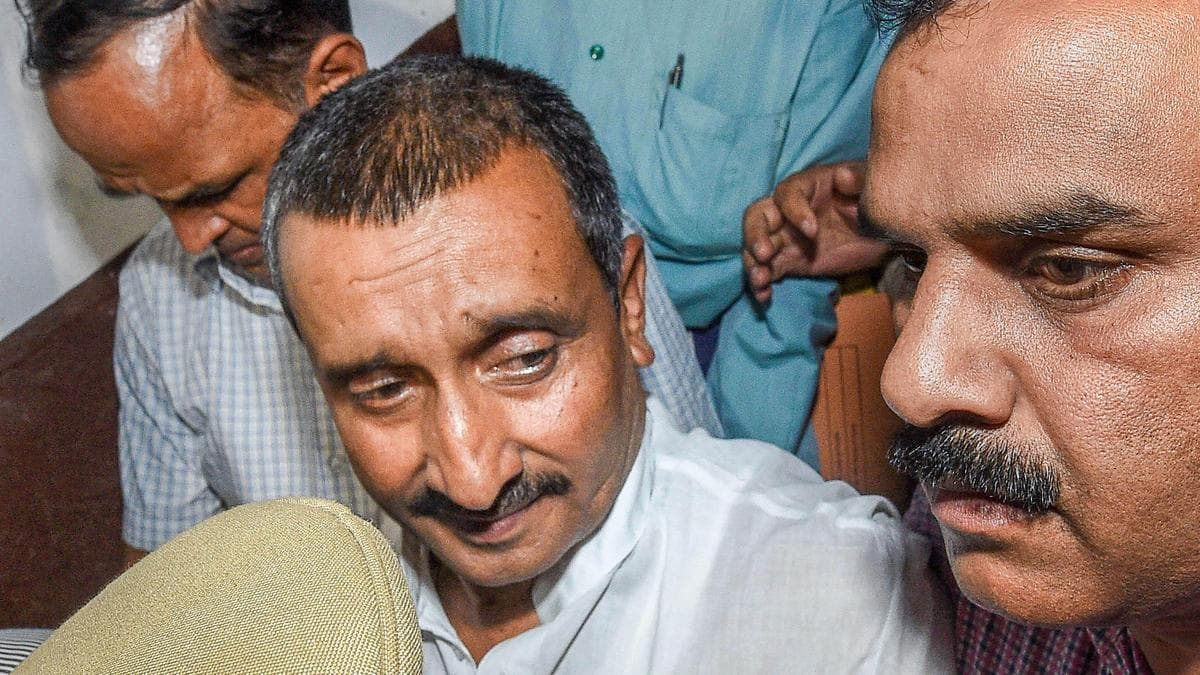
In her complaint, the victim alleged that the investigating officer conducted the probe dishonestly, and in such a way that Senger and other accused may get benefits of “deliberate lapses, manipulation of facts introduced, and secure a favourable outcome”