


Relevant for Exams
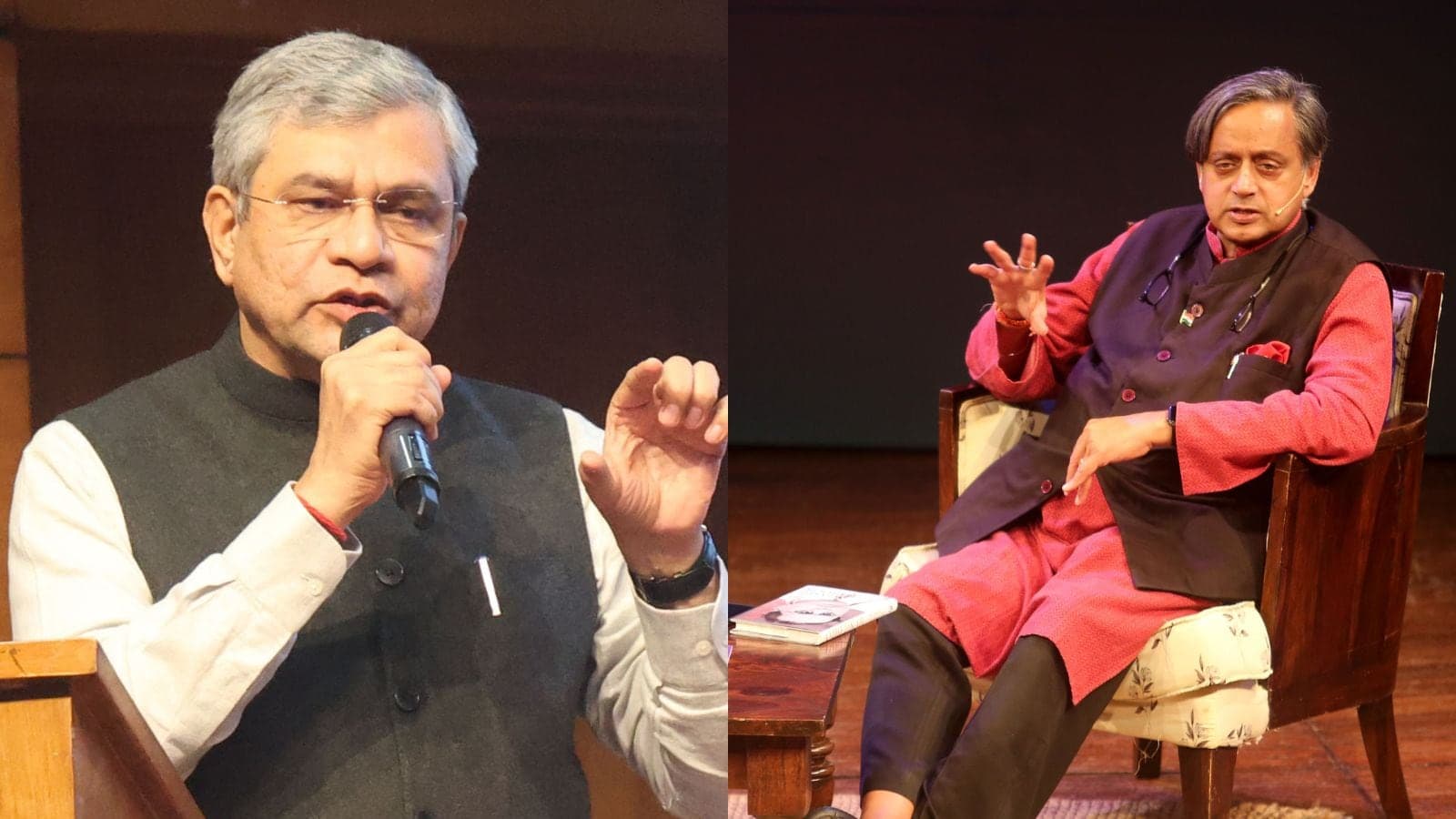
Shashi Tharoor urges Railway Minister to include Thiruvananthapuram in Vision 2030 upgrades.
Summary
Shashi Tharoor, MP for Thiruvananthapuram, has written to the Union Railway Minister regarding the exclusion of his constituency from the "Vision 2030 upgrades" plan. This action highlights concerns over equitable regional development in railway infrastructure and the proactive role of elected representatives in advocating for their areas. For competitive exams, this underscores the importance of understanding government infrastructure plans, regional disparities, and parliamentary advocacy.
Key Points
- 1Shashi Tharoor, the Member of Parliament representing Thiruvananthapuram, addressed a letter to the Union Railway Minister.
- 2The core issue raised was the omission of Thiruvananthapuram from the proposed "Vision 2030 upgrades" for railway infrastructure.
- 3This matter highlights regional imbalances in infrastructure development and modernization efforts by Indian Railways.
- 4The "Vision 2030 upgrades" refers to a long-term strategic plan for enhancing railway facilities and connectivity.
- 5The incident underscores the crucial role of elected representatives in advocating for the developmental needs of their respective constituencies.
In-Depth Analysis
The recent communication from Shashi Tharoor, the Member of Parliament for Thiruvananthapuram, to the Union Railway Minister regarding the exclusion of his constituency from the 'Vision 2030 upgrades' plan, brings to light critical aspects of India's development trajectory, governance, and regional equity. This incident serves as a microcosm of the larger challenges and aspirations related to infrastructure development and balanced growth across the diverse regions of the country.
**Background Context: Indian Railways and Vision 2030**
Indian Railways, a lifeline for millions and one of the world's largest railway networks, plays a pivotal role in the nation's economic and social fabric. For decades, it has been a primary mode of transport for both passengers and freight, contributing significantly to national integration and economic activity. Recognizing the need for modernization and capacity enhancement, the Ministry of Railways unveiled the 'National Rail Plan (NRP) 2030'. This ambitious vision document aims to create a 'future-ready' railway system by 2030, focusing on increasing the railway's freight share from approximately 27% to 45%, enhancing speed, reducing logistics costs, and modernizing infrastructure. The NRP 2030 is also a key component of the broader 'PM Gati Shakti National Master Plan' launched in 2021, which seeks to bring a multi-modal connectivity approach and integrated planning for infrastructure projects across various ministries. The goal is to break departmental silos and ensure holistic development, thereby boosting economic growth and employment.
**The Specific Grievance**
Shashi Tharoor's letter highlights a specific concern: the perceived omission of Thiruvananthapuram, the capital city of Kerala and a significant urban center, from the strategic upgrades outlined in the NRP 2030. While the exact details of the exclusion are not fully public, the essence of his complaint lies in the potential for regional imbalance in infrastructure development. Such exclusions can lead to concerns about delayed economic growth, reduced connectivity, and a sense of neglect among the populace of the affected region.
**Key Stakeholders Involved**
Several key stakeholders are central to this issue. **Shashi Tharoor**, as an elected Member of Parliament (MP), represents the interests and developmental aspirations of his constituency. His action underscores the vital role MPs play in parliamentary democracy, advocating for their regions and holding the executive accountable. The **Union Railway Minister** and the **Ministry of Railways** are responsible for formulating and implementing national railway policy, allocating resources, and ensuring equitable development across the country. **Indian Railways**, as the executing agency, translates these policies into tangible projects. Finally, the **citizens of Thiruvananthapuram and Kerala** are the ultimate beneficiaries or, in this case, those who stand to be potentially disadvantaged by such decisions. Their welfare and access to modern infrastructure are at the heart of the issue. State governments also play a role in coordinating with the Centre on state-specific infrastructure needs.
**Significance for India: Regional Development and Federalism**
This incident is highly significant for India for several reasons. Firstly, it underscores the persistent challenge of **balanced regional development**. In a country as diverse as India, ensuring equitable distribution of infrastructure projects and economic opportunities is crucial for maintaining social cohesion and preventing disparities. Uneven development can lead to regional discontent and hinder overall national progress. Secondly, it highlights the dynamics of **Indian federalism**. While railways fall under the **Union List (Entry 22 of the Seventh Schedule)**, making it a central subject, the development decisions have direct implications for states. The interaction between central planning and state-specific needs often leads to such representations. The incident also emphasizes the **role of elected representatives** in ensuring that national plans address local needs, acting as a crucial link between the government and the governed.
**Constitutional and Policy Framework**
Beyond the Seventh Schedule, the **Directive Principles of State Policy (DPSP)**, though not enforceable by courts, provide guiding principles for governance. **Article 38** mandates the State to secure a social order for the promotion of the welfare of the people, striving to minimize inequalities in income, status, facilities, and opportunities. **Article 39(b)** directs the State to ensure that the ownership and control of the material resources of the community are so distributed as best to subserve the common good. While not a direct legal mandate for specific railway projects, these articles conceptually underpin the need for equitable infrastructure development. The very existence of the **National Rail Plan 2030** and **PM Gati Shakti** reflects the government's commitment to strategic, integrated infrastructure development, making any perceived exclusion a matter of public and political scrutiny.
**Historical Context and Future Implications**
Historically, India's railway development has seen phases of rapid expansion and regional prioritization. Post-independence, the focus was on connecting major industrial and administrative centers. Over time, demands for connectivity from all regions have grown, leading to a complex web of projects. This current issue reflects the ongoing negotiation between national strategic priorities and regional aspirations. In terms of future implications, Tharoor's letter will likely prompt a response from the Railway Ministry, potentially leading to a clarification, a re-evaluation of the plan, or an explanation of the criteria used for project selection. Such advocacy often puts pressure on policymakers to ensure transparency and inclusivity in national development plans. It also reinforces the idea that infrastructure planning in a democratic setup cannot purely be top-down but must also incorporate inputs and demands from local representatives, ensuring that the benefits of national growth are truly shared across all regions.
Exam Tips
This topic falls primarily under UPSC GS Paper II (Polity & Governance - Parliament, Centre-State Relations, Government Policies & Interventions) and GS Paper III (Economy - Infrastructure, Planning).
Study the objectives and key features of the National Rail Plan 2030 and PM Gati Shakti National Master Plan. Understand how these plans aim to transform India's infrastructure landscape.
Be prepared for analytical questions on topics like regional disparities in development, the role of Members of Parliament in advocating for their constituencies, and the challenges of equitable resource allocation in a federal system. Factual questions might relate to major railway projects or constitutional provisions concerning central subjects.
Understand the constitutional provisions related to railways (Union List, Article 246) and the Directive Principles of State Policy (e.g., Article 38, 39) that guide equitable development.
Practice essay writing on topics like 'Infrastructure as a driver of economic growth' or 'Challenges of balanced regional development in India'.