


Relevant for Exams
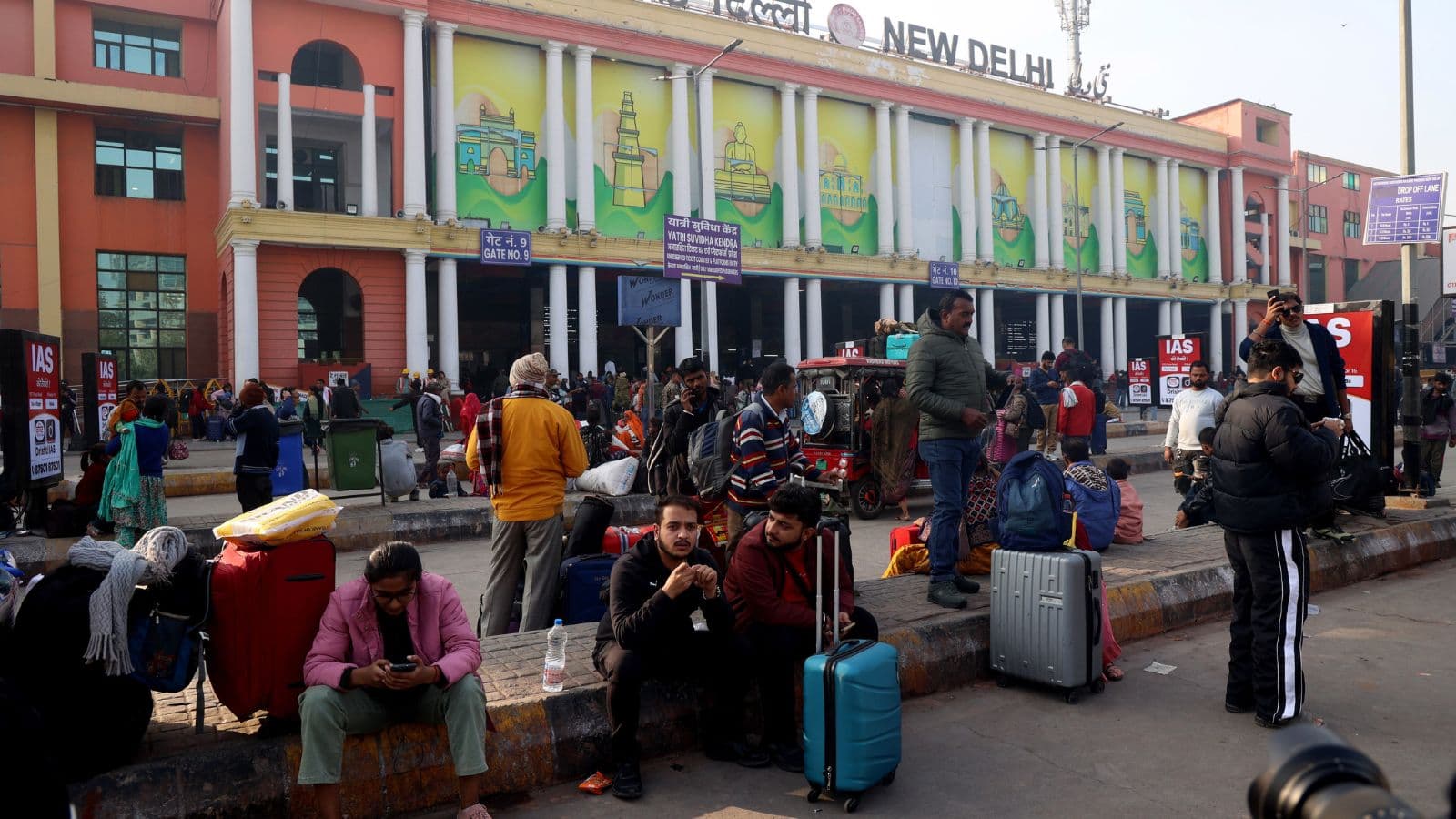
New Delhi railway station redevelopment plans two new buildings for 7 lakh daily passengers.
Summary
The New Delhi railway station redevelopment project is set to introduce two new buildings, significantly expanding its capacity. This major infrastructure upgrade aims to serve an estimated 7 lakh passengers daily, addressing the increasing demand for rail travel in the capital. It is crucial for understanding India's urban infrastructure development and railway modernization efforts, making it relevant for competitive exams.
Key Points
- 1The redevelopment project focuses on the New Delhi railway station.
- 2Plans include the construction of two new buildings to enhance station infrastructure.
- 3The redeveloped station is projected to serve 7 lakh (700,000) passengers daily.
- 4This initiative is a significant infrastructure project for Indian Railways in the national capital.
- 5The project aims to modernize facilities and increase passenger handling capacity at one of India's busiest railway hubs.
In-Depth Analysis
The proposed redevelopment of the New Delhi Railway Station (NDLS), a pivotal hub in India's vast railway network, signifies a crucial step in the nation's ambitious infrastructure modernization drive. This project, aiming to introduce two new buildings and enhance capacity to serve an astounding 7 lakh (700,000) passengers daily, reflects the urgent need to upgrade existing facilities to meet the burgeoning demands of urbanisation and increasing passenger traffic.
**Background Context and Historical Significance:**
Indian Railways, a colonial legacy dating back to 1853, has grown into one of the world's largest railway networks, serving as the lifeline of the nation. New Delhi Railway Station, strategically located in the heart of the capital, has historically been a critical gateway connecting the northern regions with the rest of India. Over decades, as India's population grew and urban centers expanded, NDLS, like many other major stations, began to face severe challenges of overcrowding, aging infrastructure, and inadequate amenities. The existing station infrastructure, while robust, was not designed to handle the current volume of passengers, leading to congestion, operational inefficiencies, and a suboptimal passenger experience. This backdrop necessitated a comprehensive redevelopment approach, moving beyond mere maintenance to a complete overhaul and capacity expansion.
**What Happened (The Project's Scope):**
The redevelopment project is not merely an aesthetic facelift; it's a fundamental transformation. The core of the plan involves the construction of two state-of-the-art buildings, which will significantly expand the station's footprint and operational capabilities. This expansion is designed to accommodate the projected daily footfall of 7 lakh passengers, a testament to the scale of the upgrade. While specific details on features like multi-modal integration, dedicated concourses, retail spaces, and advanced security systems are typically part of such modern projects, the primary objective remains capacity enhancement and modernization of passenger facilities, ensuring smoother movement and a more comfortable journey experience. Such projects often incorporate green building principles and smart station technologies.
**Key Stakeholders Involved:**
Several entities are crucial to the successful execution of this mega-project. The **Ministry of Railways** and **Indian Railways** are the primary drivers, responsible for policy formulation, overall vision, and operational oversight. The **Rail Land Development Authority (RLDA)** plays a vital role in monetizing railway land parcels to generate revenue for such projects, often through Public-Private Partnership (PPP) models. **Private developers and construction firms** will be instrumental in the actual execution, bringing in expertise and technology. The **Delhi Government and local municipal corporations** are key for urban planning approvals, traffic management, and ensuring seamless integration with city infrastructure like metro lines and bus services. Ultimately, the **passengers and the general public** are the main beneficiaries, whose feedback and needs drive the project's design.
**Significance for India:**
This redevelopment holds immense significance for India. Economically, it represents a substantial investment in infrastructure, creating numerous jobs during construction and operation, and boosting local economies. Improved connectivity and efficiency at a major hub like NDLS can significantly enhance logistics and trade. Socially, it promises a vastly improved travel experience for millions, enhancing safety, accessibility (especially for divyangjan), and comfort, thereby promoting inclusive growth. Environmentally, if designed with sustainability in mind, it can reduce the carbon footprint of transport. Politically, it aligns with the government's vision of 'New India' and its commitment to world-class infrastructure, as articulated in initiatives like the **PM Gati Shakti National Master Plan**. This project serves as a tangible example of integrated infrastructure development, connecting rail with other modes of transport and urban development.
**Constitutional and Policy References:**
Railways are a subject under the **Union List (Entry 22 of the Seventh Schedule)** of the Indian Constitution, granting the central government exclusive legislative and executive powers. This underscores the national importance and central oversight of such projects. The **Railways Act, 1989**, governs the functioning of Indian Railways. Furthermore, this project is a direct manifestation of broader national policies such as the **National Infrastructure Pipeline (NIP)**, launched in 2019, which aims for an investment of over ₹100 lakh crore in infrastructure projects across various sectors. Its integration with urban transport networks also touches upon the principles of urban planning and development, often a concurrent subject, requiring coordination between central and state agencies.
**Future Implications:**
The successful redevelopment of New Delhi Railway Station could serve as a blueprint and catalyst for similar modernization projects across other major railway stations in India, such as Mumbai's Chhatrapati Shivaji Maharaj Terminus or Chennai Central. It signifies a shift towards integrated transport planning, emphasizing multi-modal connectivity and passenger-centric design. The enhanced capacity will not only ease current congestion but also prepare the capital's railway infrastructure for future growth in passenger volumes. However, challenges such as land acquisition, funding mechanisms, timely execution without disrupting existing services, and managing the environmental impact will remain critical considerations for future projects. This initiative is pivotal in positioning Indian Railways as a modern, efficient, and sustainable mode of transport, contributing significantly to India's economic growth and urban development goals.
Exam Tips
This topic falls under GS Paper 3 (Indian Economy - Infrastructure, Industrial Policy, Investment Models) and GS Paper 1 (Indian Geography - Transport Systems, Urbanization). Be prepared for both factual and analytical questions.
Study related government initiatives like PM Gati Shakti National Master Plan, National Infrastructure Pipeline (NIP), and Public-Private Partnership (PPP) models. Questions often link specific projects to broader policy frameworks.
Expect questions on the economic, social, and environmental impacts of such large-scale infrastructure projects. Understand the 'why' behind these projects (e.g., decongestion, economic growth, tourism promotion).
Familiarize yourself with the constitutional provisions related to railways (Seventh Schedule, Union List) and key railway legislation (Railways Act, 1989).
Practice essay questions on 'Infrastructure Development as a Driver of Economic Growth' or 'Challenges and Opportunities in Modernizing Indian Railways', using this project as a case study.