


Relevant for Exams
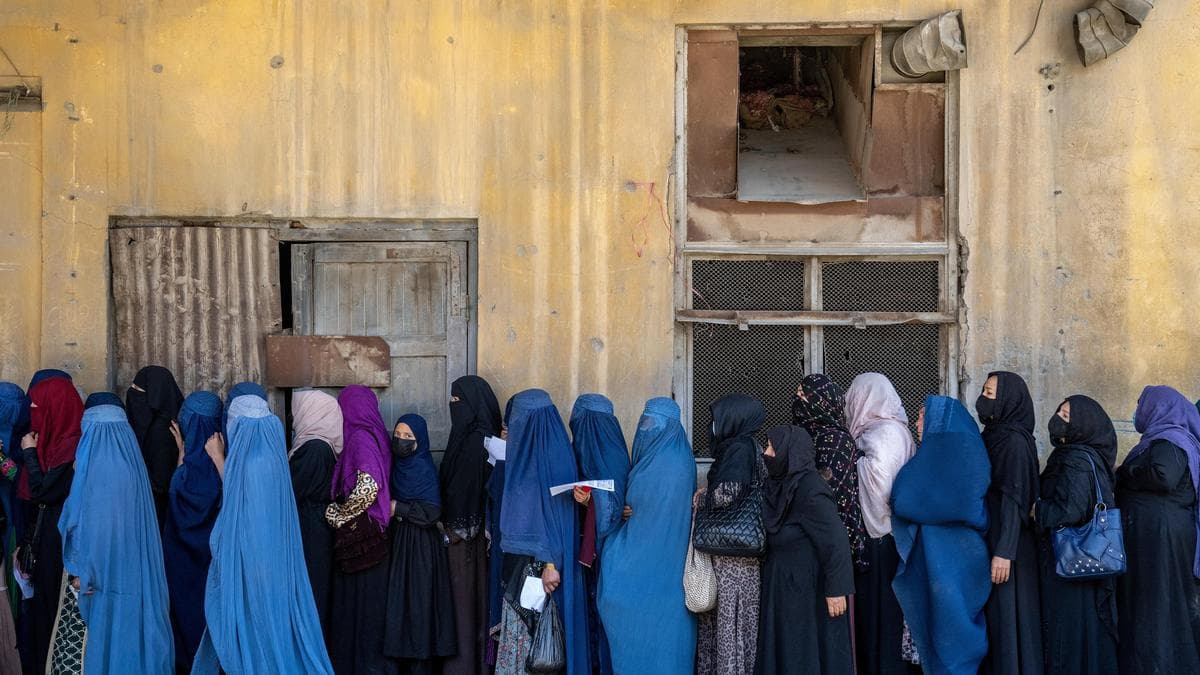
Afghanistan's humanitarian crisis deepens due to aid cuts, economic woes, droughts, earthquakes, and refugee influx.
Summary
Afghanistan is facing a severe humanitarian crisis exacerbated by significant aid cuts. The situation is further worsened by a struggling economy, recurrent droughts, and the impact of two deadly earthquakes. Additionally, a mass influx of Afghan refugees expelled from neighboring countries like Iran and Pakistan is deepening the crisis, making it a critical issue for international relations and disaster management studies.
Key Points
- 1Afghanistan is currently experiencing a deepening humanitarian crisis.
- 2The crisis is significantly worsened by the slashing of international aid.
- 3Contributing factors include a struggling economy and recurrent droughts across the country.
- 4Afghanistan has also been battered by two deadly earthquakes.
- 5A mass influx of Afghan refugees expelled from countries such as Iran and Pakistan is adding to the humanitarian challenges.
In-Depth Analysis
Afghanistan is currently grappling with a severe and deepening humanitarian crisis, a situation exacerbated by a confluence of political, economic, and environmental factors. To truly understand its gravity, we must delve into its complex background, the key actors involved, and its profound implications, especially for India.
**Background Context and What Happened:**
Afghanistan's modern history is one of perpetual conflict and instability. The Soviet invasion in 1979, the subsequent rise of the Mujahideen, the civil war, and the first Taliban regime (1996-2001) laid the groundwork for persistent challenges. The U.S.-led invasion in 2001, following the 9/11 attacks, aimed to dismantle Al-Qaeda and remove the Taliban from power, establishing a Western-backed government. However, the abrupt withdrawal of U.S. and NATO forces in August 2021 led to the swift collapse of the Afghan government and the return of the Taliban to power. This political upheaval immediately triggered a cessation of significant international aid, the freezing of Afghan central bank assets (estimated at over $9 billion, largely held in the U.S.), and the imposition of sanctions. These measures, intended to pressure the Taliban regime, have inadvertently crippled an already fragile economy heavily reliant on foreign assistance for two decades.
The current crisis is multi-faceted. Economically, the country's GDP has plummeted, unemployment is rampant, and inflation has soared. The banking system is on the verge of collapse, making it difficult for even humanitarian organizations to transfer funds. Environmentally, Afghanistan has been hit by recurrent droughts, devastating agricultural output and livestock, a lifeline for a majority of the rural population. Adding to this misery, the nation has endured two deadly earthquakes, notably the June 2022 Paktika earthquake and the series of quakes in Herat in October 2023, which claimed thousands of lives and destroyed crucial infrastructure. Compounding these internal woes is the mass influx of Afghan refugees, forcibly expelled from neighbouring countries like Pakistan and Iran, adding immense pressure on already scarce resources and services within Afghanistan. The United Nations Office for the Coordination of Humanitarian Affairs (OCHA) and the World Food Programme (WFP) have repeatedly warned that millions of Afghans face acute food insecurity, with many on the brink of famine.
**Key Stakeholders Involved:**
* **The De Facto Taliban Regime:** As the ruling authority, they are responsible for governance, security, and the welfare of their citizens. However, their international isolation, lack of diplomatic recognition, and restrictive policies (especially concerning women's rights) limit their ability to secure aid and investment.
* **The Afghan People:** The primary victims, enduring hunger, displacement, and a lack of basic services. Their resilience is tested daily.
* **United Nations Agencies (UNAMA, WFP, UNHCR, OCHA):** These organizations are at the forefront of providing humanitarian assistance, coordinating relief efforts, and advocating for the Afghan people. They often navigate complex political landscapes to deliver aid.
* **International NGOs (e.g., Doctors Without Borders, ICRC):** Crucial in delivering direct aid, healthcare, and support services on the ground.
* **Donor Countries (e.g., USA, European Union, UK, Gulf States):** Major providers of humanitarian aid, but also the entities that imposed sanctions and froze assets, creating a dilemma between humanitarian concerns and political leverage.
* **Regional Powers (Pakistan, Iran, Central Asian Republics, China, Russia):** These nations have direct geopolitical and security interests. Pakistan and Iran are grappling with the refugee crisis, while China and Russia eye economic opportunities and regional stability.
**Why This Matters for India:**
Afghanistan's stability is intrinsically linked to India's regional security and strategic interests. India has historically been a significant development partner, investing billions in infrastructure projects like the Salma Dam (Afghan-India Friendship Dam) and the Afghan Parliament building. The current crisis poses several concerns for India:
* **Security Implications:** A destabilized Afghanistan can become a breeding ground for radical groups and terrorism, potentially spilling over into India and the wider region. This necessitates heightened vigilance along India's borders and increased intelligence sharing.
* **Geopolitical Influence:** India's 'Neighbourhood First' policy and its 'Connect Central Asia' initiative are directly impacted. Instability in Afghanistan disrupts trade routes (like the Chabahar Port in Iran, which India developed to bypass Pakistan for access to Afghanistan and Central Asia) and undermines India's efforts to foster regional connectivity and economic cooperation. India also competes with China and Pakistan for influence in the region.
* **Humanitarian Concerns:** While not directly facing a large influx of Afghan refugees, India, as a responsible global actor, is concerned about the humanitarian catastrophe. India has sent humanitarian aid, including wheat and medicines, to Afghanistan, demonstrating its commitment to the Afghan people, distinct from its stance on the Taliban regime.
* **Economic Impact:** Potential disruption of regional trade, impact on Indian investments in Afghanistan, and overall regional economic slowdown.
**Future Implications:**
The future of Afghanistan remains precarious. Without a significant shift in international policy regarding aid and sanctions, coupled with the Taliban's willingness to form an inclusive government and respect human rights, the humanitarian crisis will likely deepen. This could lead to further mass migration, increased regional instability, and a potential resurgence of extremist elements. The international community faces a delicate balancing act: how to provide life-saving aid without legitimizing the Taliban regime. India will need to continue its pragmatic approach, engaging with regional partners and international bodies to ensure stability and humanitarian assistance, while safeguarding its own strategic interests. The long-term solution requires a political settlement, economic recovery, and a concerted effort to address the root causes of instability.
**Related Constitutional Articles, Acts, or Policies (for India):**
While no specific Indian constitutional article directly addresses the Afghan crisis, India's foreign policy framework provides the basis for its response:
* **Article 51 of the Indian Constitution:** Directs the State to endeavor to promote international peace and security, maintain just and honorable relations between nations, foster respect for international law, and encourage settlement of international disputes by arbitration. This article underpins India's humanitarian and diplomatic efforts.
* **'Neighbourhood First' Policy:** This foreign policy doctrine prioritizes maintaining friendly and cooperative relations with India's immediate neighbours, including Afghanistan, despite the complexities.
* **Disaster Management Act, 2005:** While primarily for domestic disaster response, its principles of coordinated action and resource mobilization inform India's approach to international disaster relief and humanitarian aid, often channeled through MEA.
* **India's Refugee Policy:** Although India is not a signatory to the 1951 Refugee Convention or its 1967 Protocol, it has a long-standing tradition of offering asylum on a case-by-case basis and adheres to the principle of non-refoulement, often providing humanitarian assistance to refugees, including Afghans.
Exam Tips
**GS Paper 2 (International Relations) & GS Paper 3 (Disaster Management, Economy):** This topic is crucial for understanding India's foreign policy, regional geopolitics, humanitarian crises, and the economic impact of global events. Focus on India's role, challenges to regional stability, and the functioning of international organizations.
**Related Topics to Study:** Link this crisis with India's 'Neighbourhood First' policy, the significance of Chabahar Port, the role of UN agencies (WFP, UNHCR, OCHA), international refugee law and conventions, and the geopolitics of Central Asia and the Middle East.
**Common Question Patterns:** Expect questions on the factors contributing to the Afghan humanitarian crisis, its implications for India's security and regional influence, the dilemma faced by the international community regarding aid and sanctions, and India's humanitarian diplomacy. Prelims might ask about key geographical locations, specific UN bodies, or major events like the earthquakes.
Related Topics to Study
Full Article
The slashing in aid has come as Afghanistan is battered by a struggling economy, recurrent droughts, two deadly earthquakes and the mass influx of Afghan refugees expelled from countries such as Iran and Pakistan