


Relevant for Exams
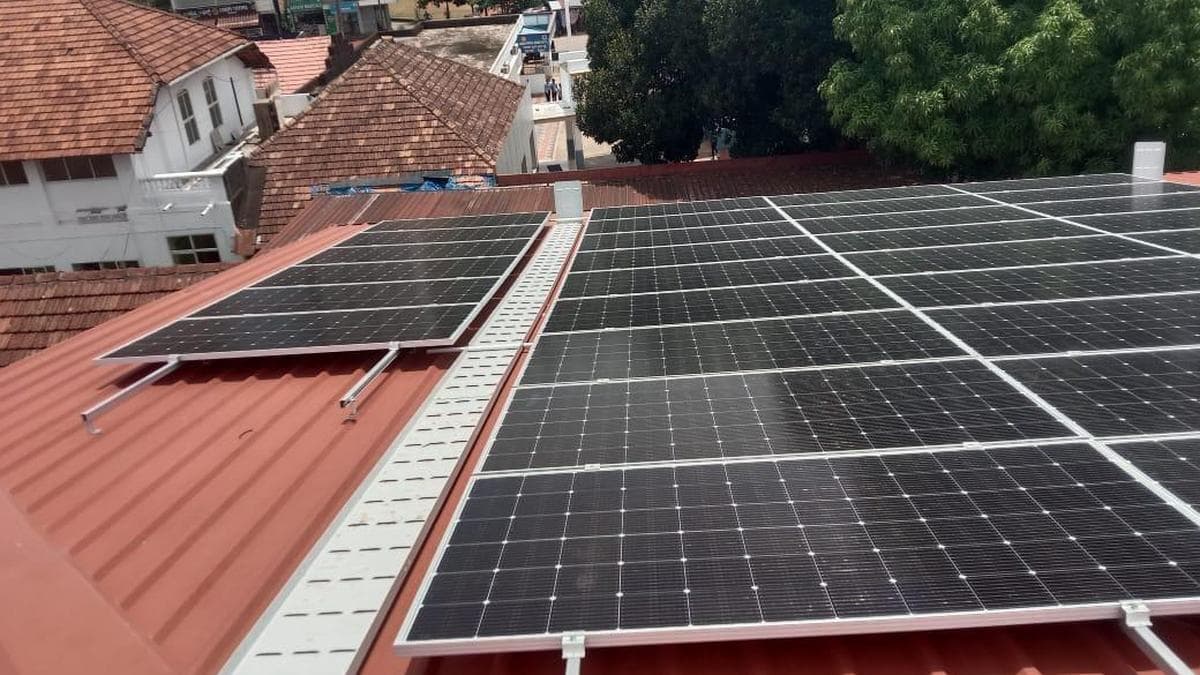
Rajasthan expedites rooftop solar under Revamped Distribution Scheme to cut T&D losses and boost power quality.
Summary
Rajasthan is expediting the installation of rooftop solar power plants under the national Revamped Distribution Sector Scheme. This initiative aims to significantly reduce transmission and distribution losses while simultaneously improving the quality of power supply across the state. For competitive exams, this highlights government focus on renewable energy, energy efficiency, and the implementation of key national schemes at the state level, making it relevant for questions on energy policy and infrastructure.
Key Points
- 1Rooftop solar power plant installations are being expedited in Rajasthan.
- 2The initiative is being carried out under the 'Revamped Distribution Sector Scheme'.
- 3A primary objective of the exercise is to reduce transmission and distribution (T&D) losses.
- 4The scheme also aims to improve the overall quality of power supply.
- 5Installation of meters on transformers is also part of this exercise to aid in loss reduction.
In-Depth Analysis
India's energy sector is at a critical juncture, balancing the imperatives of rapid economic growth, energy security, and environmental sustainability. The news regarding Rajasthan expediting rooftop solar power plant installations under the Revamped Distribution Sector Scheme (RDSS) encapsulates several key facets of this national transformation. This initiative is not merely about installing solar panels; it's a strategic move to address deep-rooted challenges within India's power distribution system and accelerate its transition towards a greener economy.
The background to this initiative lies in India's chronic power sector issues. Despite significant progress in generation capacity, the distribution sector, primarily managed by State Electricity Boards (SEBs) or Distribution Companies (DISCOMs), has been a weak link. Historically, high Aggregate Technical & Commercial (AT&C) losses, which combine technical losses (due to inefficient infrastructure) and commercial losses (due to theft, billing inefficiencies), have plagued DISCOMs, leading to massive financial distress. These losses often exceed 15-20% nationally, making DISCOMs unable to recover costs, provide quality supply, or invest in infrastructure upgrades. This precarious financial health necessitates government interventions, often through bailouts, creating a vicious cycle. Additionally, India's commitment under the Paris Agreement to achieve 50% of its installed electricity capacity from non-fossil fuel sources by 2030 and reach Net-Zero by 2070 demands a rapid shift towards renewable energy, with solar being a frontrunner due to its abundance and decreasing costs.
What happened in Rajasthan is a state-level implementation of a crucial national scheme. The 'Revamped Distribution Sector Scheme' (RDSS), launched in July 2021 by the Ministry of Power, is a reform-based and result-linked scheme with an outlay of over ₹3 lakh crore. Its primary objectives are to improve the operational efficiencies and financial sustainability of DISCOMs by providing financial assistance for smart metering, feeder segregation, and infrastructure upgrades aimed at reducing AT&C losses to pan-India levels of 12-15% by 2024-25. The scheme also promotes private sector participation and incentivizes DISCOMs for meeting performance benchmarks. Rajasthan, by expediting rooftop solar installations and meter installations on transformers, is directly contributing to RDSS goals. Rooftop solar offers decentralized generation, reducing T&D losses by generating power close to the consumption point, easing grid congestion, and empowering consumers to become prosumers.
Key stakeholders involved include the **Central Government**, primarily the Ministry of Power and the Ministry of New and Renewable Energy (MNRE), which formulate policies and provide financial backing for schemes like RDSS and various solar programs (e.g., PM-KUSUM, National Solar Mission). The **State Government of Rajasthan** and its **DISCOMs** (like Jaipur Vidyut Vitran Nigam Ltd., Ajmer Vidyut Vitran Nigam Ltd., Jodhpur Vidyut Vitran Nigam Ltd.) are crucial implementers, responsible for ground-level execution, subsidy disbursement, and grid integration. **Consumers** are direct beneficiaries and participants, adopting rooftop solar for economic and environmental reasons. **Solar developers and manufacturers** form the industrial backbone, driving innovation and installation capacity. International bodies and financial institutions also play a role through funding and technical assistance for India's renewable energy transition.
This initiative matters immensely for India. Economically, it aims to improve the financial health of DISCOMs, reducing the burden on state exchequers and allowing for better investment in infrastructure. Reduced T&D losses translate to more available power without increasing generation, enhancing energy efficiency. Environmentally, it's a direct step towards achieving India's ambitious climate targets, reducing carbon emissions, and combating air pollution. Socially, reliable and affordable power improves quality of life, supports industries, and creates green jobs. This aligns with broader themes of sustainable development, energy independence, and 'Make in India' for solar components.
The historical context is rich, with previous attempts at power sector reforms like the Accelerated Power Development and Reforms Programme (APDRP) in 2002, the Restructured APDRP (R-APDRP) in 2008, and the Ujwal DISCOM Assurance Yojana (UDAY) in 2015. While UDAY provided a financial turnaround package, RDSS focuses more on operational improvements and technology adoption. The National Solar Mission, launched in 2010 (as Jawaharlal Nehru National Solar Mission), set ambitious targets for solar capacity, including 40 GW from rooftop solar by 2022, which Rajasthan's efforts directly support.
Constitutionally, electricity falls under the **Concurrent List (Entry 38 of the Seventh Schedule)**, allowing both the Union and State governments to legislate on it. This framework enables central schemes like RDSS to be implemented by states while allowing states to tailor policies to their specific needs. The **Electricity Act, 2003**, provides the overarching legal framework for generation, transmission, distribution, trading, and use of electricity, emphasizing competition, consumer protection, and rationalization of tariffs. Rooftop solar policies are often guided by state-specific regulations derived from this Act.
The future implications are significant. Continued success in RDSS, coupled with widespread rooftop solar adoption, can lead to a more resilient, decentralized, and cleaner energy grid. It will necessitate advancements in smart grid technologies, energy storage solutions (batteries), and demand-side management to handle the intermittency of renewable energy. This also sets the stage for India to explore emerging technologies like green hydrogen and further integrate renewable energy into its industrial and transport sectors, solidifying its position as a global leader in sustainable energy transition. The proactive role of states like Rajasthan is crucial for the national success of these ambitious energy goals.
Exam Tips
This topic falls under GS Paper III (Economy, Infrastructure, Energy) for UPSC Civil Services Exam. For State PSCs, SSC, Banking, and Railways, it's relevant for General Awareness/Current Affairs sections, specifically on Government Schemes, Energy Sector, and Renewable Energy.
When studying, connect the 'Revamped Distribution Sector Scheme' (RDSS) with previous power sector reform schemes like UDAY (Ujwal DISCOM Assurance Yojana), R-APDRP, and the Electricity Act, 2003. Understand their objectives, successes, and failures to draw a comparative analysis.
Pay attention to India's renewable energy targets (e.g., 50% non-fossil fuel capacity by 2030, Net-Zero by 2070) and the role of specific initiatives like rooftop solar in achieving these goals. Questions often involve direct facts about targets or the contribution of different energy sources.
Common question patterns include: 'What are the main objectives of the RDSS scheme?', 'Discuss the challenges faced by DISCOMs in India and how government schemes address them.', 'What are the benefits of rooftop solar for consumers and the power grid?', or 'Relate India's climate commitments to its domestic energy policies.'
Understand the concept of Aggregate Technical & Commercial (AT&C) losses, why they are high in India, and how schemes like RDSS aim to reduce them through measures like smart metering and infrastructure upgrades.
Related Topics to Study
Full Article
The exercise, carried out under the revamped distribution sector scheme, along with installation of meters on transformers, is aimed at reducing transmission and distribution losses and improve power supply quality.