


Relevant for Exams
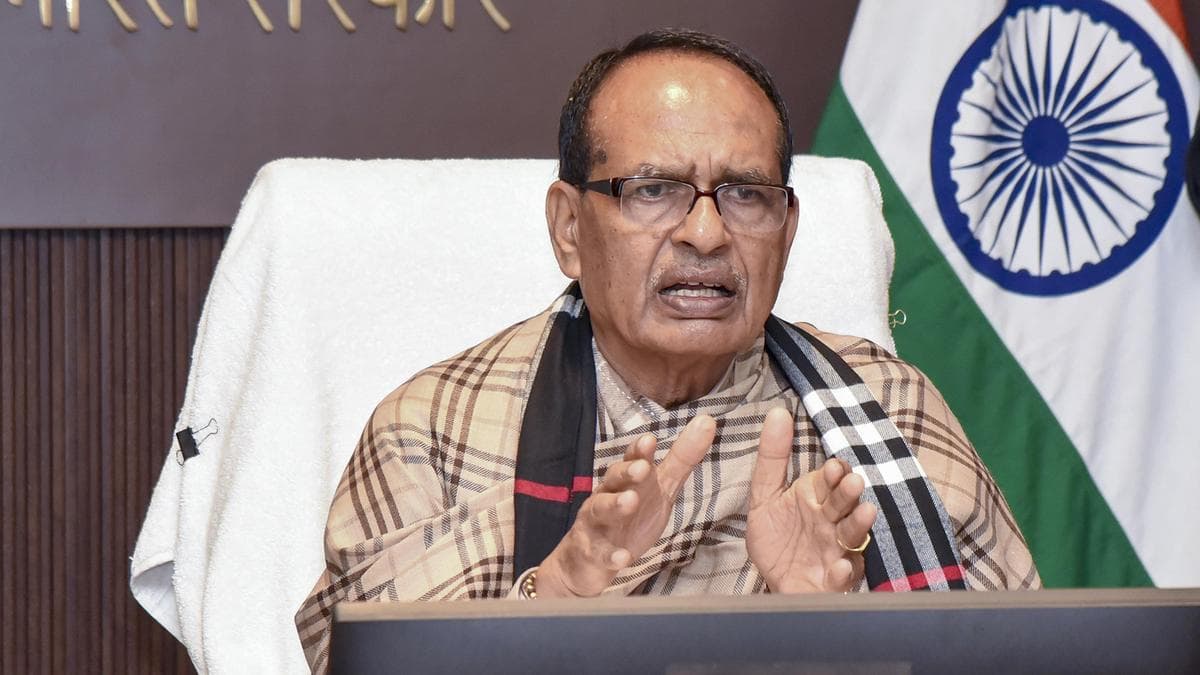
Agriculture Minister Chouhan criticizes Congress over MGNREGA, alleging budget cuts and frozen wages.
Summary
Union Agriculture Minister Chouhan criticized the Congress party, alleging they are 'shedding crocodile tears' over the rural jobs scheme, MGNREGA. He accused Congress of using Mahatma Gandhi's name for electoral gains while simultaneously reducing the scheme's budget and freezing wages. This highlights the political debate surrounding the implementation and funding of key social welfare programs, crucial for understanding governance and economic policy for competitive exams.
Key Points
- 1The statement was made by Union Agriculture Minister Chouhan.
- 2The criticism is directed towards the Congress party regarding the rural jobs scheme.
- 3The scheme in question is the Mahatma Gandhi National Rural Employment Guarantee Act (MGNREGA).
- 4Chouhan alleged that Congress reduced the budget for MGNREGA and froze wages.
- 5It was also alleged that Congress used Mahatma Gandhi's name for electoral gains related to the scheme.
In-Depth Analysis
The Mahatma Gandhi National Rural Employment Guarantee Act (MGNREGA), often hailed as a landmark legislation, guarantees the 'right to work' to rural households in India. Enacted in 2005 under the United Progressive Alliance (UPA) government, it is a demand-driven scheme that aims to provide 100 days of wage employment in a financial year to adult members of any rural household willing to do unskilled manual work. This legal guarantee for employment is a significant step towards poverty alleviation, rural development, and strengthening the livelihoods of the most vulnerable sections of society. It mandates a statutory minimum wage and ensures timely payment, with one-third of the beneficiaries required to be women.
The recent statement by Union Agriculture Minister Shivraj Singh Chouhan, accusing the Congress party of 'shedding crocodile tears' over MGNREGA, underscores the scheme's enduring political significance and its role as a battleground for ideological and policy debates. Chouhan alleged that the Congress, despite using Mahatma Gandhi's name for electoral gains, reduced the scheme's budget and froze wages during its tenure. This accusation highlights a recurring theme in Indian politics: the credit-claiming and blame-game over welfare schemes, particularly those with a broad reach and direct impact on the electorate.
Key stakeholders in this discourse include the **Union Government** and its various ministries (Rural Development, Finance), which are responsible for policy formulation, budget allocation, and overall oversight of MGNREGA. The **Opposition Parties**, like the Congress, play a crucial role in scrutinizing the government's implementation, demanding accountability, and proposing alternative approaches. **State Governments** are pivotal implementers, managing the on-ground execution, fund disbursement, and grievance redressal. Most importantly, **rural workers and beneficiaries** are the ultimate stakeholders, whose lives and economic security are directly impacted by the scheme's effectiveness. Civil society organizations and gram panchayats also play important roles in monitoring and facilitating the scheme.
MGNREGA's significance for India cannot be overstated. Economically, it acts as a crucial safety net, particularly during periods of economic distress, natural calamities, or pandemics (like COVID-19, when it saw a surge in demand). It injects purchasing power into the rural economy, stimulates demand, and helps prevent distress migration to urban areas. Socially, it promotes gender equality by ensuring one-third participation of women, contributing to their economic empowerment. It also facilitates asset creation in rural areas, such as water conservation structures, rural roads, and irrigation facilities, which are vital for sustainable development. Politically, MGNREGA is a powerful tool, capable of influencing electoral outcomes due to its direct impact on millions of rural households. Debates over its funding, implementation, and efficacy often become central to political campaigns, reflecting differing approaches to welfare economics and governance.
Historically, MGNREGA emerged from a long struggle for the right to work and social justice. While the 'Right to Work' is enshrined in the **Directive Principles of State Policy (DPSP)** under **Article 41** of the Indian Constitution (stating that the State shall, within the limits of its economic capacity and development, make effective provision for securing the right to work, to education and to public assistance in cases of unemployment, old age, sickness and disablement), MGNREGA transformed this aspirational principle into a legal entitlement. It is also implicitly linked to the **Right to Life (Article 21)**, as secure livelihood is fundamental to a life of dignity. The **MGNREGA Act, 2005**, itself is a comprehensive legislation that outlines the scheme's objectives, implementation mechanisms, and features like social audits, which promote transparency and accountability.
Future implications of such political statements and policy debates are manifold. They can lead to renewed scrutiny of the scheme's budget allocations, wage revisions, and implementation challenges. There is a constant need to balance fiscal prudence with the scheme's social objectives. Discussions around MGNREGA often highlight broader themes of fiscal federalism, as the central government bears a significant portion of the cost, but states are responsible for implementation. Ensuring timely wage payments, curbing corruption, and strengthening the social audit mechanism remain critical for the scheme's long-term success. The scheme's evolution will continue to reflect India's commitment to inclusive growth and social welfare, making it a perennial subject of debate and policy refinement.
Exam Tips
This topic falls under the 'Indian Economy' and 'Social Justice' sections of the UPSC Civil Services Exam syllabus (GS Paper III and II respectively). For SSC, Banking, Railway, and State PSCs, it's relevant under 'Indian Economy' and 'Government Schemes'.
Study the key features of MGNREGA: its objectives, eligibility criteria, guaranteed days of employment, wage payment mechanisms, role of Gram Panchayats, social audit provisions, and the 1/3rd reservation for women. Understand the difference between demand-driven and supply-driven schemes.
Common question patterns include direct questions on the MGNREGA Act (year, provisions), its impact on rural poverty and women empowerment, challenges in implementation (wage delays, corruption), and its constitutional backing (DPSP - Article 41, Right to Life - Article 21). Mains questions often require a critical analysis of its effectiveness and suggestions for reform.
Related Topics to Study
Full Article
It used Mahatma Gandhi’s name for electoral gains, reduced the budget for MGNREGA and froze wages, alleges Agriculture Minister