


Relevant for Exams
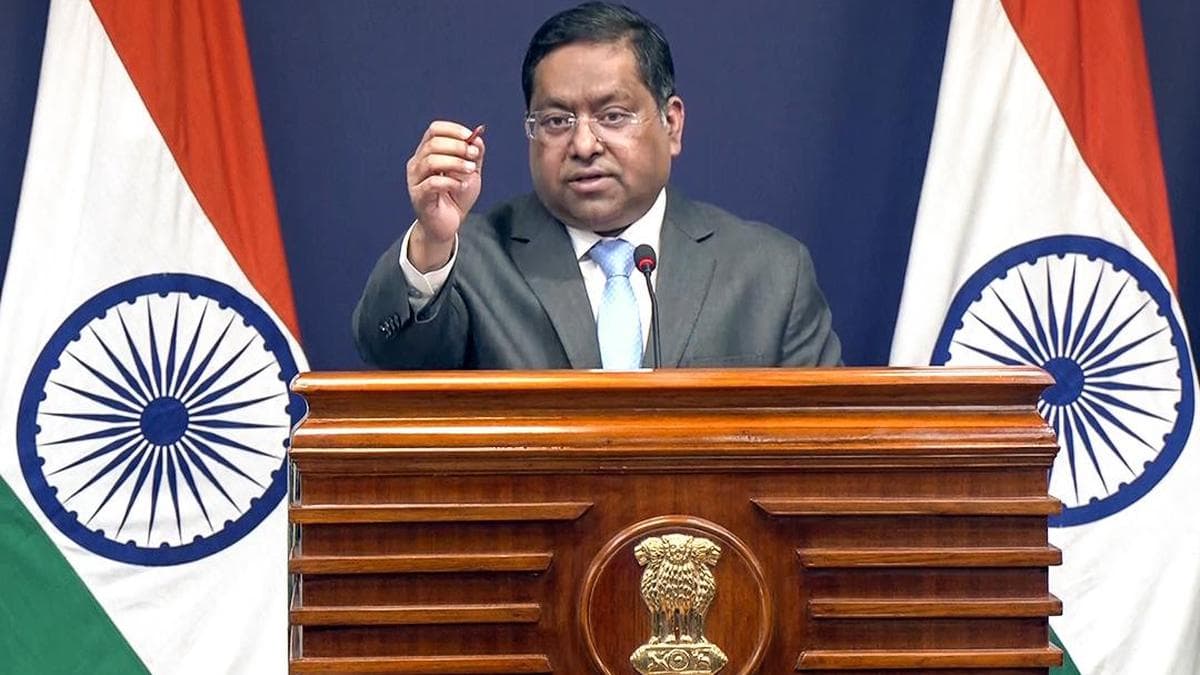
MEA reiterates commitment to bringing back fugitives like Lalit Modi and Vijay Mallya.
Summary
The Ministry of External Affairs (MEA) has reaffirmed India's commitment to repatriating fugitives who have fled the country. This assertion came shortly after Lalit Modi, in a social media video, jested about his and Vijay Mallya's status as India's "two biggest fugitives." The statement underscores the government's ongoing efforts to tackle economic offenders and uphold the rule of law, which is a recurring theme in competitive exams related to governance and international relations.
Key Points
- 1The assertion was made by the Ministry of External Affairs (MEA).
- 2The commitment is focused on bringing back fugitives who have fled India.
- 3Specific individuals mentioned in the context are Lalit Modi and Vijay Mallya.
- 4The MEA's statement followed a social media video by Lalit Modi.
- 5Lalit Modi's video joked about his and Mallya’s status as India’s "two biggest fugitives."
In-Depth Analysis
The recent assertion by the Ministry of External Affairs (MEA) reaffirming India's commitment to repatriating fugitives who have fled the country underscores a persistent and significant challenge for Indian governance and its international relations. This statement, prompted by a rather flippant social media video by Lalit Modi, serves as a stark reminder of the government's ongoing efforts to tackle economic offenders and uphold the rule of law.
**Background Context and What Happened:**
India has, for several years, grappled with the issue of high-profile individuals, often involved in significant financial irregularities or scams, absconding from the country to evade legal proceedings. These 'fugitive economic offenders' range from industrialists and business magnates to sports administrators, leaving behind massive debts and defrauded public funds, primarily impacting public sector banks. The cases of Vijay Mallya, accused of defaulting on loans worth over ₹9,000 crore, and Lalit Modi, facing charges related to money laundering in the Indian Premier League (IPL) scandal, are emblematic of this challenge. Both individuals have been residing abroad, primarily in the United Kingdom, making their extradition a complex diplomatic and legal battle. The MEA's recent statement, following Lalit Modi's jocular reference to his and Mallya's fugitive status, was a necessary reiteration of India's unwavering resolve to bring such individuals to justice, demonstrating that their actions and subsequent flight have not been forgotten.
**Key Stakeholders Involved:**
Several entities play crucial roles in this complex process. The **Ministry of External Affairs (MEA)** is central, as it handles all diplomatic channels and formal extradition requests with foreign governments, negotiating treaties and protocols. The **Ministry of Home Affairs (MHA)** is the nodal ministry for extradition matters within India, coordinating with various investigating agencies. **Investigating agencies** like the Enforcement Directorate (ED), Central Bureau of Investigation (CBI), and Serious Fraud Investigation Office (SFIO) are responsible for gathering evidence, filing charges, and initiating the legal process that leads to an extradition request. The **Judiciary** in both India and the host countries plays a critical role, as extradition is a judicial process requiring courts to validate the requests based on the laws of both nations. Finally, the **fugitives themselves** and their legal teams are key stakeholders, often employing extensive legal strategies to delay or prevent their extradition. Foreign governments, particularly those of the UK and Caribbean nations where many fugitives seek refuge, are also significant stakeholders, as their cooperation is essential for successful repatriation.
**Why This Matters for India:**
This issue holds profound significance for India across multiple dimensions. Economically, the repatriation of fugitives is crucial for the recovery of defrauded funds, which can run into thousands of crores, directly impacting the health of India's banking sector and public finances. It also sends a strong message to potential investors about the robustness of India's legal and financial systems. Politically, the government's commitment to bringing back fugitives is a matter of national prestige and a fulfillment of its promise to combat corruption and ensure accountability. It reinforces public trust in governance and justice delivery. Socially, it addresses the public's outrage over individuals who exploit the system and escape consequences, thereby upholding the principle of equality before the law. Internationally, successful extraditions enhance India's image as a nation committed to combating financial crime and willing to cooperate with global partners against illicit financial flows.
**Historical Context and Legal Framework:**
The challenge of extraditing criminals is not new, but it has gained significant prominence in recent years. Historically, extradition processes have been cumbersome, often hampered by differing legal systems, political considerations, and the lengthy appeals processes available in host countries. To strengthen its hand, India enacted the **Extradition Act, 1962**, which provides the legal framework for extradition to and from India. A landmark development was the **Fugitive Economic Offenders Act (FEOA), 2018**. This Act empowers the government to confiscate assets of economic offenders who have fled the country to avoid prosecution, even before conviction, and declare them as 'Fugitive Economic Offenders'. This law specifically targets individuals with outstanding arrest warrants for offenses involving ₹100 crore or more. Other relevant legislation includes the **Prevention of Money Laundering Act (PMLA), 2002**, which provides a mechanism to trace, attach, and confiscate proceeds of crime, and India's network of **Mutual Legal Assistance Treaties (MLATs)** with various countries, facilitating cooperation in criminal matters.
**Future Implications:**
India's continued resolve signals a future where economic offenses are met with stringent legal and diplomatic action. The operationalization of the FEOA, 2018, and enhanced international cooperation through MLATs and multilateral forums like the G20 and FATF (Financial Action Task Force) are expected to make it increasingly difficult for economic offenders to evade justice. There's a growing emphasis on real-time intelligence sharing and coordinated international efforts to track and repatriate such individuals. While challenges remain, particularly concerning the complexities of international law and the varying legal interpretations of host nations (e.g., dual criminality, human rights concerns), the consistent political will demonstrated by the Indian government suggests a more proactive and successful approach in the long run. This sustained effort will contribute to a stronger rule of law, greater financial accountability, and a more robust international standing for India.
Exam Tips
This topic falls under GS Paper II (Governance, International Relations) and GS Paper III (Indian Economy, Internal Security) for UPSC. For SSC/State PSC exams, it relates to Current Affairs, Polity, and Economy. Focus on the legal frameworks like the FEO Act, 2018, Extradition Act, 1962, and PMLA, 2002.
Study the roles of various agencies (MEA, ED, CBI) and ministries involved in the extradition process. Understand the difference between extradition and deportation, and the challenges faced in bringing back fugitives. Common question patterns include direct questions on the provisions of the FEO Act or analytical questions on the impact of economic fugitives on India's economy and international image.
Connect this topic with broader themes such as white-collar crime, money laundering, NPAs (Non-Performing Assets) in banks, and international cooperation in combating financial crimes. Prepare for questions that ask about the significance of international treaties and conventions (e.g., UN Convention Against Corruption) in this context.
Pay attention to high-profile cases like Vijay Mallya and Nirav Modi, understanding the specific legal arguments and diplomatic hurdles encountered in their extradition processes. This helps in illustrating answers with concrete examples.
Related Topics to Study
Full Article
The assertion by the Ministry of External Affairs (MEA) came days after Lalit Modi, in a video posted on social media, joked about his and Mallya’s status as the “two biggest fugitives” of India