


Relevant for Exams
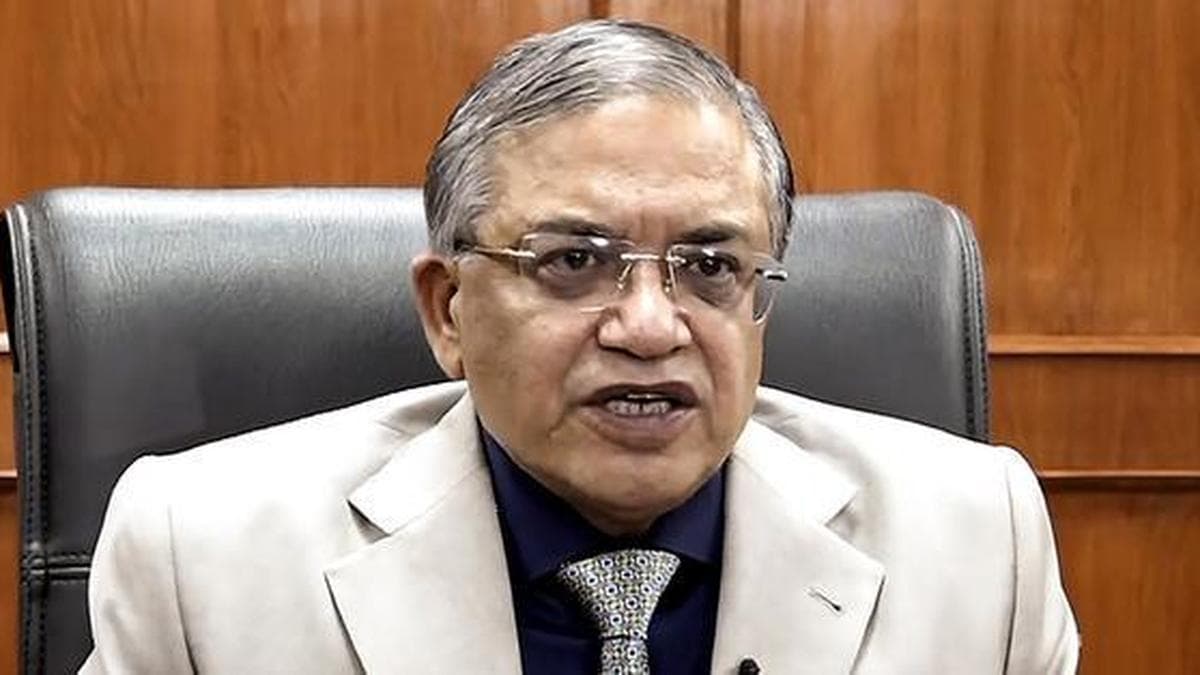
CEC Mr. Kumar on 3-day Odisha tour, calls BLOs 'pillars of election process'.
Summary
Chief Election Commissioner (CEC) Mr. Kumar initiated a 3-day tour of Odisha, during which he highlighted the indispensable role of Booth Level Officers (BLOs) by terming them 'pillars of the election process'. This visit underscores the Election Commission's focus on grassroots electoral administration and preparedness. Such engagements are crucial for ensuring robust democratic processes and are important for competitive exams to understand the functioning of India's electoral system.
Key Points
- 1Chief Election Commissioner (CEC) Mr. Kumar commenced a 3-day tour of Odisha.
- 2CEC Mr. Kumar referred to Booth Level Officers (BLOs) as 'pillars of the election process'.
- 3He will interact with approximately 700 BLOs from Khurda and Cuttack districts.
- 4The interaction with BLOs is scheduled to take place on December 29.
- 5The interaction event with BLOs will be held in Bhubaneswar.
In-Depth Analysis
The Chief Election Commissioner (CEC), Mr. Rajiv Kumar's recent 3-day tour of Odisha, culminating in an interaction with approximately 700 Booth Level Officers (BLOs) from Khurda and Cuttack districts in Bhubaneswar, highlights a crucial aspect of India's democratic machinery: the indispensable role of grassroots functionaries in ensuring free and fair elections. His characterization of BLOs as 'pillars of the election process' is not just a rhetorical flourish but a strategic acknowledgment of their foundational contribution to electoral integrity.
**Background Context and What Happened:**
India, the world's largest democracy, relies heavily on a robust and impartial electoral system overseen by the Election Commission of India (ECI). The ECI, an autonomous constitutional body established under **Article 324** of the Constitution, is tasked with the 'superintendence, direction, and control' of elections to Parliament, State Legislatures, and the offices of President and Vice-President. While the ECI formulates policies and guidelines, their actual implementation on the ground rests with a vast network of officials, primarily the Booth Level Officers (BLOs). BLOs are local government or semi-government officials, typically school teachers or Anganwadi workers, appointed by the District Election Officer for a specific polling area. Their primary responsibilities include maintaining and updating the electoral roll, identifying eligible voters, facilitating voter registration, conducting door-to-door surveys, and ensuring voter awareness. The CEC's visit to Odisha and direct engagement with BLOs underscore the ECI's commitment to strengthening this grassroots network, listening to their challenges, and motivating them, especially in the run-up to significant elections.
**Key Stakeholders Involved:**
Several key stakeholders are central to this event and the broader electoral process. Foremost is the **Election Commission of India (ECI)**, represented by the **Chief Election Commissioner (CEC)**, who guides the entire electoral administration. The **Booth Level Officers (BLOs)** are the most critical ground-level functionaries, acting as the direct interface between the ECI and the electorate. Their efficiency directly impacts the accuracy of electoral rolls and voter facilitation. Other stakeholders include the **State Election Machinery**, comprising the Chief Electoral Officer (CEO) at the state level and District Election Officers (DEOs) at the district level, who supervise the BLOs. Finally, the **voters** themselves are the ultimate beneficiaries, as accurate electoral rolls and smooth polling processes ensure their democratic right to franchise is upheld.
**Significance for India and Historical Context:**
The recognition of BLOs as 'pillars' is profoundly significant for India's democratic health. Accurate and inclusive electoral rolls are the bedrock of free and fair elections. Without them, the entire democratic exercise risks being compromised by disenfranchisement or fraudulent voting. BLOs play a pivotal role in ensuring that no eligible voter is left out and that deceased or shifted voters are removed, thereby maintaining the purity of the electoral process. This focus on grassroots administration gained significant traction with electoral reforms initiated in the late 20th century, particularly under the leadership of former CECs like T.N. Seshan, who emphasized stringent implementation of electoral laws. The **Representation of the People Act, 1950**, provides the legal framework for the preparation and revision of electoral rolls, while the **Representation of the People Act, 1951**, governs the conduct of elections. The continuous process of electoral roll revision, often driven by BLOs, is vital for adapting to demographic changes and ensuring the rolls reflect the current electorate. Initiatives like the Systematic Voters' Education and Electoral Participation (SVEEP) program heavily rely on BLOs for effective outreach and voter awareness, especially among first-time voters, women, and marginalized communities.
**Future Implications:**
The CEC's emphasis on BLOs suggests a future direction focused on strengthening the human element of electoral administration. This could lead to enhanced training, better resources, and improved incentives for BLOs, recognizing their critical, often challenging, work. The ECI has already introduced technological aids like the BLO App for digital electoral roll management, which can be further integrated and optimized. A motivated and well-equipped BLO force will contribute to more accurate and updated electoral rolls, higher voter turnout, and greater public trust in the electoral system. This grassroots strengthening is crucial for tackling challenges like urban apathy, misinformation, and the inclusion of vulnerable groups, thereby reinforcing the foundational principles of India's vibrant democracy. It underpins the nation's commitment to democratic governance and continuous electoral reforms, ensuring that the voice of every citizen is counted fairly and transparently.
Exam Tips
This topic falls under the 'Indian Polity and Governance' section of the UPSC Civil Services Exam (GS-II) and State PSCs. For SSC, Banking, Railway, and Defence exams, it's relevant for 'General Awareness' or 'General Studies'.
Prepare for factual questions on the Election Commission of India (composition, functions, constitutional articles like Article 324), the roles and responsibilities of the Chief Election Commissioner and Booth Level Officers (BLOs), and key electoral reforms. Understand the difference between the Representation of the People Act, 1950, and 1951.
Be ready for analytical questions in Mains exams (UPSC/State PSCs) regarding the challenges to free and fair elections, the significance of grassroots administration, the role of technology in elections, and the importance of voter education programs like SVEEP. Understand how the ECI ensures electoral integrity.
Related Topics to Study
Full Article
Before concluding his visit, Mr. Kumar will interact with around 700 BLOs from Khurda and Cuttack districts on December 29 in Bhubaneswar