


Relevant for Exams
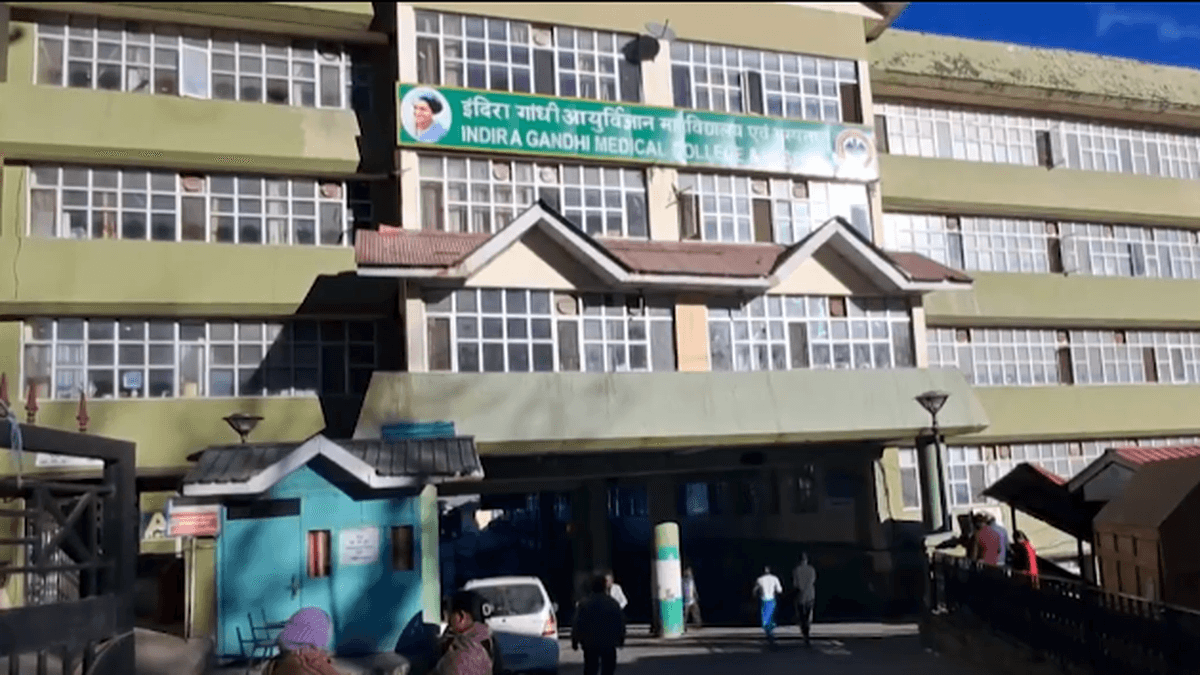
IGMC Shimla doctors on indefinite strike, demanding Dr. Narula's reinstatement; Himachal medical services hit.
Summary
Doctors at Indira Gandhi Medical College (IGMC) Shimla have initiated an indefinite strike, severely impacting medical services across Himachal Pradesh. The strike stems from demands for the reinstatement of Dr. Narula and a transparent, time-bound, and impartial inquiry into a recent incident. This highlights challenges in public healthcare administration and staff relations, relevant for understanding regional governance and healthcare system issues in competitive exams.
Key Points
- 1Doctors at Indira Gandhi Medical College (IGMC) Shimla have launched an indefinite strike.
- 2The primary demand of the striking doctors is the reinstatement of Dr. Narula.
- 3Doctors are also demanding a transparent, time-bound, and impartial inquiry into a specific incident.
- 4The strike has led to medical services being significantly affected across Himachal Pradesh.
- 5The incident triggering the strike occurred at IGMC Shimla, the capital of Himachal Pradesh.
In-Depth Analysis
The indefinite strike by doctors at Indira Gandhi Medical College (IGMC) Shimla, the premier public health institution in Himachal Pradesh, and its subsequent impact on medical services across the state, brings to the forefront critical issues plaguing India's public healthcare system. This incident is not an isolated event but rather a reflection of deeper systemic challenges, including strained doctor-administration relations, concerns over professional safety, and the delicate balance between the rights of healthcare providers and the public's right to health.
**Background Context and What Happened:**
Public healthcare institutions like IGMC Shimla are the backbone of medical services, especially for economically weaker sections and in states with challenging terrains like Himachal Pradesh. These hospitals often bear a disproportionately high patient load with limited resources. The immediate trigger for the strike was a 'brawl' incident at IGMC Shimla, which led to the suspension or adverse action against Dr. Narula. The striking doctors, under the banner of various medical associations, are demanding two key things: the immediate reinstatement of Dr. Narula and a transparent, time-bound, and impartial inquiry into the incident. The indefinite nature of the strike signals a significant breakdown in trust and communication between the medical fraternity and the hospital administration/state government. With doctors withdrawing from duties, essential medical services, including outpatient departments (OPDs), elective surgeries, and even emergency services, are severely affected, putting countless patient lives at risk across the state.
**Key Stakeholders Involved:**
1. **The Doctors/Medical Fraternity:** Represented by various associations, they are the primary actors initiating the strike. Their demands stem from concerns over professional dignity, fair treatment, safety in the workplace, and perceived administrative high-handedness. They advocate for their rights as employees and professionals.
2. **The State Government of Himachal Pradesh/Health Department:** As the ultimate authority responsible for public health, the government is a crucial stakeholder. Their role involves maintaining law and order, ensuring essential services, negotiating with striking doctors, and implementing policies related to healthcare administration. Their ability to resolve the crisis reflects their governance effectiveness.
3. **The Hospital Administration (IGMC Shimla):** The immediate authority managing the hospital, responsible for day-to-day operations, staff management, and initial handling of the incident. Their actions (or inactions) directly contributed to the escalation of the situation.
4. **Patients and the General Public:** These are the ultimate sufferers. Their fundamental right to health, enshrined implicitly under Article 21 of the Constitution, is directly compromised by the disruption of medical services. They rely heavily on public hospitals, and strikes force them to seek expensive private care or go without treatment.
**Significance for India and Broader Themes:**
This incident underscores several critical issues pertinent to India. Firstly, it highlights the persistent strain on India's public healthcare system, which often struggles with inadequate infrastructure, human resource shortages, and frequent administrative disputes. Such strikes exacerbate these vulnerabilities. Secondly, it brings to light the often-contentious relationship between healthcare professionals and hospital administrations/governments. Issues of safety for doctors, particularly after incidents of violence against medical staff, and the demand for fair investigative processes are recurring themes across India. Thirdly, it touches upon the delicate balance between the right to protest (for doctors) and the right to health (for citizens). The invocation of the Essential Services Maintenance Act (ESMA) is often considered in such situations to compel essential service providers back to work, though its application can be controversial. Himachal Pradesh, a state focused on welfare, faces a direct challenge to its commitment to public well-being.
**Historical Context and Constitutional Provisions:**
Doctor strikes are not new to India. From demands for better pay and working conditions to protests against violence and administrative apathy, the medical community has frequently resorted to strikes. These often lead to public outcry and government intervention. From a constitutional perspective, 'Public health and sanitation; hospitals and dispensaries' falls under **Entry 6 of the State List** in the **Seventh Schedule** of the Indian Constitution, placing primary responsibility on state governments. The **National Health Policy 2017** aims to achieve universal access to good quality healthcare services, and incidents like this directly impede its objectives. More critically, the disruption of medical services impacts the **Right to Life and Personal Liberty** guaranteed under **Article 21** of the Constitution, which has been interpreted by the Supreme Court to include the right to health and medical care. While doctors have the right to protest, this right is not absolute, especially when it jeopardizes fundamental rights of others. The government's power to declare services like healthcare as 'essential services' under the **Essential Services Maintenance Act (ESMA)**, 1968, allows it to prohibit strikes in such sectors to ensure public welfare.
**Future Implications:**
The resolution of this strike will set a precedent for future doctor-administration disputes in Himachal Pradesh and potentially other states. There is an urgent need for robust grievance redressal mechanisms within public health institutions to prevent such escalations. The incident calls for a critical review of safety protocols for medical professionals and transparent internal inquiry processes. Failure to address the root causes can lead to recurring disruptions, eroding public trust in government healthcare, and potentially pushing more patients towards an overburdened private sector. Long-term implications include potential brain drain from public sector hospitals if doctors feel their concerns are not addressed, and a general decline in the quality and accessibility of public health services, directly impacting India's human development indicators.
Exam Tips
This topic falls primarily under **Indian Polity and Governance (GS Paper II)**, specifically concerning 'Health' and 'Issues relating to development and management of Social Sector/Services relating to Health'. It also has relevance for **Social Issues (GS Paper I)** and **Current Events (National)**.
When studying, focus on the constitutional provisions related to health (Article 21, State List), government policies like the National Health Policy 2017, and relevant acts like ESMA. Understand the roles and responsibilities of central and state governments in healthcare.
Expect questions on the challenges faced by India's public healthcare system, the ethics of doctor strikes vs. patient rights, and the role of the state in ensuring essential services. Case study-based questions on public health crises are also common in State PSC and UPSC exams.
Related Topics to Study
Full Article
Doctors demand reinstatement of Dr. Narula and a transparent, time-bound and impartial inquiry into the incident