

Relevant for Exams
Swiss Army chief warns of defence gap; Switzerland boosts spending, modernizes military with F-35As.
Summary
Switzerland's Army chief has stated that the nation cannot defend itself from a full-scale attack, prompting a significant increase in defence spending. This strategic shift includes modernizing artillery and ground systems, alongside replacing ageing fighter jets with Lockheed Martin F-35As. This development is crucial for competitive exams as it highlights evolving defence strategies of traditionally neutral nations amidst changing global security dynamics.
Key Points
- 1The Swiss Army chief stated that Switzerland cannot defend itself from a full-scale attack.
- 2Switzerland is increasing its overall defence spending in response to this assessment.
- 3Key modernization efforts include upgrading artillery and ground systems.
- 4The nation is replacing its ageing fighter jets with advanced Lockheed Martin F-35As.
- 5The country undertaking these defence enhancements is Switzerland, known for its historical neutrality.
In-Depth Analysis
Switzerland, a nation historically synonymous with neutrality and peace, has recently made headlines with its Army chief's candid admission that the country cannot defend itself from a full-scale attack. This statement, far from being a sign of weakness, signifies a profound strategic re-evaluation driven by the dramatically shifting global security landscape. For competitive exam aspirants, understanding this development requires delving into its historical context, current implications, and future trajectory.
Switzerland's neutrality is not merely a policy but a deeply ingrained aspect of its national identity, formally established at the Congress of Vienna in 1815. This neutrality has allowed it to remain outside major conflicts, including both World Wars, and to serve as a hub for international diplomacy and humanitarian efforts, hosting institutions like the United Nations European headquarters in Geneva. However, this traditional stance has been increasingly challenged by geopolitical tremors, most notably the Russia-Ukraine conflict that began in February 2022. The war in Ukraine shattered the post-Cold War illusion of enduring peace in Europe, forcing even historically neutral nations to reconsider their defence postures.
The Swiss Army chief's assessment is a direct consequence of this changed reality. It highlights a recognition that modern warfare, with its rapid technological advancements and large-scale aggression, demands robust and well-equipped national defence capabilities, even for countries not anticipating direct engagement. In response, Switzerland is undertaking a significant increase in its defence spending. This financial commitment is being channeled into critical modernization efforts across its armed forces. Key among these are the upgrading of artillery and ground systems, which are vital for territorial defence and maintaining a credible deterrent. Perhaps the most prominent acquisition is the replacement of ageing fighter jets with advanced Lockheed Martin F-35As. This fifth-generation stealth fighter is one of the most sophisticated military aircraft in the world, signifying a leap in Swiss air defence capabilities and a clear move towards interoperability with Western allies' systems, despite maintaining neutrality.
Several key stakeholders are involved in this strategic pivot. The **Swiss Federal Council** (the executive body) and the **Swiss Parliament** are instrumental in approving the increased defence budget and major procurement decisions. The **Swiss Army** leadership, through its assessments and recommendations, provides the operational impetus. **Lockheed Martin**, as the supplier of the F-35A, is a significant external stakeholder, representing the global defence industry. Indirectly, **NATO** and its member states, as well as the **European Union**, are stakeholders, as Switzerland's defence posture contributes to the broader European security architecture, even if not formally allied.
For India, this development holds significant relevance. Firstly, it underscores the **global trend of defence modernization** and the increasing importance of advanced military technology. India, as one of the world's largest defence importers and a nation facing complex geopolitical challenges, continuously evaluates its own defence preparedness. The acquisition of state-of-the-art platforms like the F-35A by a traditionally neutral nation could influence India's own strategic thinking regarding advanced fighter aircraft and overall defence procurement. Secondly, it offers a fascinating case study in the **evolution of neutrality and non-alignment**. India, a founding member of the Non-Aligned Movement (NAM), has historically championed strategic autonomy. Switzerland's pragmatic shift demonstrates how even traditional neutrality must adapt to ensure national security in a volatile world. This can spark discussions in India about balancing strategic autonomy with necessary international partnerships and defence collaborations. Thirdly, it highlights the **economic implications of defence spending**, including its impact on national budgets, industrial growth, and technological advancement. India's "Make in India" initiative in defence aims to boost indigenous production and reduce import dependence, a strategy that gains urgency when observing global defence spending trends.
Historically, Switzerland's neutrality was a cornerstone of its foreign policy, allowing it to mediate conflicts and maintain an independent stance. However, the current shift is a recognition that "armed neutrality" requires substantial investment in modern capabilities to be credible. This isn't a rejection of neutrality but rather an adaptation to ensure its viability in a more dangerous world. While India's constitutional framework doesn't explicitly define 'neutrality' in the Swiss sense, its foreign policy is guided by principles enshrined in **Article 51** of the Directive Principles of State Policy, which calls for the promotion of international peace and security, maintenance of just and honorable relations between nations, fostering respect for international law, and encouraging settlement of international disputes by arbitration. India's defence policy, therefore, aims at self-reliance and maintaining peace through strength, aligning with the broader theme of securing national interests in a complex global environment. Policies like the **Defence Acquisition Procedure (DAP)**, most recently revised in 2020, emphasize indigenous design, development, and manufacturing, reflecting India's commitment to strategic autonomy in defence, similar to how Switzerland is investing in its own capabilities.
The future implications of Switzerland's defence pivot are multifaceted. It could lead to a more robust and integrated European security framework, with even non-NATO members contributing to collective deterrence. It might also prompt other traditionally non-aligned or neutral nations to re-evaluate their defence strategies, potentially leading to increased global defence spending and a more competitive arms market. For Switzerland itself, while the core principle of neutrality is likely to remain, its practical application might evolve, potentially involving closer security cooperation with European partners. This development signals a broader geopolitical reality: in an era of renewed great power competition and regional conflicts, national security is paramount, and even long-standing foreign policy doctrines must be flexible enough to address emerging threats effectively.
Exam Tips
This topic primarily falls under GS Paper II (International Relations, Foreign Policy, Geopolitics) and GS Paper III (Internal Security, Defence Technology, Economy - Defence Sector) for UPSC. For SSC/Banking/Railway exams, focus on factual aspects like the country, specific aircraft (F-35A), and the concept of neutrality.
When studying, connect this to broader themes like the Russia-Ukraine War's impact on global security, the evolution of non-alignment/neutrality, global defence spending trends, and the role of advanced military technology. Compare Switzerland's neutrality with India's non-alignment policy.
Common question patterns include: analyzing the reasons behind a nation's shift in defence policy, discussing the implications of such shifts for global security, comparing the foreign policy approaches of different countries (e.g., India vs. Switzerland on neutrality/non-alignment), and factual questions about specific defence systems or international events.
Pay attention to the concept of 'armed neutrality' and how it differs from passive neutrality. Understand the difference between collective security organizations (like NATO) and individual nation's defence strategies.
Be prepared to discuss the economic aspects of defence modernization, including the cost of advanced weapon systems and the impact on national budgets and industrial policies (e.g., Make in India in Defence).
Related Topics to Study
Full Article
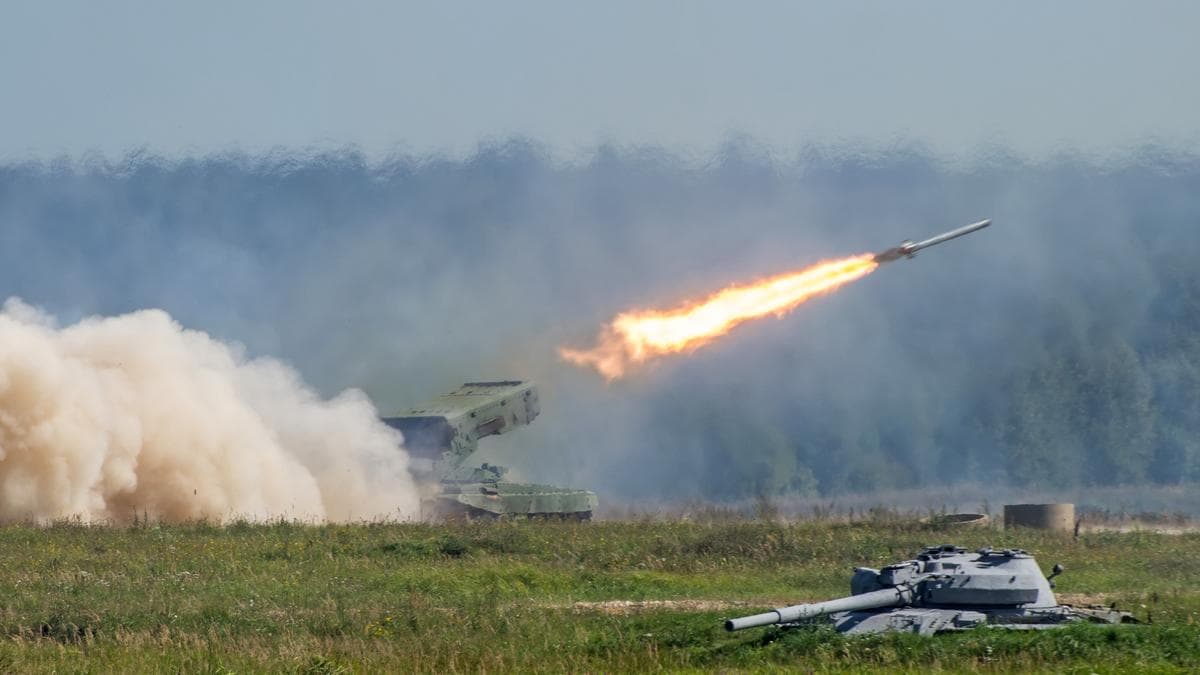
Switzerland is increasing defence spending, modernising artillery and ground systems and replacing ageing fighter jets with Lockheed Martin F-35As