


Relevant for Exams
Alice in Wonderland Syndrome (Todd's Syndrome): Rare neurological condition distorting perception.
Summary
Alice in Wonderland Syndrome (AIWS), also known as Todd's Syndrome, is a rare neurological condition that temporarily distorts a person's perception of size, distance, body image, and time. This information is significant for competitive exams under the General Science or Biology sections, particularly regarding human diseases and disorders. Understanding such rare conditions tests a candidate's breadth of scientific knowledge.
Key Points
- 1Alice in Wonderland Syndrome (AIWS) is a rare neurological condition.
- 2AIWS is also known by the name Todd’s Syndrome.
- 3The syndrome causes temporary distortions in a person's perception.
- 4Specifically, it distorts the perception of size and distance.
- 5It also affects the perception of body image and time.
In-Depth Analysis
Alice in Wonderland Syndrome (AIWS), also known as Todd's Syndrome, is a fascinating and often disorienting neurological condition that temporarily alters how a person perceives the world around them. Imagine waking up to find objects shrinking or growing, distances becoming distorted, or your own body feeling alien – this is the reality for individuals experiencing AIWS. Unlike a psychiatric disorder, AIWS is primarily a perceptual disturbance, often linked to specific neurological events.
**Background and What Happened:**
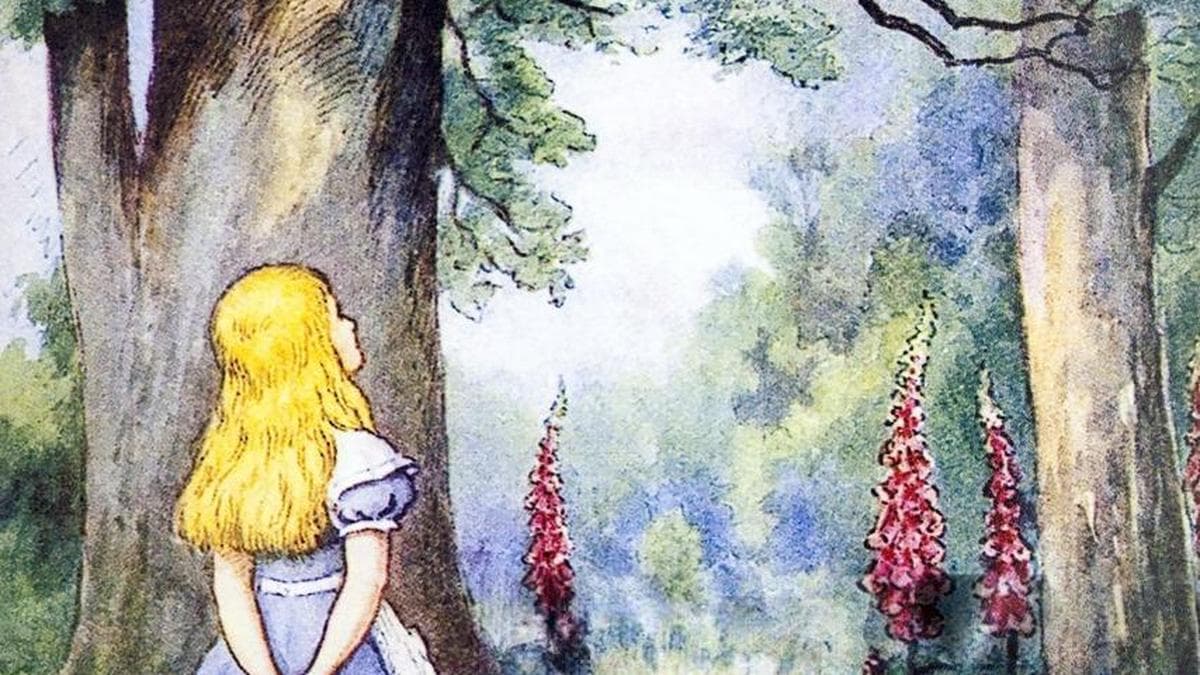
AIWS was first described in 1955 by British psychiatrist Dr. John Todd, who noticed a cluster of symptoms in his patients that resembled the fantastical experiences of Alice in Lewis Carroll's novel, "Alice's Adventures in Wonderland." Carroll himself is believed to have suffered from migraines, a condition strongly associated with AIWS, leading some to speculate that his own experiences might have inspired the book's surreal imagery. The syndrome is characterized by temporary episodes of distorted perception, including micropsia (objects appearing smaller), macropsia (objects appearing larger), pelopsia (objects appearing closer), teleopsia (objects appearing farther away), distorted body image (e.g., feeling one's limbs are growing or shrinking), and altered perception of time. These episodes are typically brief, lasting from minutes to hours, and are often benign, though they can be frightening for the individual experiencing them. While the exact mechanism is not fully understood, it is believed to involve temporary dysfunction in certain areas of the brain responsible for processing sensory information, particularly the visual cortex and parietal lobe. It is frequently associated with migraines, but can also occur with epilepsy, brain lesions, infections (such as Epstein-Barr virus), or certain medications.
**Key Stakeholders Involved:**
The primary stakeholders in understanding and managing AIWS include **patients and their families**, who directly experience the challenges of diagnosis and living with the condition. **Neurologists and medical researchers** are crucial for diagnosing AIWS, differentiating it from other neurological or psychiatric conditions, and advancing our understanding of its causes and potential treatments. **Public health organizations and government bodies**, such as the Ministry of Health and Family Welfare in India and the Indian Council of Medical Research (ICMR), play a vital role in funding research, developing healthcare infrastructure, and formulating policies for rare diseases. Additionally, **patient advocacy groups and non-governmental organizations** are instrumental in raising awareness, providing support networks, and advocating for better diagnostic and treatment facilities.
**Why This Matters for India:**
While AIWS is rare, its implications for India are significant, particularly in the broader context of rare diseases and neurological healthcare. India's vast population and diverse genetic pool mean that rare conditions, though individually uncommon, affect a substantial number of people collectively. **Awareness** is a major challenge; many medical professionals, especially in rural areas, might not be familiar with such a rare syndrome, leading to misdiagnosis or delayed treatment. This underscores the need for continuous medical education and training. Furthermore, the **healthcare infrastructure** in India, while improving, still faces challenges in providing specialized neurological care uniformly across all regions. Research into rare diseases, including AIWS, is essential to understand their prevalence, unique manifestations in the Indian population, and to develop cost-effective diagnostic and management strategies. The **social impact** also matters; experiencing such perceptual distortions can be profoundly unsettling, potentially leading to anxiety or social withdrawal if not properly understood and managed. Addressing rare diseases also aligns with India's commitment to inclusive healthcare and reducing health disparities.
**Historical Context and Future Implications:**
Dr. Todd's description in 1955 marked a significant step in recognizing this unique neurological phenomenon. Prior to this, individuals experiencing these symptoms might have been misdiagnosed or dismissed. The syndrome's connection to Lewis Carroll's work provides a cultural anchor, making it somewhat more recognizable, though still widely unknown in the general public. Looking ahead, future implications involve increased **research** into the neurological underpinnings of AIWS, potentially leading to more targeted therapies beyond symptomatic management. Improved **diagnostic tools** and **awareness campaigns** among both medical professionals and the public could reduce diagnostic delays and psychological distress for patients. Integrating knowledge about rare neurological conditions like AIWS into **national health policies** will be crucial. With advancements in neuroimaging and genetics, there's hope for understanding predisposing factors and developing preventative strategies.
**Related Constitutional Articles, Acts, or Policies:**
While there is no specific constitutional article dedicated to AIWS, its management and implications fall under the broader framework of India's commitment to public health and the well-being of its citizens. **Article 47 of the Directive Principles of State Policy (DPSP)** mandates the State to regard the raising of the level of nutrition and the standard of living of its people and the improvement of public health as among its primary duties. This provides the constitutional basis for government intervention in healthcare, including rare diseases. The **Right to Health**, though not explicitly a fundamental right, has been interpreted by the Supreme Court as an integral part of **Article 21 (Right to Life and Personal Liberty)**. This means citizens have a right to access adequate healthcare, which extends to diagnosis and treatment of conditions like AIWS. Most relevant is the **National Policy for Rare Diseases (NPRD) 2021**, launched by the Ministry of Health and Family Welfare. This policy aims to lower the cost of treatment for rare diseases, promote indigenous research, and provide financial support for patients suffering from specific rare diseases. While AIWS might not be explicitly listed for financial aid, the policy's framework for research, awareness, and healthcare infrastructure development benefits the broader rare disease community, including those with AIWS. Furthermore, if the temporary distortions become severe or frequent enough to significantly impair daily functioning, aspects of the **Rights of Persons with Disabilities Act, 2016**, could become relevant, particularly concerning access to support and non-discrimination, though AIWS is typically a temporary condition and not a permanent disability itself.
Exam Tips
This topic falls under the General Science section, specifically 'Biology' and 'Human Diseases and Disorders' or 'Health and Nutrition' in exams like UPSC CSE (Prelims GS Paper I), SSC CGL, State PSCs, and Railway exams. Focus on understanding the basic definition, symptoms, and potential causes.
When studying, link AIWS with other neurological conditions like migraines and epilepsy, as these are common associations. Also, connect it to the broader topic of 'Rare Diseases in India' and government policies like the National Policy for Rare Diseases (NPRD) 2021.
Common question patterns include: 'What is Alice in Wonderland Syndrome?', 'Who described Todd's Syndrome?', 'Which parts of perception are distorted in AIWS?', 'Which government policy addresses rare diseases in India?' or match-the-following questions with symptoms and conditions. Pay attention to the 'temporary' nature of the distortions.
Understand the difference between neurological conditions and psychological disorders, as AIWS is a perceptual neurological issue, not a psychiatric one. This distinction can be a common trap in multiple-choice questions.
For Mains exams (UPSC, State PSCs), be prepared to discuss the challenges of rare disease management in India, the role of public health policies, and the implications for healthcare infrastructure, using AIWS as an example of a rare neurological condition.
Related Topics to Study
Full Article
Alice in Wonderland Syndrome, also known as Todd’s Syndrome, is a rare neurological condition that causes temporary distortions in how a person perceives size, distance, body image, and time