


Relevant for Exams
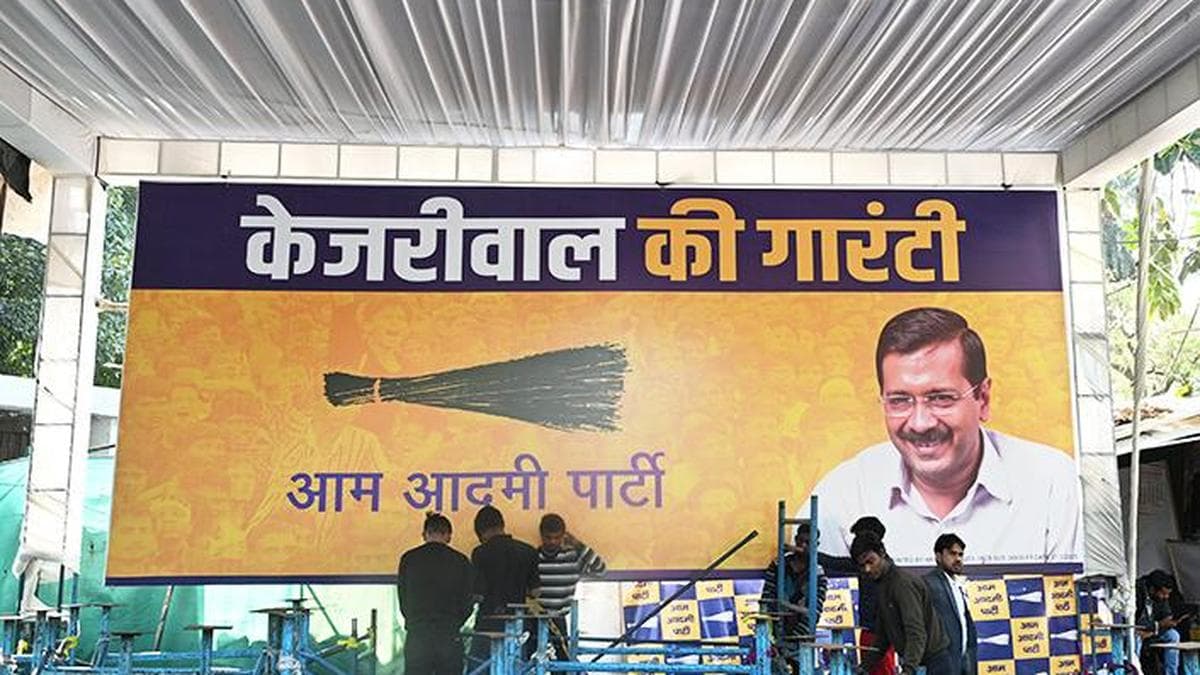
AAP to debut in Bhiwandi-Nizampur civic polls, screens candidates for 30 of 90 seats.
Summary
The Aam Aadmi Party (AAP) has announced its debut in the Bhiwandi-Nizampur Municipal Corporation civic polls in Maharashtra. The party has completed initial candidate screening for 30 out of the total 90 seats, indicating its strategic expansion into local body elections beyond its traditional strongholds. This move highlights AAP's efforts to broaden its political footprint at the grassroots level, which is relevant for understanding evolving party dynamics in Indian politics.
Key Points
- 1Aam Aadmi Party (AAP) is making its debut in the Bhiwandi-Nizampur Municipal Corporation civic polls.
- 2The Bhiwandi-Nizampur Municipal Corporation is located in Maharashtra, near Navi Mumbai.
- 3The civic body has a total of 90 electoral seats.
- 4AAP has completed initial candidate screening for 30 out of the 90 seats.
- 5The announcement was made by the president of the AAP Bhiwandi unit.
In-Depth Analysis
The announcement by the Aam Aadmi Party (AAP) to debut in the Bhiwandi-Nizampur Municipal Corporation civic polls marks a significant strategic move in its quest for national expansion. This development is not merely a local election entry but reflects broader trends in Indian politics, democratic decentralization, and urban governance.
**Background Context and AAP's Trajectory:**
Formed out of the anti-corruption movement in 2012, the Aam Aadmi Party quickly established itself as a formidable force in Delhi politics, winning consecutive assembly elections since 2015. Its governance model, often termed the 'Delhi Model,' focusing on education, health, and free utilities, has resonated with urban and semi-urban populations. Following its success in Delhi, AAP expanded its footprint to Punjab, securing a landslide victory in the 2022 Assembly elections. This trajectory clearly indicates AAP's ambition to transform from a regional party into a national one. For a party to achieve national status and truly embed itself across India, establishing a strong grassroots presence through local body elections is paramount. These elections serve as a training ground for local leadership, help build party cadres, and allow the party to connect directly with citizens on everyday issues.
**What Happened and Key Stakeholders:**
AAP's decision to contest the Bhiwandi-Nizampur Municipal Corporation elections, with initial candidate screening completed for 30 out of 90 seats, signals a calculated entry into Maharashtra's complex political landscape. Bhiwandi, known as a major textile and logistics hub, is a rapidly urbanizing area near Mumbai and Navi Mumbai. It presents a diverse demographic and significant urban challenges, making it a strategic location for a party like AAP that often campaigns on issues of governance and public services. The primary stakeholder, AAP, aims to leverage this entry to test its appeal in a new, economically vibrant, and demographically varied region. Other key stakeholders include the established political parties in Maharashtra – the Bharatiya Janata Party (BJP), Shiv Sena (both factions), Nationalist Congress Party (NCP), and Indian National Congress – who will undoubtedly view AAP's entry as a potential challenge to their vote banks and traditional strongholds. The local populace of Bhiwandi-Nizampur is also a crucial stakeholder, as they will be the ultimate beneficiaries or discontents of the governance offered by the elected body.
**Historical Context and Constitutional Framework:**
The importance of local self-governance in India is deeply rooted in its constitutional framework, particularly with the 73rd and 74th Constitutional Amendment Acts of 1992. These landmark amendments breathed new life into the concept of democratic decentralization. While the 73rd Amendment dealt with Panchayati Raj Institutions (rural local bodies), the **74th Constitutional Amendment Act, 1992**, mandated the establishment of Urban Local Bodies (ULBs) like Municipal Corporations, Municipal Councils, and Nagar Panchayats. This amendment inserted **Part IXA** into the Constitution, titled 'The Municipalities,' containing **Articles 243P to 243ZG**. It provided for the constitution of Municipalities, their composition, reservation of seats for Scheduled Castes, Scheduled Tribes, and women, a fixed tenure of five years, and the establishment of a State Election Commission to conduct these elections. It also outlined the powers, authority, and responsibilities of Municipalities, including preparing plans for economic development and social justice, and implementing schemes related to the **Twelfth Schedule** of the Constitution, which lists 18 functional items like urban planning, water supply, public health, sanitation, and street lighting. AAP's participation directly falls under this framework, underscoring the vital role of these local bodies as the third tier of government, closest to the people.
**Significance for India and Future Implications:**
This move by AAP holds significant implications for India. Firstly, it reinforces the principle of **democratic decentralization** by highlighting the continued importance of local self-governance. Effective ULBs are crucial for addressing the myriad challenges of rapid urbanization, including infrastructure development, waste management, public transport, and housing. Secondly, it signals an **evolving party dynamic** in India. AAP's entry into a new state's local elections demonstrates a willingness to challenge established regional and national parties on their home turf, potentially leading to a more multi-polar political landscape. This competition can also push existing parties to improve their local governance delivery. Thirdly, for AAP itself, success in Bhiwandi could provide a crucial **launchpad for its national ambitions**, particularly in Maharashtra, a politically and economically significant state. It would allow the party to build a cadre, understand local issues, and gain experience before contesting state assembly elections. Conversely, failure could temper its expansionist aspirations. The future will likely see increased competition in local body elections, with parties focusing more on grassroots issues and governance models. This could lead to a more responsive local administration and greater accountability from elected representatives, ultimately strengthening India's federal structure by empowering its sub-state units and enhancing citizen participation in governance.
Exam Tips
This topic falls under 'Indian Polity and Governance' in the UPSC Civil Services Exam (Prelims & Mains GS-II) and State Public Service Commission exams, specifically under 'Local Self-Government' and 'Political Parties in India'.
Thoroughly study the 73rd and 74th Constitutional Amendment Acts (1992), focusing on their key provisions, articles (e.g., Part IX and IXA, Articles 243-243ZG), subjects in the 11th and 12th Schedules, and the role of the State Election Commission and State Finance Commission. Understand the distinction between different types of Urban Local Bodies (Municipal Corporations, Municipal Councils, Nagar Panchayats).
Expect multiple-choice questions (MCQs) on the constitutional provisions, year of amendments, specific articles, or items listed in the schedules. For descriptive answers (Mains), be prepared to discuss the significance of local self-governance, challenges faced by ULBs, the role of political parties in local elections, and the impact of democratic decentralization on governance.
Analyze the reasons behind the rise of regional parties and new entrants like AAP, their electoral strategies, and their impact on India's multi-party system. Compare their governance models with traditional parties.
Related Topics to Study
Full Article
“ Aam Aadmi Party has completed the initial screening of candidates for 30 out of the 90 seats in the Bhiwandi-Nizampur Municipal Corporation,” says AAP Bhiwandi unit's president