


Relevant for Exams
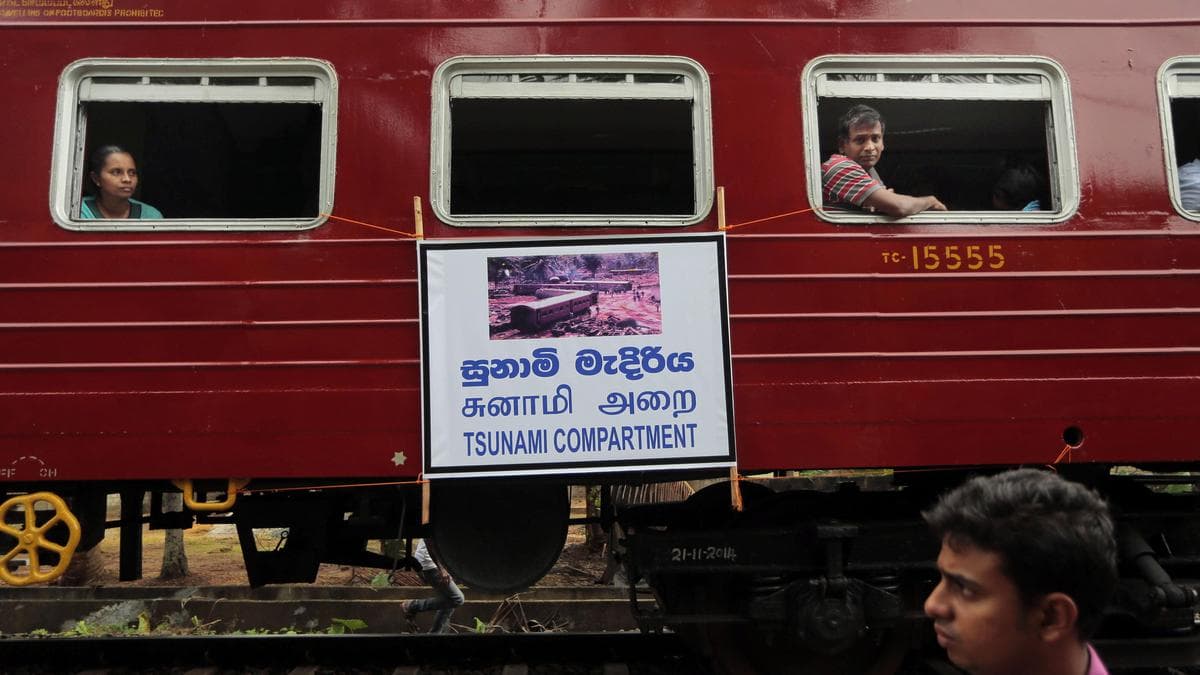
Sri Lanka marks 21st Tsunami anniversary; remembers over 35,000 dead amid recent Cyclone Ditwah tragedy.
Summary
Sri Lanka observed the 21st anniversary of the devastating 2004 Indian Ocean Tsunami, which claimed over 35,000 lives in the country. This year's commemoration was particularly somber due to the recent impact of Cyclone Ditwah, a natural disaster that killed nearly 700 people and left hundreds missing. This event is relevant for general awareness, geography, and disaster management topics in competitive exams.
Key Points
- 1Sri Lanka commemorated the 21st anniversary of the 2004 Indian Ocean Tsunami.
- 2The 2004 Indian Ocean Tsunami caused over 35,000 deaths in Sri Lanka.
- 3The commemoration occurred amidst the lingering grief from Cyclone Ditwah.
- 4Cyclone Ditwah struck Sri Lanka late last month, resulting in nearly 700 fatalities.
- 5The 2004 Indian Ocean Tsunami, a major disaster, occurred on December 26, 2004.
In-Depth Analysis
The recent commemoration of the 21st anniversary of the 2004 Indian Ocean Tsunami in Sri Lanka, overshadowed by the fresh devastation wrought by Cyclone Ditwah, brings into sharp focus the perennial vulnerability of island nations and coastal regions to natural disasters. This event is not merely a historical footnote but a stark reminder of the evolving challenges in disaster management, climate change, and regional cooperation, all critical themes for competitive exam aspirants.
**Background Context and What Happened:**
Sri Lanka, an island nation strategically located in the Indian Ocean, is inherently susceptible to various natural calamities, from tsunamis originating from seismic activity in the 'Ring of Fire' to cyclones formed over the Bay of Bengal and the Arabian Sea. The 2004 Indian Ocean Tsunami, which struck on December 26, 2004, was triggered by a colossal 9.1-9.3 magnitude earthquake off the west coast of Sumatra, Indonesia. This megathrust earthquake, one of the largest ever recorded, generated a series of devastating waves that travelled across the Indian Ocean. Due to the absence of an effective early warning system in the region at the time, coastal communities had little to no time to prepare. Sri Lanka bore a significant brunt, losing over 35,000 lives, with millions displaced and infrastructure severely damaged. The scale of destruction was unprecedented, leading to a massive international humanitarian response.
Fast forward to the present, Sri Lanka marked this somber anniversary amidst the fresh grief caused by Cyclone Ditwah, which struck late last month. This recent disaster claimed nearly 700 lives and left hundreds missing, highlighting the ongoing threat posed by extreme weather events. The dual tragedies underscore the continuous need for robust disaster preparedness and response mechanisms.
**Key Stakeholders Involved:**
The immediate aftermath of both disasters saw a multitude of stakeholders spring into action. The **Sri Lankan Government** was the primary responder, tasked with coordinating rescue, relief, rehabilitation, and long-term reconstruction efforts. This involved deploying military and civil defence forces, establishing temporary shelters, and managing aid distribution. The **International Community**, including the United Nations and various donor countries, played a crucial role by providing humanitarian aid, financial assistance, and technical expertise for rebuilding and establishing early warning systems. **India**, as a regional power and immediate neighbour, was among the first responders, providing significant humanitarian assistance and disaster relief (HADR) operations, reinforcing its 'Neighbourhood First' policy. **Local Communities** themselves demonstrated immense resilience, actively participating in rescue efforts and rebuilding their lives. Non-governmental organizations (NGOs) and civil society groups also provided invaluable support in delivering aid and psychological support.
**Significance for India:**
The 2004 Tsunami had a profound impact on India as well, particularly its Andaman & Nicobar Islands and the southern coastal states like Tamil Nadu, Kerala, and Andhra Pradesh, where over 10,000 lives were lost. This shared experience significantly shaped India's approach to disaster management. Post-2004, India enacted the **Disaster Management Act, 2005**, leading to the establishment of the **National Disaster Management Authority (NDMA)** and the **National Disaster Response Force (NDRF)**. These institutions have since become pillars of India's disaster preparedness and response strategy. India also played a pivotal role in establishing the Indian Ocean Tsunami Warning and Mitigation System (IOTWMS), demonstrating its commitment to regional security and disaster risk reduction. India's HADR operations in Sri Lanka and other affected countries showcased its growing capability and leadership in the Indian Ocean Region, often being the first to extend help, reinforcing bilateral ties and regional stability. Economically, such disasters can disrupt regional trade routes, tourism, and supply chains, impacting India's economic interests in the region.
**Historical Context and Future Implications:**
Historically, coastal populations have always faced the wrath of nature. However, the 2004 tsunami marked a paradigm shift globally, moving from a reactive relief-centric approach to a proactive, holistic disaster risk reduction strategy. This shift is reflected in international frameworks like the **Sendai Framework for Disaster Risk Reduction (2015-2030)**, which emphasizes understanding disaster risk, strengthening governance, investing in resilience, and enhancing preparedness for effective response and recovery.
The future implications are deeply intertwined with climate change. Experts predict an increase in the frequency and intensity of extreme weather events like cyclones, alongside rising sea levels, which could exacerbate the impact of future tsunamis and coastal flooding. This necessitates continuous investment in advanced early warning systems, climate-resilient infrastructure, and community-based disaster preparedness programs. Regional cooperation, through forums like SAARC, BIMSTEC, and IORA, becomes even more critical for sharing knowledge, resources, and coordinating effective cross-border responses. For India, this means continuously strengthening its disaster management framework, investing in scientific research for better forecasting, and upholding its role as a responsible regional leader in HADR, aligning with Sustainable Development Goal 13 (Climate Action) and Goal 11 (Sustainable Cities and Communities).
**Related Constitutional Articles, Acts, or Policies:**
While Sri Lanka has its own legal framework, India's response and learning are relevant. The **Disaster Management Act, 2005**, is central to India's disaster governance. The **Seventh Schedule of the Indian Constitution** places aspects of disaster management under various lists: 'Public health and sanitation' (Entry 23 of State List) is relevant for post-disaster health issues, and 'Economic and social planning' (Entry 20 of Concurrent List) allows both central and state governments to plan for disaster preparedness and mitigation. **Article 253** of the Constitution empowers Parliament to make laws for implementing international treaties and agreements, which is crucial for India's participation in regional and global disaster risk reduction initiatives. The **National Policy on Disaster Management (NPDM) 2009** further outlines India's strategic vision for disaster management, focusing on prevention, mitigation, preparedness, and response.
Exam Tips
This topic falls under GS Paper I (Geography - Physical Geography, especially natural disasters and their causes), GS Paper III (Disaster Management, Environment & Ecology, Internal Security for HADR), and General Awareness sections of UPSC, State PSC, SSC, and Banking exams.
Study related topics such as plate tectonics, types of natural disasters (cyclones, tsunamis, earthquakes), mechanisms of early warning systems (e.g., IOTWMS), and India's disaster management framework (NDMA, NDRF, Disaster Management Act, 2005) to gain a holistic understanding.
Expect questions on factual details (dates of major disasters, death tolls, locations), analytical questions (causes and impacts of tsunamis/cyclones, effectiveness of disaster management policies, the role of international cooperation), and policy-oriented questions (provisions of the Disaster Management Act, Sendai Framework, India's HADR policy).
Related Topics to Study
Full Article
This year's commemoration comes amid lingering grief from another natural disaster, Cyclone Ditwah, which struck Sri Lanka late last month, killing nearly 700 people and leaving hundreds missing as authorities continue to assess the damage