


Relevant for Exams
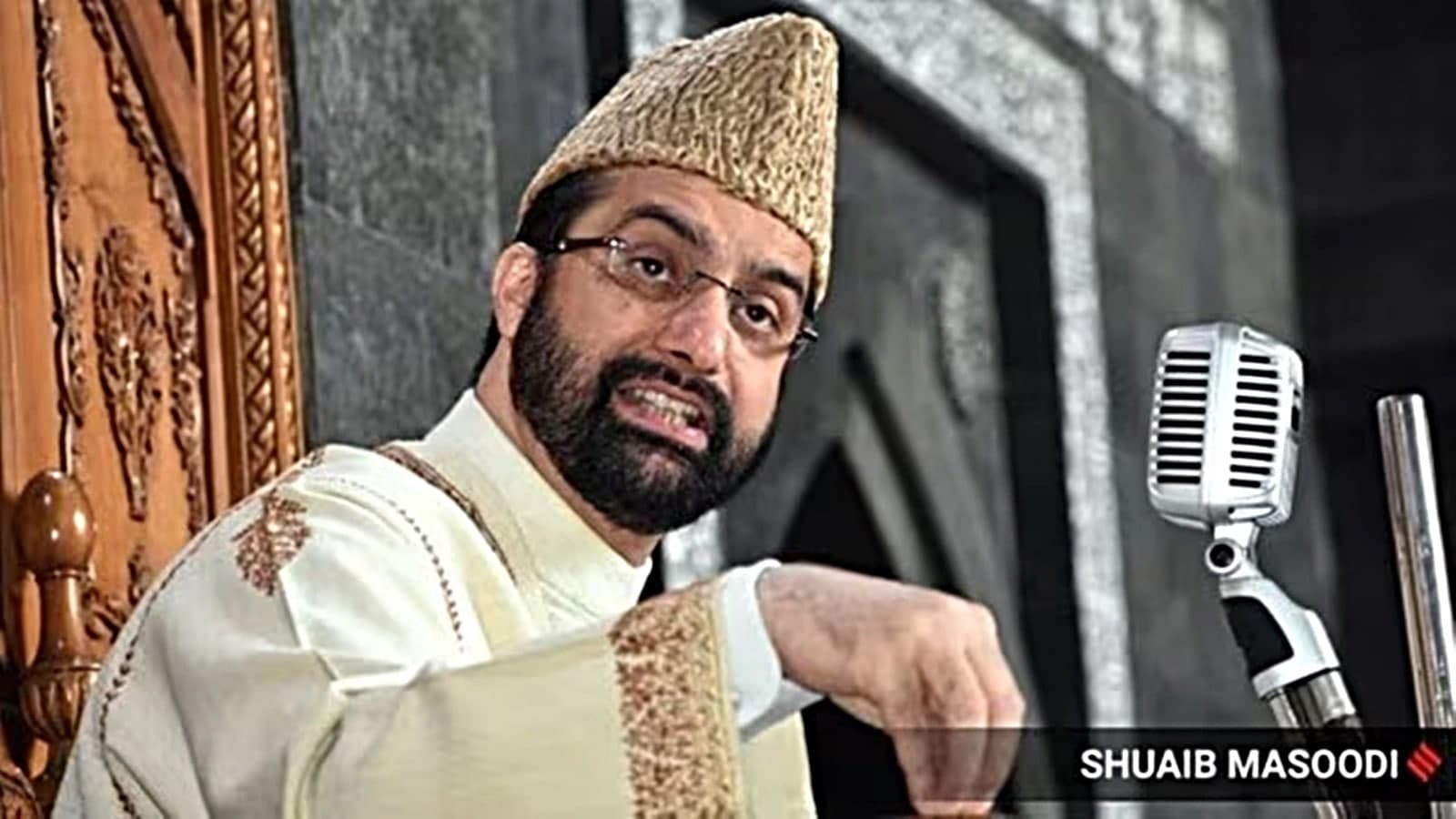
Mirwaiz alleges coercion by authorities over Hurriyat tag on X; no content available for details.
Summary
The article's content is unavailable, preventing a detailed summary. Based on the title, Mirwaiz alleges coercion by authorities regarding the 'Hurriyat tag' on X and claims he was stopped from leading prayers. This highlights potential issues concerning political freedom and religious rights in the region, relevant for understanding socio-political dynamics and current events in Jammu & Kashmir.
Key Points
- 1Mirwaiz, a prominent Kashmiri leader, alleged coercion by authorities.
- 2The alleged coercion was specifically linked to the 'Hurriyat tag' on the social media platform X (formerly Twitter).
- 3Mirwaiz also claimed he was prevented from leading prayers, indicating restrictions on religious freedom.
- 4The incident points to ongoing political and social issues concerning governance and rights in the Jammu & Kashmir region.
- 5The allegations raise concerns about freedom of expression and religious rights for individuals in the context of state actions.
In-Depth Analysis
The allegations made by Mirwaiz Umar Farooq, a prominent religious and political leader in Jammu & Kashmir, regarding 'coercion by authorities' over his 'Hurriyat tag' on X (formerly Twitter) and being stopped from leading prayers, cast a significant spotlight on the complex socio-political landscape of the region. This incident is not isolated but is deeply rooted in the historical context of J&K and the Indian government's post-Article 370 abrogation strategy.
To understand this, we must first delve into the background. Mirwaiz Umar Farooq is the hereditary Mirwaiz (chief cleric) of Kashmir and also the chairman of the moderate faction of the All Parties Hurriyat Conference (APHC). The APHC is a separatist political conglomerate formed in 1993, advocating for the resolution of the Kashmir dispute. The Mirwaiz family has historically held significant religious and political influence, often seen as a voice for a section of the Kashmiri populace. Following the abrogation of Article 370 and Article 35A on August 5, 2019, which revoked J&K's special status and bifurcated it into two Union Territories, the Indian government initiated a massive security crackdown. This included the detention of numerous political leaders, activists, and separatists, including Mirwaiz Umar Farooq, who remained under house arrest or detention for over four years.
The recent allegations indicate that despite his conditional release, restrictions on his public and online activities persist. The claim of coercion over the 'Hurriyat tag' on X suggests pressure from authorities to either remove or disassociate himself from the APHC identity on social media. This is critical in the digital age, where online presence often reflects political affiliation and outreach. Simultaneously, being stopped from leading prayers, particularly at Srinagar's historic Jamia Masjid where he traditionally delivers the Friday sermon, highlights direct restrictions on his religious freedom and public assembly. This practice is deeply symbolic, as the Mirwaiz's sermons often carry significant political undertones and provide a platform for community interaction.
Key stakeholders in this scenario include Mirwaiz Umar Farooq, who represents a segment of Kashmiri political and religious sentiment. His actions and statements are closely watched by both his followers and the authorities. The Indian Authorities, encompassing the Central Government and the J&K Administration, are responsible for maintaining law and order, counter-insurgency operations, and implementing policies aimed at integrating J&K and fostering normalcy. Their actions are driven by national security concerns and the objective of eliminating separatism and militancy. The people of J&K, particularly those in the Kashmir Valley, are directly affected by these dynamics, experiencing the consequences of security measures, political restrictions, and the evolving governance framework. Social media platforms like X, while not directly involved in the allegations, become a medium where such political discourse unfolds, and their policies regarding content moderation and compliance with government requests are always under scrutiny.
This incident matters significantly for India on multiple fronts. Politically, it reflects the ongoing challenges in normalizing the situation in J&K post-Article 370 abrogation. The government's narrative of peace and development needs to be balanced with the reality of civil liberties. Socially, continued restrictions on religious and political figures can deepen alienation and distrust among certain sections of the Kashmiri population, hindering efforts towards complete integration. Internationally, such allegations can attract scrutiny regarding India's human rights record and democratic credentials, especially given the sensitive nature of the Kashmir issue. Economically, prolonged political instability and restrictions deter investment and hinder the region's development prospects.
From a constitutional perspective, these allegations raise critical questions concerning fundamental rights. **Article 19(1)(a)**, which guarantees freedom of speech and expression, comes into play regarding the 'Hurriyat tag' on social media. **Article 19(1)(b)**, the right to assemble peaceably, is relevant to his ability to lead prayers and engage in public religious discourse. Most importantly, **Article 25**, which guarantees freedom of conscience and the right to freely profess, practice, and propagate religion, is directly implicated when a religious leader is allegedly prevented from performing his duties. Furthermore, **Article 21**, the protection of life and personal liberty, underpins the broader context of restrictions on his movement and public life. The Public Safety Act (PSA), often used in J&K for preventive detention, is a legal tool that has been historically controversial and could be a backdrop to such coercive measures.
Looking ahead, the future implications are substantial. Continued imposition of restrictions on prominent figures like Mirwaiz could perpetuate a trust deficit between the administration and the local populace, potentially leading to further radicalization or a resurgence of dissent in different forms. It complicates the government's stated aim of holding assembly elections and restoring statehood to J&K, as a truly democratic process requires space for diverse political voices, even those critical of the establishment. The handling of such situations will determine the pace and success of the normalization process in J&K, influencing whether the region moves towards genuine political reconciliation or remains in a state of controlled stability. It also sets a precedent for how freedom of expression and religious rights are balanced against national security concerns in a sensitive region, a balance that is crucial for India's democratic fabric.
Exam Tips
This topic falls primarily under UPSC GS Paper II (Polity & Governance - Fundamental Rights, Centre-State Relations, J&K Reorganisation Act, Internal Security) and GS Paper I (Indian Society - issues related to communalism, regionalism).
Study related topics such as the Abrogation of Article 370 and 35A, the Jammu and Kashmir Reorganisation Act, 2019, the role of the Public Safety Act (PSA), and the constitutional provisions related to Fundamental Rights (Articles 19, 21, 25).
Common question patterns include analytical questions on challenges to fundamental rights in sensitive regions, the impact of government policies on civil liberties, and the historical evolution of the Kashmir issue. Be prepared for essay questions on 'Democracy and Dissent' or 'Balancing National Security with Human Rights'.
Understand the distinction between preventive detention laws (like PSA) and regular criminal laws, and their implications for individual liberties. Also, be aware of the role of social media in political activism and government control.
Focus on the constitutional validity of restrictions on fundamental rights, citing relevant Supreme Court judgments if possible, especially concerning freedom of speech, assembly, and religion.