


Relevant for Exams
India raises concern with US over H1B visa interview cancellations, impacting Indian professionals.
Summary
India has formally expressed its concern to the United States regarding the abrupt cancellation of H1B visa interviews, a move that significantly impacts Indian professionals seeking employment in specialty occupations in the US. This diplomatic intervention highlights ongoing challenges in bilateral visa processing and its implications for the crucial IT sector and people-to-people ties. For competitive exams, understanding the H1B visa program, India-US relations, and their economic dimensions is essential.
Key Points
- 1India conveyed its concern to the United States over the cancellation of H1B visa interviews.
- 2The H1B visa is a non-immigrant visa that permits US employers to temporarily hire foreign workers in specialty occupations.
- 3Indian professionals are among the largest beneficiaries of the H1B visa program, especially in the technology sector.
- 4The cancellations disrupt career plans for individuals and operational strategies for companies relying on global talent mobility.
- 5This issue underscores the need for predictable and efficient visa processing to maintain strong bilateral economic and strategic ties between India and the US.
In-Depth Analysis
The recent diplomatic intervention by India, expressing concern to the United States over the abrupt cancellation of H1B visa interviews, highlights a recurring point of friction in the otherwise robust bilateral relationship. For competitive exam aspirants, understanding this issue goes beyond mere news headlines; it delves into the intricate dynamics of international relations, economic interdependence, and the socio-cultural fabric connecting two powerful democracies.
**Background Context:** The H1B visa is a non-immigrant visa that allows U.S. employers to temporarily employ foreign workers in specialty occupations. These occupations generally require a bachelor's degree or higher in a specific field, predominantly in technology, engineering, and medical sciences. Introduced as part of the Immigration and Nationality Act, the H1B program has an annual cap, currently set at 65,000, with an additional 20,000 visas reserved for those with a U.S. master's degree or higher. India has historically been the largest beneficiary of this program, with Indian professionals, especially from the burgeoning IT sector, consistently receiving a significant majority of these visas each year. This program has been a cornerstone of India's 'brain drain' phenomenon, but also a source of significant remittances and knowledge transfer, contributing to India's economic growth.
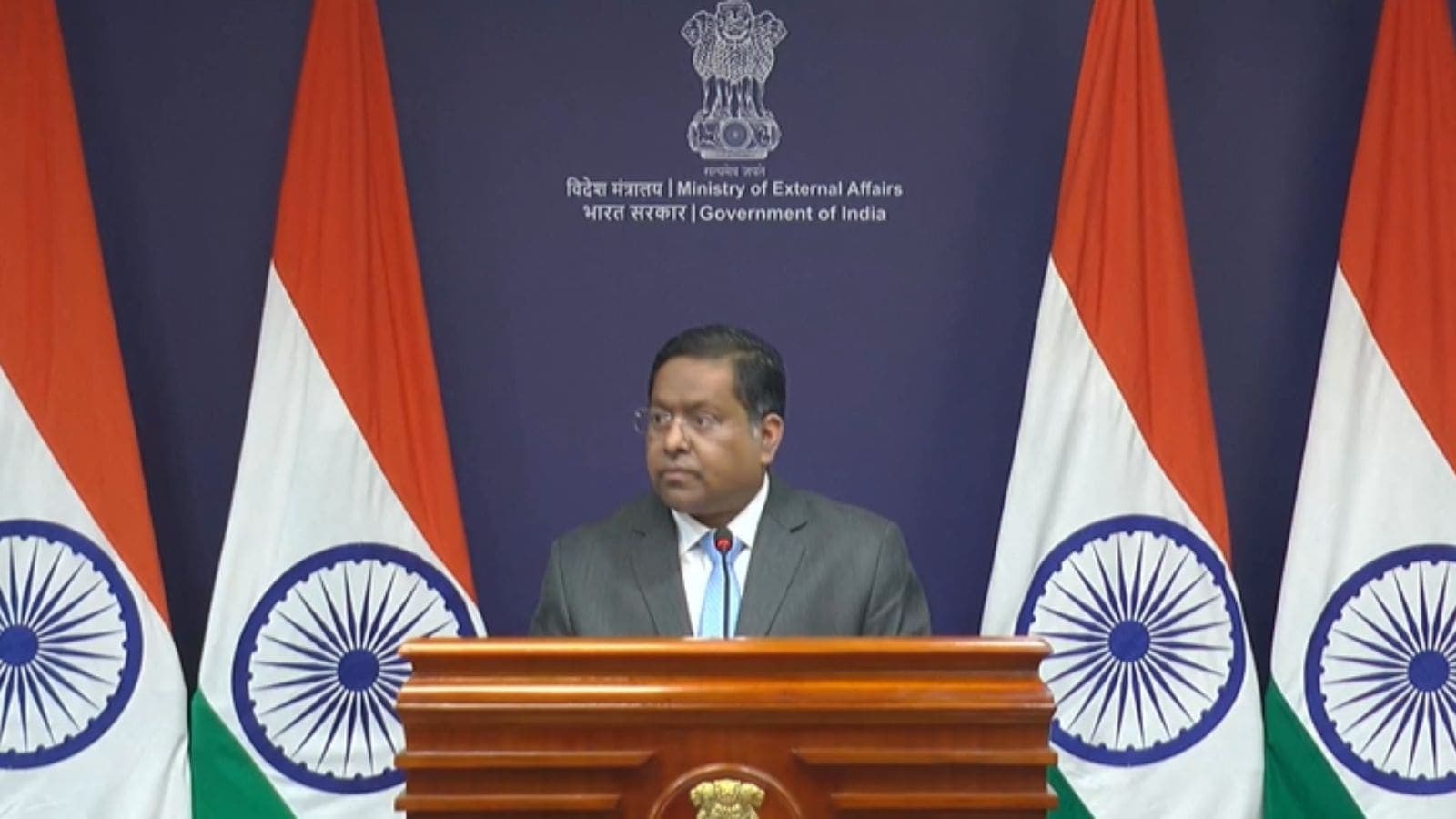
**What Happened:** India formally conveyed its concerns to the U.S. government regarding the sudden and widespread cancellation of H1B visa interviews. This move by the U.S. consular services, often attributed to operational challenges, staff shortages, or evolving pandemic-related restrictions, directly impacts thousands of Indian professionals who had already secured job offers in the U.S. and were awaiting their visa stamping. These cancellations lead to significant uncertainty, disrupt career plans, and create logistical nightmares for individuals and their families, who often invest substantial time and resources in the application process.
**Key Stakeholders Involved:** Several entities are directly impacted. On the Indian side, the **Ministry of External Affairs (MEA)** is the primary government body articulating India's concerns through diplomatic channels. **Indian IT professionals and students** are the most direct stakeholders, facing career disruptions and financial losses. **Indian IT service companies** like TCS, Infosys, and Wipro, which heavily rely on global talent mobility to serve their U.S. clients, also face operational challenges. On the U.S. side, the **Department of State** and the **U.S. Citizenship and Immigration Services (USCIS)** are responsible for visa policy and processing. **U.S. employers**, particularly in the tech sector, depend on H1B workers to fill critical skill gaps, and any disruption impacts their operations. The broader **Indian diaspora in the U.S.** also feels the ripple effect, as it affects future family reunification and community growth.
**Why This Matters for India:** This issue holds immense significance for India. Economically, the H1B program facilitates significant **remittances** from the diaspora, which are crucial for India's foreign exchange reserves and domestic consumption. The IT sector, a major contributor to India's GDP, relies on global talent mobility for its growth and competitiveness. Disruptions can hinder the sector's ability to capitalize on global opportunities, potentially impacting employment and revenue. Politically, smooth visa processing is a barometer of the strength and maturity of the **India-U.S. strategic partnership**. While both nations share common interests in defence, trade, and counter-terrorism, persistent visa hurdles can strain people-to-people ties, which are considered the bedrock of the relationship. Socially, the H1B dream represents aspiration for many Indian families, and cancellations can lead to widespread frustration and disillusionment.
**Historical Context:** Visa processing issues are not new. During the Trump administration, there were significant policy shifts and increased scrutiny, including proposals to restrict H1B extensions and raise wage requirements, which caused considerable anxiety. India has consistently advocated for predictable and transparent visa regimes, emphasizing the contributions of Indian professionals to the U.S. economy. This ongoing dialogue underscores the complex interplay of domestic U.S. immigration politics and its international ramifications.
**Future Implications:** The immediate future will likely involve continued diplomatic engagement between New Delhi and Washington D.C. India will press for streamlined processes, increased consular staffing, and clearer communication from the U.S. side. For India's IT sector, such uncertainties might accelerate a trend towards diversifying global operations and strengthening domestic talent pools, potentially aligning with initiatives like 'Make in India' and 'Digital India' to create more high-skill jobs domestically. For the U.S., balancing its domestic employment concerns with the need for skilled foreign talent remains a critical policy challenge. The long-term implications could see a re-evaluation of migration strategies by Indian professionals, potentially exploring other global destinations or focusing on entrepreneurial ventures within India.
**Related Constitutional Articles, Acts, or Policies:** While the H1B visa is a U.S. immigration policy, its impact on India touches upon several Indian governmental priorities. India's **foreign policy**, guided by principles of promoting international peace and fostering friendly relations (reflected in **Article 51 of the DPSP**, though not directly applicable to a foreign visa policy, it informs India's diplomatic approach), plays a crucial role in negotiating these issues. The **Emigration Act, 1983**, governs the emigration of Indian citizens for employment abroad, ensuring their welfare and regulating recruitment agencies. From an economic perspective, policies like **'Skill India'** and **'Digital India'** aim to enhance domestic capabilities, potentially reducing reliance on overseas employment while simultaneously preparing a workforce for global opportunities. The bilateral discussions also fall under the broader framework of **India-U.S. trade and strategic dialogues**, which cover economic cooperation and people-to-people exchanges.
Exam Tips
This topic falls under GS Paper II (International Relations, Governance) and GS Paper III (Indian Economy, Science and Technology) for UPSC. For SSC and State PSCs, it's relevant for General Awareness and Current Affairs.
Study the H1B visa program details (eligibility, cap, lottery system) and its historical evolution. Connect it with broader themes like brain drain/gain, remittances, and the role of the Indian diaspora.
Common question patterns include essay questions on India-US relations and the role of diaspora, short notes on 'visa issues and their economic impact', or MCQs on specific H1B facts or key organizations involved (e.g., USCIS, MEA).