


Relevant for Exams
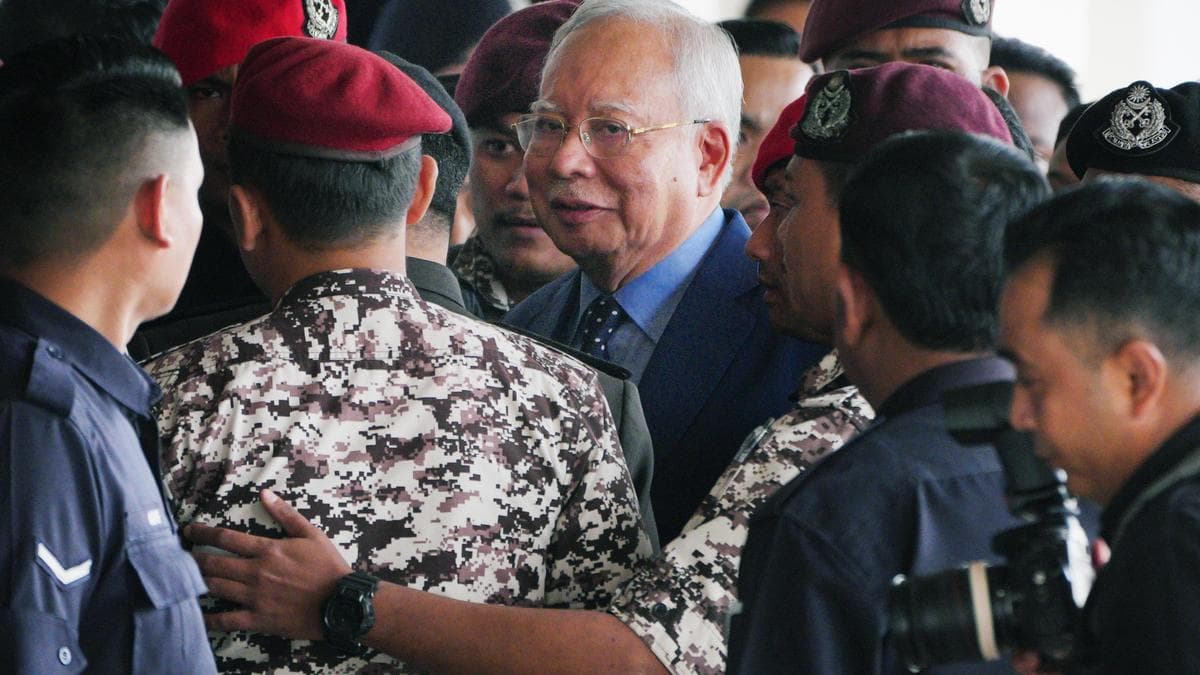
Former Malaysian PM Najib Razak convicted in 1MDB scandal for siphoning over $700 million.
Summary
Former Malaysian Prime Minister Najib Razak was convicted in the high-profile 1MDB corruption scandal. He was found guilty of siphoning over $700 million from the state investment fund into his personal accounts. This landmark conviction highlights global efforts against high-level corruption and is significant for competitive exams as a major international political event.
Key Points
- 1Former Malaysian Prime Minister Najib Razak was convicted in a corruption trial.
- 2The conviction is linked to the infamous 1MDB (1Malaysia Development Berhad) corruption scandal.
- 3Authorities accused Najib Razak of siphoning more than $700 million.
- 4The siphoned funds were reportedly transferred into his personal bank accounts.
- 5The 1MDB fund is Malaysia's state investment fund.
In-Depth Analysis
The conviction of former Malaysian Prime Minister Najib Razak in the infamous 1MDB corruption scandal represents a landmark moment in the global fight against high-level financial crime and abuse of power. This complex case, spanning multiple continents and involving billions of dollars, offers crucial lessons for students of governance, international relations, and public administration, particularly within the Indian context.
**Background Context: The Genesis of 1MDB**
1Malaysia Development Berhad (1MDB) was established in 2009 by Najib Razak, shortly after he became Prime Minister. Its stated objective was to drive strategic investments for Malaysia's long-term economic development, focusing on high-impact projects like energy, real estate, and tourism. Initially lauded as a vehicle for national progress, 1MDB was structured as a state-owned investment fund, intended to leverage government guarantees to secure financing for ambitious projects. However, almost from its inception, the fund became a conduit for illicit financial flows, eventually accumulating a staggering debt and becoming synonymous with grand corruption.
**What Happened: A Web of Deceit and Diversion**
At the heart of the scandal was the systematic siphoning of billions of dollars from 1MDB through a complex web of shell companies, offshore accounts, and fraudulent transactions. Investigations by authorities in multiple countries, including the United States, Switzerland, Singapore, and Malaysia, revealed that funds raised by 1MDB, often through bond sales arranged by international banks like Goldman Sachs, were diverted instead of being used for their intended development projects. Najib Razak was accused of personally benefiting from this scheme, with more than $700 million reportedly transferred into his private bank accounts. The charges against him included criminal breach of trust, money laundering, and abuse of power. His conviction in July 2020 (and subsequent appeals and additional convictions) on charges related to the SRC International, a former 1MDB unit, marked a significant legal victory, affirming that even the highest office holders are not immune from justice.
**Key Stakeholders Involved:**
* **Najib Razak:** The central figure, former Prime Minister of Malaysia, convicted for his role in the scandal.
* **1MDB (1Malaysia Development Berhad):** The state investment fund at the core of the corruption.
* **Jho Low (Low Taek Jho):** A Malaysian financier and alleged mastermind of the scheme, currently a fugitive, accused of orchestrating the diversions and laundering money globally.
* **Goldman Sachs:** The American investment bank that helped 1MDB raise billions through bond sales. It faced significant penalties and admitted to its role in the scheme, paying over $2.9 billion in fines globally.
* **Malaysian Judiciary and Government:** Played a crucial role in the investigation, prosecution, and conviction, demonstrating judicial independence and a commitment to combating corruption.
* **International Agencies:** The U.S. Department of Justice (DOJ), FBI, Swiss Attorney General, and Singaporean authorities were instrumental in uncovering the global money trail and seizing assets.
**Why This Matters for India: Lessons in Governance and Accountability**
For India, the 1MDB scandal offers several critical takeaways. Firstly, it underscores the vulnerability of state-owned enterprises (SOEs) and sovereign wealth funds (SWFs) to political interference and corruption if robust oversight mechanisms are absent. India, with its significant public sector presence, must continuously strengthen corporate governance and accountability frameworks for its SOEs. Secondly, the case highlights the importance of an independent judiciary and investigative agencies in holding powerful individuals accountable. India's own anti-corruption framework, comprising institutions like the Central Vigilance Commission (CVC), Central Bureau of Investigation (CBI), and the Lokpal, aims to achieve similar objectives. The 1MDB case reinforces the global consensus that no one is above the law. Furthermore, the cross-border nature of the crime emphasizes the need for international cooperation in combating financial crimes, a principle that India actively supports through various multilateral forums and bilateral agreements.
**Historical Context and Future Implications:**
The 1MDB scandal is not an isolated incident but rather fits into a broader historical pattern of grand corruption cases involving political elites globally. It echoes scandals like Brazil's 'Operation Car Wash' or various cases in African nations, where state resources are plundered for personal gain. However, the scale and sophistication of the 1MDB scheme, involving global financial institutions and offshore havens, set it apart. The conviction of Najib Razak sends a powerful message that such abuses will be pursued and punished, regardless of the perpetrator's past stature. This precedent could embolden anti-corruption efforts in other developing nations and strengthen public trust in democratic institutions.
Moving forward, the scandal will likely lead to increased scrutiny of financial institutions' due diligence processes, particularly those involved in large-scale bond offerings for state entities. It also highlights the imperative for greater transparency in the operations of SWFs and SOEs worldwide. For Malaysia, the case has significantly reshaped its political landscape, contributing to a shift in power dynamics and a renewed focus on good governance. The long-term implications include a potential strengthening of democratic institutions, a more vigilant electorate, and enhanced international cooperation in tracing and repatriating stolen assets.
**Related Constitutional Articles, Acts, or Policies (Indian Context):**
The principles underlying the fight against corruption, as exemplified by the 1MDB case, resonate deeply with India's legal and constitutional framework:
* **Prevention of Corruption Act, 1988:** This primary legislation in India deals with corruption by public servants, defining offenses like bribery, criminal misconduct, and abuse of official position.
* **Prevention of Money Laundering Act (PMLA), 2002:** Crucial for tracing and seizing proceeds of crime, PMLA enables authorities to combat money laundering, a key aspect of the 1MDB scandal.
* **Lokpal and Lokayukta Act, 2013:** Establishes the Lokpal at the Centre and Lokayuktas in states to inquire into allegations of corruption against public functionaries, including the Prime Minister.
* **Article 14 (Equality before Law):** This fundamental right ensures that no person, regardless of their position, is above the law, a principle powerfully demonstrated by Najib Razak's conviction.
* **Article 50 (Separation of Judiciary from Executive):** The independence of the Malaysian judiciary in prosecuting a former PM underscores the importance of this DPSP, which is vital for ensuring fair trials and unbiased justice.
Exam Tips
This topic falls under 'International Relations' (GS Paper 2 for UPSC), 'Governance' (GS Paper 2), and 'Indian Polity' (GS Paper 2, specifically anti-corruption mechanisms). Questions can range from direct facts about the scandal to its implications for global governance and India's anti-corruption efforts.
Study related topics such as the functioning of Sovereign Wealth Funds (SWFs), the role of international financial institutions (like the FATF in combating money laundering), and major international anti-corruption conventions (e.g., United Nations Convention Against Corruption - UNCAC).
Common question patterns include: 'Discuss the significance of the 1MDB scandal for global anti-corruption efforts.' or 'Analyze the lessons India can draw from the 1MDB case regarding governance of state-owned enterprises and combating high-level corruption.' Be prepared to compare with similar Indian cases.
Familiarize yourself with key Indian anti-corruption laws like the Prevention of Corruption Act, PMLA, and the Lokpal and Lokayukta Act. Understand their scope and limitations, as questions might ask you to relate international events to India's domestic legal framework.
Related Topics to Study
Full Article
Authorities said he siphoned more than $700 million into his personal bank accounts from the 1MDB fund