


Relevant for Exams
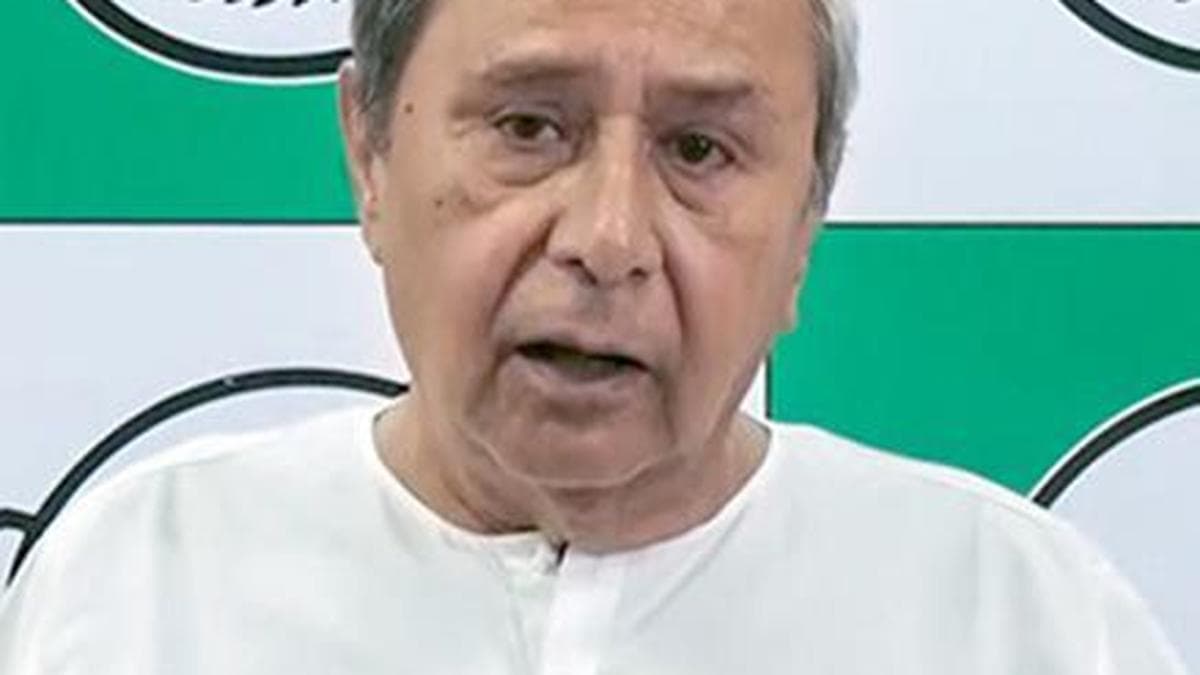
Naveen Patnaik dismisses BJD disintegration and succession rumors on party's 29th foundation day.
Summary
Odisha Chief Minister and Biju Janata Dal (BJD) chief Naveen Patnaik dismissed rumors of the party's disintegration and a possible successor announcement on its 29th foundation day. He asserted that the BJD would endure for generations, calling the talks 'rumour-mongering' and 'mischief'. This news highlights the political stability and leadership dynamics within a significant regional party, relevant for understanding state-level politics and party systems in India for competitive exams.
Key Points
- 1Biju Janata Dal (BJD) is a regional political party, primarily active in Odisha.
- 2Naveen Patnaik is the chief of the BJD and the current Chief Minister of Odisha.
- 3The statement was made in the context of the BJD's 29th foundation day.
- 4Mr. Patnaik refuted 'disintegration talk' and rumors regarding the 'possible announcement of a successor'.
- 5He affirmed that the BJD 'will survive for generations', dismissing the rumors as 'mischief'.
In-Depth Analysis
The statement by Odisha Chief Minister Naveen Patnaik, dismissing 'disintegration talk' and succession rumours within the Biju Janata Dal (BJD) as 'mischief' on the party's 29th foundation day, offers a crucial insight into the dynamics of regional politics, leadership, and party stability in India. This seemingly simple dismissal carries significant weight for understanding state-level governance, federalism, and the challenges faced by long-standing political entities.
**Background Context and What Happened:**
The Biju Janata Dal (BJD) was founded on December 26, 1997, by Naveen Patnaik, following the demise of his father, the legendary former Chief Minister of Odisha, Biju Patnaik. Emerging from a split in the Janata Dal, the BJD quickly established itself as a formidable force in Odisha politics. Under Naveen Patnaik's leadership, the party has achieved unprecedented electoral success, forming the government continuously since 2000. Patnaik himself has served as Chief Minister for over two decades, making him one of India's longest-serving CMs. This remarkable tenure has been marked by a focus on welfare schemes, disaster management, and a relatively clean image, which has resonated with the Odia populace.
The context of Patnaik's recent statement is the BJD's 29th foundation day. Such anniversaries often become occasions for internal reflection and external speculation. Given Naveen Patnaik's age (77 years as of 2023) and the absence of a clearly designated second-in-command or a dynastic successor within the party, rumours about the party's future and potential succession plans are a recurring feature of political discourse in Odisha. The 'disintegration talk' likely refers to speculation about internal factions or the party losing its electoral dominance, especially with the Bharatiya Janata Party (BJP) making significant inroads in the state in recent elections.
**Key Stakeholders Involved:**
1. **Naveen Patnaik:** As the founder, chief, and the face of the BJD, he is the central figure. His leadership has been largely unchallenged, and his image is inextricably linked with the party's success. His statement aims to project confidence and unity.
2. **Biju Janata Dal (BJD) Cadre and Leaders:** The party's rank and file, as well as its senior leaders, are stakeholders whose morale and unity are crucial. Rumours of disintegration or succession can create instability and factionalism, which the statement aims to quell.
3. **Opposition Parties (e.g., BJP, Congress in Odisha):** These parties stand to gain from any perceived weakness or internal strife within the BJD. Spreading or amplifying such rumours can be a political tactic to destabilize the ruling party and prepare for future elections.
4. **Voters of Odisha:** The ultimate stakeholders, their perception of the BJD's stability and future leadership influences their electoral choices. Patnaik's assurance is also directed at maintaining voter confidence.
**Why This Matters for India and Historical Context:**
This episode is significant for understanding India's federal structure and the robust role of regional parties. India's multi-party system, particularly the rise of strong regional entities, has been a defining feature of its post-liberalization political landscape. Regional parties often articulate specific state-level aspirations and can act as crucial checks and balances against the central government. The BJD's enduring dominance in Odisha, despite the national wave of major parties, exemplifies this trend. Historically, many regional parties, especially those built around a charismatic leader, face significant challenges in leadership transition. Examples like the DMK and AIADMK in Tamil Nadu, or the Shiv Sena in Maharashtra, illustrate the complexities and potential for fragmentation when a towering figure departs. Naveen Patnaik's assertion attempts to preempt such a scenario.
**Future Implications:**
While Patnaik's statement offers immediate reassurance, the question of succession for any long-serving leader eventually becomes pertinent. The BJD's future will depend on how it manages this transition when it eventually occurs. Will it evolve into a more institutionalized party structure less reliant on a single personality? Or will it follow the path of some other regional parties that struggled post-founder? The continued growth of the BJP in Odisha poses a significant challenge, making internal cohesion even more critical for the BJD to 'survive for generations' as Patnaik envisions. The party's ability to continue delivering on its welfare agenda (e.g., KALIA scheme for farmers, Mission Shakti for women self-help groups) and maintain good governance will be key to its longevity.
**Related Constitutional Articles, Acts, and Policies:**
1. **Article 246 and Seventh Schedule:** This article, along with the State List in the Seventh Schedule, delineates the powers of state legislatures, underpinning the existence and functioning of state-level political parties like the BJD.
2. **Representation of the People Act, 1951:** This act governs the conduct of elections, including the registration and recognition of political parties by the Election Commission of India (ECI). The BJD, as a recognized state party, operates under these provisions.
3. **Election Commission of India (ECI):** The ECI plays a vital role in ensuring free and fair elections, and its recognition of parties is crucial for their participation in the democratic process.
4. **Anti-defection Law (Tenth Schedule):** While not directly about succession, this law, introduced by the 52nd Amendment Act of 1985, is crucial for maintaining party stability by deterring elected representatives from switching parties, thus preventing 'disintegration' through defections.
5. **State Welfare Policies:** The BJD's continued success is often linked to its effective implementation of state-specific welfare schemes, which fall under the purview of state governments and are key to building public trust and electoral support.
Exam Tips
**GS Paper II - Polity & Governance:** This topic falls under the study of Indian Federalism, Regionalism, Political Parties, and Electoral Reforms. Pay attention to the role of regional parties in strengthening federalism and their impact on national politics.
**Related Topics to Study:** Delve into the evolution of India's multi-party system, the challenges of coalition politics, the Anti-Defection Law (Tenth Schedule), and the powers and functions of the Election Commission of India. Also, study specific welfare schemes implemented by state governments.
**Common Question Patterns:** Expect questions analyzing the significance of regional parties in India's democratic setup, challenges faced by personality-centric parties in leadership transition, or the impact of state-specific welfare policies on electoral outcomes. Comparative analysis with other regional parties facing similar issues is also common.
Related Topics to Study
Full Article
The regional party dismisses possible announcement of successor to Mr. Patnaik on its 29th foundation day as mischief