


Relevant for Exams
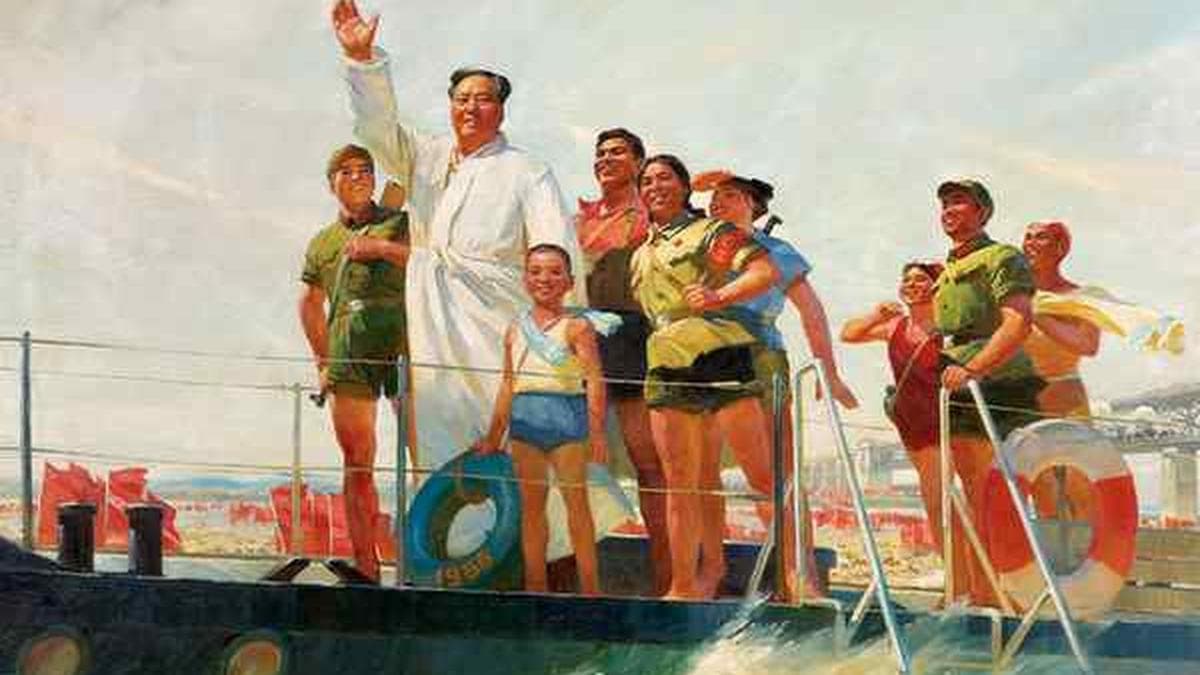
Quiz prompt on Mao Zedong, Chinese communist revolutionary and Chairman of the CCP, born Dec 26, 1893.
Summary
This news item serves as a prompt for a quiz on Mao Zedong, a pivotal figure in 20th-century world history. Born on December 26, 1893, he was a Chinese communist revolutionary and the long-time Chairman of the Chinese Communist Party. Understanding his life and legacy is crucial for competitive exams, particularly in Modern World History and International Relations sections, as he shaped contemporary China and global geopolitics.
Key Points
- 1Mao Zedong was born on December 26, 1893.
- 2He was a prominent Chinese communist revolutionary.
- 3Mao Zedong served as the long-time Chairman of the Chinese Communist Party (CCP).
- 4He was the founding father of the People's Republic of China (PRC), established on October 1, 1949.
- 5Mao Zedong led the Communist Party of China to victory in the Chinese Civil War against the Kuomintang.
In-Depth Analysis
Mao Zedong, born on December 26, 1893, stands as one of the most transformative and controversial figures of the 20th century. His life and legacy are inextricably linked to the birth of modern China and its profound impact on global geopolitics. Understanding Mao is not merely a historical exercise; it is crucial for comprehending contemporary international relations, particularly India's relationship with its powerful eastern neighbor.
**Background Context: A Nation in Turmoil**
To grasp Mao's rise, one must first understand the tumultuous state of China in the late 19th and early 20th centuries. The once mighty Qing Dynasty was in terminal decline, weakened by internal rebellions (like the Taiping Rebellion) and humiliated by foreign imperialist powers (Opium Wars, unequal treaties, Boxer Rebellion). This period, often referred to as the 'Century of Humiliation,' fostered a deep sense of nationalism and a yearning for national rejuvenation among the Chinese populace. The Xinhai Revolution of 1911 overthrew the Qing Dynasty, establishing the Republic of China, but it failed to bring stability, leading to a 'Warlord Era' of regional fragmentation and continued foreign interference. It was into this crucible of chaos and nascent nationalism that Marxism-Leninism, with its promise of revolutionary change and national liberation, found fertile ground.
**What Happened: From Peasant Revolutionary to Chairman**
Mao Zedong, initially a librarian and school teacher, became an early adherent of Marxist thought. He was a founding member of the Chinese Communist Party (CCP) in 1921. Unlike orthodox Marxists who focused on the industrial proletariat, Mao adapted communism to the Chinese context, emphasizing the revolutionary potential of the peasantry. This 'Maoist' ideology was central to the CCP's strategy. After initial cooperation, the CCP engaged in a brutal civil war with the Kuomintang (KMT) led by Chiang Kai-shek. The iconic Long March (1934-1935), a strategic military retreat, cemented Mao's leadership and the CCP's resilience. The war against Japanese invasion (1937-1945) saw a temporary alliance, but the civil war resumed after World War II. Ultimately, the CCP's superior organization, popular support, and effective guerrilla tactics led to victory. On October 1, 1949, Mao Zedong proclaimed the establishment of the People's Republic of China (PRC) from Tiananmen Square, declaring, "The Chinese people have stood up."
As Chairman of the CCP, Mao initiated radical transformations. The Great Leap Forward (1958-1962), an ambitious economic and social campaign, aimed to rapidly industrialize China through collectivization and communal living. However, it led to widespread famine and millions of deaths due to poor planning, exaggerated reports, and disregard for traditional agriculture. Subsequently, the Cultural Revolution (1966-1976) was launched to purge 'bourgeois' and 'traditional' elements from Chinese society, consolidate Mao's power, and revive revolutionary fervor. This period plunged China into a decade of chaos, persecution, and destruction of cultural heritage, significantly impacting education, economy, and social fabric.
**Key Stakeholders and Why This Matters for India**
The primary stakeholders were Mao Zedong, the Chinese Communist Party, and the Chinese people. Other significant players included the Kuomintang (KMT) and its leader Chiang Kai-shek, the Soviet Union (which initially supported the CCP but later had ideological rifts), and the United States (which supported the KMT and viewed the PRC as a major Cold War adversary). For India, the rise of communist China under Mao was a watershed moment.
Historically, India and China shared ancient cultural ties. Post-independence, India, under Prime Minister Jawaharlal Nehru, adopted a policy of non-alignment and was among the first nations to recognize the PRC in 1950. Nehru championed China's entry into the UN and promoted the 'Panchsheel' principles of peaceful coexistence, initially signed with China in 1954 regarding trade and intercourse between the Tibet region of China and India. However, this initial bonhomie soon deteriorated. The Tibetan uprising in 1959 and India granting asylum to the Dalai Lama deeply strained relations. The unresolved border disputes, particularly over Aksai Chin and Arunachal Pradesh, culminated in the Sino-Indian War of 1962, a major setback for India and a significant blow to Nehru's foreign policy vision. Mao's China became a formidable and often adversarial neighbor, necessitating a re-evaluation of India's defense and foreign policy strategies.
**Future Implications and Constitutional Connections**
Mao's legacy continues to shape China's domestic and foreign policies. His emphasis on a strong, centralized state, national unity, and self-reliance laid the groundwork for China's subsequent economic rise, albeit under a different leadership philosophy (Deng Xiaoping's reforms). The CCP's continued authoritarian rule draws legitimacy from its revolutionary origins under Mao. For India, the implications are enduring. The unresolved border issue remains a major flashpoint. China's growing economic and military power, its 'String of Pearls' strategy, and initiatives like the Belt and Road Initiative (BRI) directly impact India's strategic interests in the Indian Ocean region and its neighborhood. India's foreign policy, guided by Article 51 of the Constitution (which promotes international peace and security), constantly navigates the complex relationship with China, balancing cooperation with competition.
Understanding Mao's era helps contextualize current Sino-Indian relations, from trade imbalances to geopolitical rivalries in multilateral forums like BRICS and SCO, and emerging alliances such as the QUAD. The ideological differences, historical grievances, and strategic competition stemming from Mao's legacy continue to define one of the most critical bilateral relationships in the 21st century, influencing regional stability and the global balance of power.
Exam Tips
This topic falls under 'Modern World History' and 'International Relations' in UPSC Civil Services, State PSCs, and SSC exams. For defence exams, it's crucial for understanding geopolitical strategy.
Pay attention to the chronology of events: Chinese Civil War, Long March, Establishment of PRC, Great Leap Forward, Cultural Revolution. Questions often test the sequence or cause-effect relationships.
Study India-China relations in detail, focusing on the 1950s and 1960s (Panchsheel, Tibet issue, 1962 War) as direct consequences of Mao's rise. Understand the shift from 'Hindi-Chini bhai-bhai' to conflict.
Be prepared for comparative analysis questions, e.g., comparing Mao's communism with Soviet communism, or his approach to nation-building versus India's democratic approach.
Familiarize yourself with key terms: Kuomintang, Long March, Great Leap Forward, Cultural Revolution, Red Guards, Panchsheel. Definitions and their significance are common question patterns.
Related Topics to Study
Full Article
Born on December 26, 1893, Mao Zedong was a Chinese communist revolutionary and the long-time Chairman of the Chinese Communist Party. A quiz on the man and his times