


Relevant for Exams
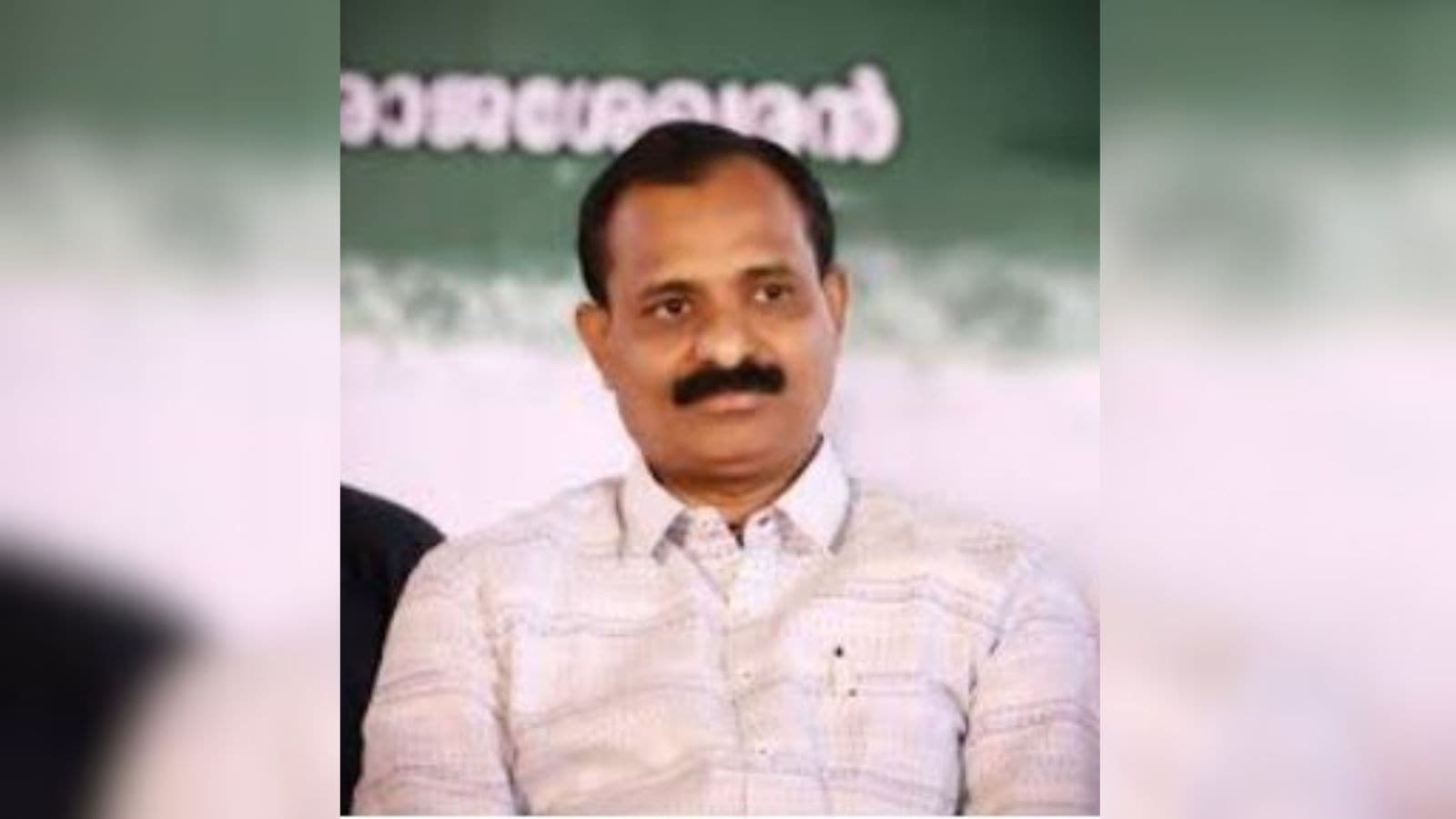
BJP's V V Rajesh elected Thiruvananthapuram Mayor, signaling a significant pre-poll boost for the party.
Summary
BJP leader V V Rajesh has been elected as the Mayor of Thiruvananthapuram, marking a significant political development in Kerala. This victory is perceived as a major pre-poll boost for the BJP, indicating potential shifts in the state's political landscape ahead of upcoming elections. For competitive exams, this highlights the growing presence of national parties in regional politics and the importance of understanding local government structures and election outcomes.
Key Points
- 1V V Rajesh, a leader from the BJP, was elected as the Mayor.
- 2The election occurred in Thiruvananthapuram, the capital city of Kerala.
- 3This mayoral victory is considered a 'big pre-poll boost' for the Bharatiya Janata Party (BJP).
- 4The position secured by V V Rajesh is that of the Mayor of the municipal corporation.
- 5The event is significant for understanding political dynamics in the state of Kerala.
In-Depth Analysis
The election of V V Rajesh, a Bharatiya Janata Party (BJP) leader, as the Mayor of Thiruvananthapuram, Kerala's capital city, marks a significant political milestone and offers a compelling case study for competitive exam aspirants. This victory, described as a 'big pre-poll boost' for the BJP, underscores the evolving political dynamics in a state traditionally dominated by the Left Democratic Front (LDF) and the United Democratic Front (UDF).
Kerala has historically presented a formidable challenge for the BJP. The state's unique socio-political fabric, characterized by high literacy rates, strong social welfare focus, and deeply entrenched political ideologies, has fostered a bipolar political system oscillating between the LDF (primarily CPI(M) led) and the UDF (Congress led). National parties like the BJP have struggled to make significant inroads, often relegated to a marginal presence in state assembly and parliamentary elections. Thiruvananthapuram, as the state capital and a major urban center, holds symbolic and strategic importance. A victory here, even at the municipal level, signals a potential shift in voter sentiment and the BJP's growing acceptance in an otherwise resistant political landscape.
This specific event involved the election of V V Rajesh to the mayoral post. The position of Mayor is crucial in urban local self-governance, acting as the head of the Municipal Corporation. While the role can be largely ceremonial in some contexts, it also involves significant administrative responsibilities, including overseeing urban development, sanitation, public health, and infrastructure projects within the city limits. For the BJP, this win is not just about holding a position but about establishing a foothold, gaining administrative experience at the local level, and demonstrating its capacity to govern in Kerala. It provides a platform to address local issues and build a grassroots presence, which has been a long-standing challenge for the party in the state.
Key stakeholders in this development include the BJP, which sees this as validation of its 'Southern push' strategy; the LDF and UDF, who must now contend with a more assertive third player in their traditional strongholds; and the electorate of Thiruvananthapuram, whose voting patterns reflect a nuanced engagement with local and national political narratives. For India, this matters profoundly as it highlights the ongoing decentralization of power and the increasing significance of local body elections. These elections, often overlooked in national discourse, are vital for ensuring governance at the grassroots level and directly impact citizens' daily lives. The BJP's success here could embolden its efforts to expand its national footprint, particularly in states where it has historically been weak.
The constitutional framework underpinning such elections is the **74th Constitutional Amendment Act, 1992**. This landmark amendment institutionalized urban local bodies (ULBs) like Municipal Corporations, providing them constitutional status and defining their powers and responsibilities. Articles 243P to 243ZG of the Indian Constitution deal with Municipalities, outlining provisions for their constitution, composition, reservation of seats, duration, powers, and the conduct of elections by the **State Election Commission**. The Mayor, as the head of the Municipal Corporation, derives powers and functions from state legislation enacted in conformity with the 74th Amendment. This victory reaffirms the democratic spirit of local self-governance and the role of citizens in shaping their urban environment.
Historically, Kerala's politics have been characterized by strong ideological divides, with the CPI(M) and Congress representing distinct political philosophies. The BJP, with its Hindutva ideology and nationalistic platform, has found it challenging to penetrate this established order. However, incremental gains in recent local body elections and the increasing vote share in some parliamentary constituencies, such as Thiruvananthapuram itself where Suresh Gopi (BJP) secured a Lok Sabha seat in 2024, indicate a gradual shift. This mayoral victory could be seen as a continuation of this trend, signaling a broader acceptance among a segment of the urban electorate.
Looking ahead, this victory has several implications. It could serve as a morale booster for BJP cadres in Kerala, potentially translating into increased effort and resource allocation for future elections, including the upcoming Lok Sabha elections in 2024 (if the mayoral election preceded it, as suggested by 'pre-poll boost') and the Kerala Assembly elections in 2026. It forces the LDF and UDF to recalibrate their strategies, addressing the emergent threat from the BJP. Furthermore, it highlights the importance of urban governance issues – infrastructure, waste management, public transport, and smart city initiatives – which often become focal points in municipal elections. The performance of V V Rajesh as Mayor will be closely watched, as it will directly influence public perception of the BJP's governance capabilities in Kerala. This event underscores that Indian politics is not monolithic but a complex interplay of national, state, and local dynamics, where even a local election can have far-reaching implications for national political parties and governance models.
Exam Tips
This topic falls under the 'Indian Polity and Governance' section of the UPSC Civil Services Exam (GS-II) and State PSCs, as well as 'Current Events of National Importance' for Prelims. Focus on the constitutional provisions related to Urban Local Bodies (ULBs).
Study the 73rd and 74th Constitutional Amendment Acts (1992) in detail. Understand the composition, powers, and functions of Municipal Corporations, Municipalities, and Nagar Panchayats, as well as the role of the Mayor and the State Election Commission.
Common question patterns include factual questions (e.g., 'Which Constitutional Amendment deals with Urban Local Bodies?', 'Who conducts elections for Municipal Corporations?'), analytical questions (e.g., 'Discuss the significance of local body election results in shaping state politics,' 'Analyze the challenges faced by Mayors in urban governance'), and descriptive questions on the powers and functions of Mayors or Municipal Commissioners.