


Relevant for Exams
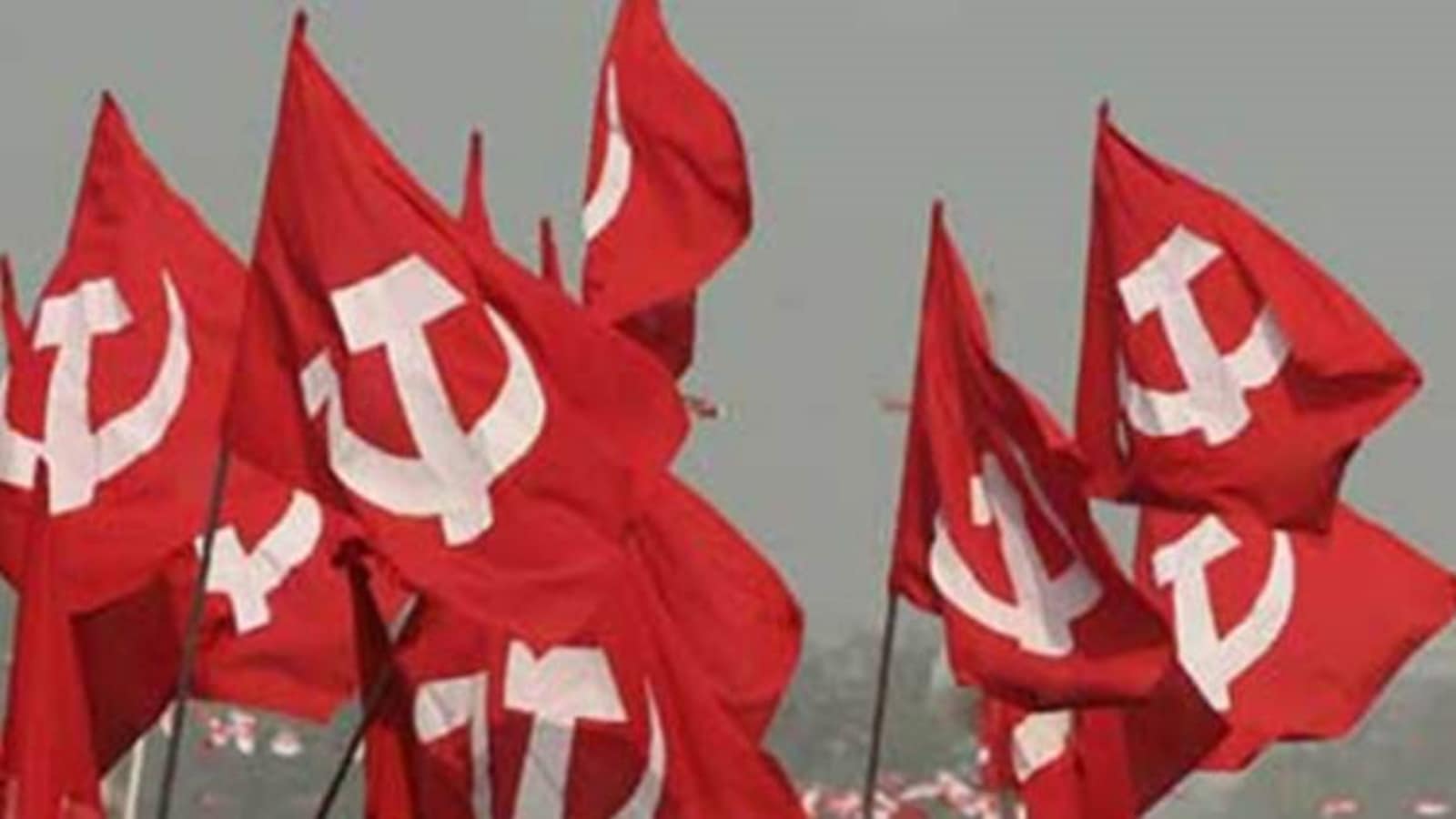
CPI's 100th anniversary: First president's speech on Gandhi's Khadi and Tilak's legacy.
Summary
The article's title indicates a historical analysis of the Communist Party of India (CPI) on its 100th anniversary. It would likely explore the party's foundational ideology, focusing on its first conclave president's views, including criticisms of Mahatma Gandhi's Khadi movement and praise for Bal Gangadhar Tilak. This topic is significant for understanding India's political history and ideological evolution, crucial for competitive exams.
Key Points
- 1The article's title marks the 100th anniversary of the Communist Party of India (CPI).
- 2It refers to a speech by CPI's first conclave president, detailing early ideological positions.
- 3The speech reportedly included criticisms of Mahatma Gandhi's Khadi movement.
- 4The speech also reportedly contained praise for Bal Gangadhar Tilak.
- 5Due to the absence of article content, specific dates, names, and detailed excerpts from the speech are unavailable for extraction.
In-Depth Analysis
The 100th anniversary of the Communist Party of India (CPI) marks a significant milestone in India's political and ideological landscape, inviting us to delve into the foundational ideas that shaped one of the country's oldest political parties. While the specific article content is unavailable, the title itself provides a fascinating glimpse into the early ideological struggles and alliances within the Indian nationalist movement. The CPI's inception in 1920 in Tashkent (then in Soviet Russia) by figures like M.N. Roy, Abani Mukherji, and others, was deeply influenced by the success of the 1917 Russian Revolution and the global spread of communist ideology under the guidance of the Comintern. Its formation was driven by a belief that the Indian freedom struggle, while nationalist, needed a distinct class-based approach focusing on the emancipation of the working class and peasantry, rather than merely replacing British rule with Indian capitalist rule.
The early communist movement in India found itself navigating a complex political environment dominated by Mahatma Gandhi's non-violent, mass-based nationalist movement. The reported criticism of Gandhi's Khadi movement by the CPI's first conclave president highlights a fundamental ideological divergence. Gandhi's Khadi movement, promoting hand-spun and hand-woven cloth, was central to his Swadeshi philosophy, aiming for economic self-sufficiency, rural revival, and a symbolic rejection of British industrial goods. For communists, however, this approach was often seen as romanticizing pre-industrial modes of production, diverting attention from the need for large-scale industrialization and the inherent class struggle between capitalists and laborers. They argued that Khadi, while a symbol of resistance, did not address the root causes of poverty and exploitation, which they believed lay in the capitalist system itself. Their focus was on mobilizing the industrial working class and the landless peasantry, advocating for radical land reforms and industrial workers' rights, a stark contrast to Gandhi's emphasis on trusteeship and class harmony.
Conversely, the praise for Bal Gangadhar Tilak by the same CPI leader is intriguing. Tilak, a prominent 'Extremist' leader of the Indian National Congress in the late 19th and early 20th centuries, was known for his radical nationalism, his call for 'Swaraj is my birthright,' and his efforts to mobilize the masses through cultural festivals like Ganesh Chaturthi and Shivaji Jayanti. While not a socialist or communist, Tilak's uncompromising anti-imperialist stance, his willingness to challenge British authority directly, and his appeal to a broader section of society, including the lower middle class and some peasant groups, likely resonated with early communists. His radical approach might have been seen as a more direct and forceful challenge to British rule compared to what they perceived as the softer, reformist tendencies of the moderate Congress or the economic philosophy of Gandhi. This illustrates the complex tactical alliances and ideological distinctions that existed within the broader anti-colonial movement.
Key stakeholders in this historical narrative include the CPI itself, representing the nascent communist movement; Mahatma Gandhi, the undisputed leader of the mainstream nationalist movement; and Bal Gangadhar Tilak, a towering figure of radical nationalism. The British colonial administration was the common adversary, while the Indian working class and peasantry were the intended beneficiaries and mobilizable forces for the communists. This ideological ferment matters profoundly for India as it laid the groundwork for the diverse political spectrum we see today. The left-wing movement significantly influenced labor laws, land reform debates, and the overall discourse on social justice and economic equality in independent India. The CPI, along with its offshoots like the CPI(M), played crucial roles in forming governments in states like Kerala and West Bengal, demonstrating the electoral viability of communist politics in a democratic framework.
Historically, the CPI faced challenges, including being banned by the British, involvement in the Meerut Conspiracy Case (1929), and navigating the complexities of World War II and the Cold War. Post-independence, it participated in parliamentary democracy, influencing policy debates and advocating for socialist principles. While direct constitutional articles might not refer to specific political parties, the right to form associations (Article 19(1)(c) of the Indian Constitution) is fundamental to the existence of parties like the CPI. Furthermore, the Directive Principles of State Policy (DPSP), particularly Articles 38, 39, and 43, which advocate for social and economic justice, equitable distribution of wealth, and workers' rights, resonate with many of the core demands of the communist movement, even if their methods differed. These principles underline the state's commitment to welfare and reducing inequalities, objectives that communists have historically championed.
Looking ahead, the future implications for the communist movement in India are complex. While their electoral influence has waned significantly in recent decades, particularly at the national level, their historical legacy in shaping labor rights, peasant movements, and social welfare discourse remains. The CPI's 100th anniversary serves as a reminder of the enduring questions of economic inequality, social justice, and the role of the state in development—issues that continue to be central to India's political debate. The party's evolution reflects the broader journey of India from a colonial state to a sovereign, democratic republic, grappling with diverse ideological currents in its quest for progress and equity.
Exam Tips
This topic falls under 'Modern Indian History' and 'Indian Polity' sections of UPSC, State PSC, and SSC exams. Focus on the ideological underpinnings of various political movements during the freedom struggle.
Study the rise of left-wing politics in India, key personalities like M.N. Roy, S.A. Dange, and the formation of early communist groups. Connect this with the broader global communist movement and the Russian Revolution.
Understand the differences and similarities between various nationalist ideologies: Gandhian philosophy, radical nationalism (Tilak), and early socialist/communist ideas. Questions often involve comparing and contrasting their approaches to Swaraj, economic development, and social change.
Be prepared for questions on key events related to the communist movement, such as the Meerut Conspiracy Case, the formation of AITUC, and the role of communist parties in post-independence state politics (e.g., Kerala, West Bengal).
Familiarize yourself with relevant Constitutional provisions like Article 19(1)(c) (Freedom of Association) and the Directive Principles of State Policy (Articles 38, 39, 43) that reflect socialist ideals, as these provide the legal and philosophical context for political parties and their objectives.