


Relevant for Exams
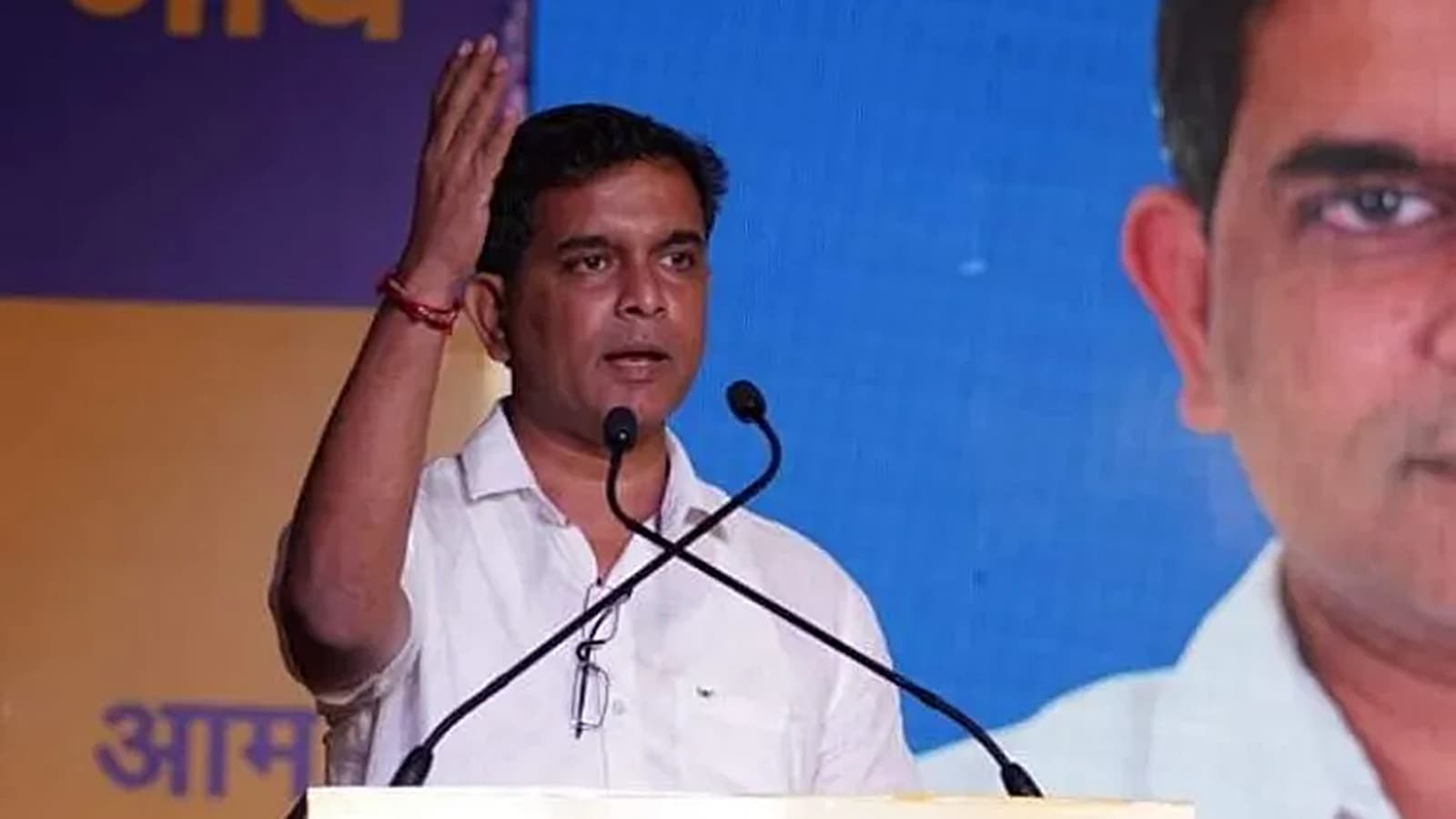
AAP replaces Goa chief Amit Palekar after poor Zilla Panchayat poll performance.
Summary
The Aam Aadmi Party (AAP) has removed Amit Palekar from his position as the Goa unit chief. This decision was taken following the party's unsatisfactory performance in the recent Zilla Panchayat elections in the state. This event highlights internal party accountability and leadership changes based on electoral outcomes, a common theme in political science for competitive exams.
Key Points
- 1Aam Aadmi Party (AAP) removed its Goa unit chief.
- 2The leader removed from the position was Amit Palekar.
- 3The decision followed the party's performance in the Zilla Panchayat elections.
- 4The specific reason cited for the removal was a 'bleak show' in the polls.
- 5This leadership change pertains to the state of Goa.
In-Depth Analysis
The Aam Aadmi Party's (AAP) decision to remove Amit Palekar as its Goa unit chief, following a 'bleak show' in the recent Zilla Panchayat elections, offers a crucial lens through which to examine internal party accountability, the significance of grassroots elections, and the challenges faced by national parties attempting to expand their footprint. This event underscores the cut-throat nature of Indian electoral politics, where performance at every level, even local bodies, can dictate leadership changes.
**Background Context and What Happened:**
AAP, founded in 2012, emerged as a potent political force, initially focusing on anti-corruption and good governance. After establishing strong roots in Delhi and making significant inroads in Punjab, the party has consistently aimed to expand its national presence. Goa, with its distinct political landscape and smaller electorate, has been one such target state. AAP contested the Goa Assembly elections in 2017 and 2022, managing to secure two seats in the 2022 polls, a modest but significant entry into the state assembly. Amit Palekar, a prominent face, was even projected as the party's Chief Ministerial candidate in the 2022 elections, reflecting the party's trust in his leadership. However, the recent Zilla Panchayat elections saw the party performing below expectations. While specific results for AAP's performance aren't detailed in the prompt, the quick summary indicates a 'bleak show,' which prompted the central leadership to take swift action. The removal of Palekar is a direct consequence of this electoral setback, signaling a clear message that electoral performance is paramount for leadership retention within the party.
**Key Stakeholders Involved:**
1. **Aam Aadmi Party (AAP) Central Leadership:** This body, including figures like Arvind Kejriwal and other senior leaders, made the decision to remove Palekar. Their stake lies in ensuring the party's national growth trajectory and maintaining discipline and performance standards across state units.
2. **Amit Palekar:** As the former Goa unit chief and a prominent local leader, his career trajectory is directly impacted. His removal highlights the personal cost of electoral failure in competitive politics.
3. **Goan Electorate:** Their votes in the Zilla Panchayat elections directly influenced the outcome that led to Palekar's removal. Their preferences at the grassroots level are crucial indicators for all political parties.
4. **Goa Unit of AAP:** The remaining members and workers now face the challenge of rebuilding the organization and preparing for future elections under new leadership. This event will likely trigger internal restructuring and strategic re-evaluation.
5. **Other Political Parties in Goa (e.g., BJP, Congress):** These parties observe AAP's internal dynamics as a measure of their competitor's strength and strategy, potentially influencing their own future electoral plans.
**Why This Matters for India and Historical Context:**
This event is significant for India as it highlights several critical aspects of its democratic framework. Firstly, it underscores the importance of **Panchayati Raj Institutions (PRIs)** as the third tier of governance. Mandated by the **73rd Constitutional Amendment Act of 1992**, PRIs like Zilla Panchayats are crucial for decentralized governance and bringing democracy to the grassroots. Performance in these elections, though often localized, can be a barometer of a party's ground-level connect and future prospects in state assembly or national elections. The Act, through **Articles 243 to 243O**, provides for the constitution, powers, and responsibilities of Panchayats, including the role of the **State Election Commission (Article 243K)** in conducting these elections. This event shows that even national parties recognize the strategic importance of winning at this local level.
Secondly, it speaks to the theme of **internal party democracy and accountability**. While not explicitly mandated by any constitutional provision, the practice of holding leaders accountable for electoral outcomes is a common feature of robust party systems. This move by AAP is an example of a party attempting to enforce performance standards, which is vital for maintaining public trust and internal cohesion. Historically, Indian political parties have often faced criticism for a lack of internal democracy and dynastic succession; instances like this, where performance dictates leadership, offer a contrast.
**Future Implications:**
For AAP, this leadership change in Goa signifies a renewed focus on strengthening its organizational structure and electoral strategy in the state. The party will likely appoint a new chief who can revitalize the unit, address local concerns more effectively, and prepare for the next round of state assembly elections (due in 2027). This could involve a more aggressive grassroots campaign, strategic alliances, or a shift in local messaging. For the broader Indian political landscape, such decisions by a national party reinforce the idea that local election results are not just isolated events but crucial indicators of political momentum and public sentiment. It also serves as a reminder to other parties to continuously assess and adapt their leadership and strategies based on electoral performance at all levels of governance. The challenge for AAP will be to learn from this setback and demonstrate resilience in a state where regional parties and established national players like BJP and Congress have a strong hold.
Exam Tips
This topic falls under the 'Indian Polity and Governance' section of the UPSC Civil Services Exam (GS Paper II), State PSCs, and other competitive exams. Focus on the structure and functions of Panchayati Raj Institutions (PRIs), especially the 73rd Constitutional Amendment Act, 1992, and related Articles (243-243O), and the role of the State Election Commission (Article 243K).
Study the evolution of political parties in India, their organizational structure, and internal dynamics. Questions often test understanding of how parties function at national and state levels, their strategies for expansion, and the factors influencing leadership changes (e.g., electoral performance, internal dissent).
Be prepared for analytical questions that connect local body election results to broader political trends, state assembly elections, and the concept of grassroots democracy. Understand the significance of decentralization and how political parties engage with local governance.
Familiarize yourself with the key provisions of the 73rd and 74th Constitutional Amendments, including the mandatory and voluntary provisions, the role of State Finance Commission (Article 243I), and the types of local bodies (Gram Panchayat, Zilla Parishad, Municipalities).
Practice questions on the challenges faced by regional and national parties in expanding their base in diverse states, the role of local leadership, and the impact of anti-incumbency or pro-incumbency waves at different tiers of government.