


Relevant for Exams
Aravallis' critical role in North India's climate, air, and water highlighted for environmental stability.
Summary
The article emphasizes the Aravalli Range's pivotal role in sustaining the climate, air quality, and water resources of the North Indian plains. This ancient mountain system acts as a critical ecological barrier, influencing monsoon patterns, preventing desertification, and facilitating groundwater recharge. Understanding its environmental significance is crucial for competitive exams, particularly in geography, environment, and ecology sections, highlighting its impact on regional sustainability.
Key Points
- 1The Aravalli Range is one of the world's oldest fold mountain systems, extending approximately 692 km from Gujarat to Delhi.
- 2It acts as a crucial natural barrier, preventing the westward expansion of the Thar Desert into the fertile Indo-Gangetic plains.
- 3The range significantly influences the climate of North India by impacting monsoon patterns and rainfall distribution.
- 4Aravallis are vital for groundwater recharge in Rajasthan, Haryana, and Delhi, supporting numerous water bodies and aquifers.
- 5They serve as a green lung and biodiversity hotspot, crucial for maintaining air quality and ecological balance in the region.
In-Depth Analysis
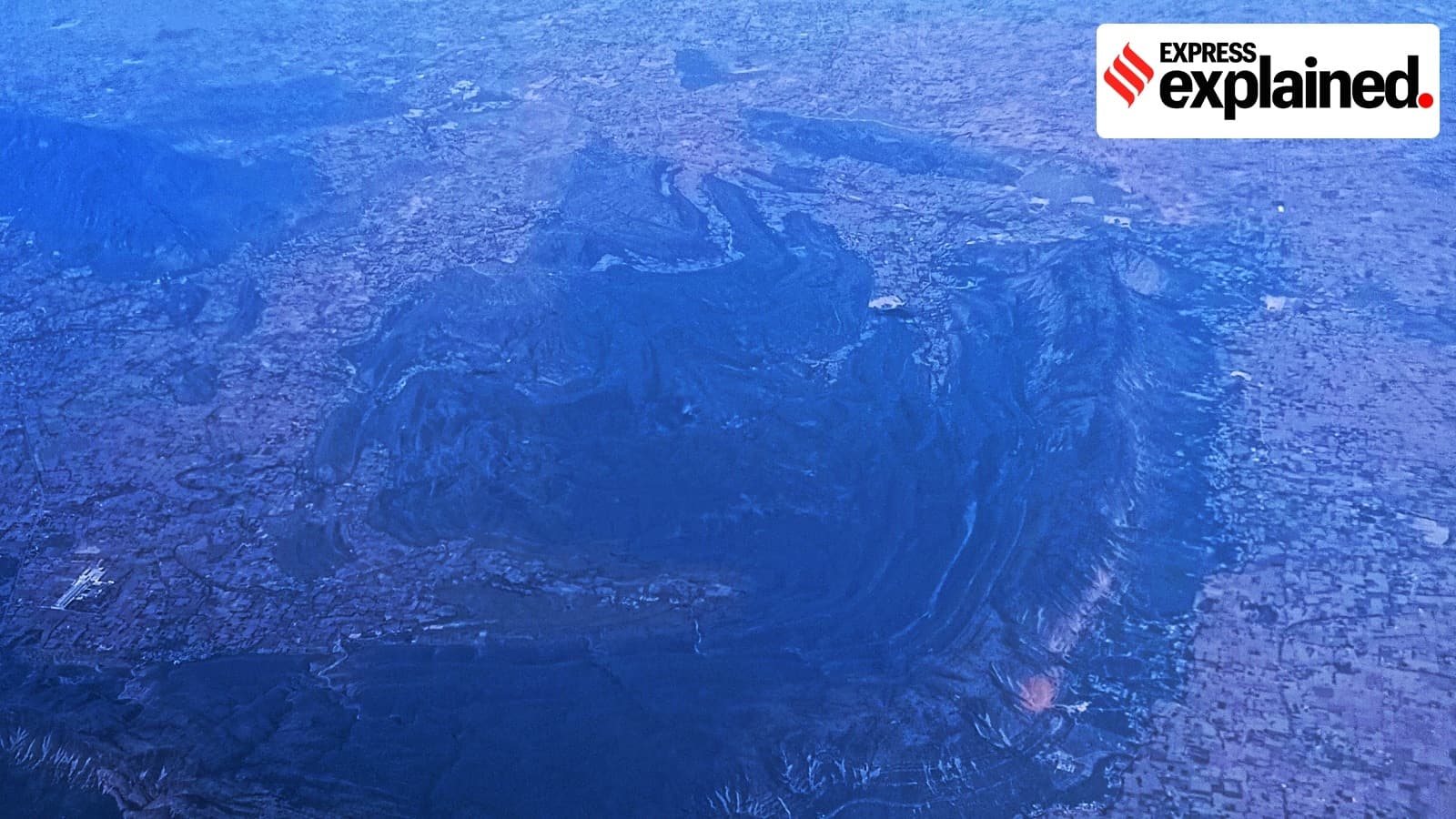
The Aravalli Range, one of the world's oldest fold mountain systems, stands as a formidable natural sentinel for the climate, air, and water resources of the North Indian plains. Extending approximately 692 km from Gujarat, through Rajasthan and Haryana, culminating in Delhi, this ancient range, formed during the Precambrian era (around 2.5 billion years ago), has profoundly shaped the geography, ecology, and human settlements of the region. Its geological antiquity means it has undergone significant erosion, yet its remaining rugged peaks and forested slopes continue to perform indispensable ecological functions.
At its core, the Aravallis act as a crucial natural barrier, fundamentally altering the environmental landscape of North India. Its primary role is preventing the westward expansion of the Thar Desert into the fertile Indo-Gangetic plains. Without the Aravallis, the desert sands would likely engulf vast agricultural lands, turning productive areas into barren wastelands and displacing millions. This barrier effect is not just physical; it also influences atmospheric circulation, creating a rain shadow effect on its western side while facilitating monsoon rains on its eastern flank. The range's orientation is critical: it runs roughly parallel to the path of the Arabian Sea branch of the southwest monsoon winds, channeling them towards the plains and contributing to rainfall in parts of Rajasthan, Haryana, and Delhi. Conversely, the Bay of Bengal branch of the monsoon gets obstructed, leading to less rainfall in certain western areas.
Key stakeholders in the Aravalli's fate are diverse and often have conflicting interests. The Central and State Governments (Rajasthan, Haryana, Gujarat, Delhi) are responsible for policy formulation, environmental protection, and resource management. Agencies like the Ministry of Environment, Forest and Climate Change (MoEF&CC), state forest departments, and mining departments are directly involved. Local communities, including indigenous groups, depend on the range for their livelihoods, water, and non-timber forest produce. Environmental activists and Non-Governmental Organizations (NGOs) tirelessly advocate for the Aravalli's protection, often resorting to legal battles. Conversely, powerful mining lobbies and real estate developers exert immense pressure for economic exploitation, leading to illegal quarrying, deforestation, and encroachment. The judiciary, particularly the Supreme Court and the National Green Tribunal (NGT), has frequently intervened, issuing directives to curb illegal activities and protect the range, underscoring its role as a crucial environmental guardian.
The significance of the Aravallis for India is multi-faceted. Environmentally, it's a 'green lung' for the National Capital Region (NCR), helping to filter pollutants and improve air quality in one of the world's most polluted regions. It is also a vital biodiversity hotspot, home to numerous species of flora and fauna, including leopards, hyenas, and various bird species, many of which are endangered. Economically, its preservation is crucial for the agricultural productivity of the Indo-Gangetic plains, which feed millions. It supports groundwater recharge in water-stressed states like Rajasthan and Haryana, replenishing aquifers that supply drinking water and irrigation. Socially, the range supports the livelihoods of local communities and provides recreational spaces. Its degradation would lead to severe water scarcity, increased dust storms, worsening air quality, loss of biodiversity, and forced migration, impacting national stability and public health.
Historically, the Aravallis have been a cradle of civilization and a strategic defensive line. Forts and ancient settlements dot its landscape, testifying to its importance for human habitation for millennia. Today, the threats are unprecedented. Illegal mining, rampant urbanization, deforestation for infrastructure projects, and encroachment continue to degrade the ecosystem. This destruction not only threatens the ecological balance but also impacts the constitutional mandate of environmental protection. Article 48A of the Indian Constitution, a Directive Principle of State Policy, obligates the State to "endeavour to protect and improve the environment and to safeguard the forests and wildlife of the country." Furthermore, Article 51A(g) makes it a Fundamental Duty of every citizen to "protect and improve the natural environment including forests, lakes, rivers and wildlife, and to have compassion for living creatures." Various legislative measures like the Environment (Protection) Act, 1986, the Forest (Conservation) Act, 1980, and the Wildlife (Protection) Act, 1972, provide the legal framework for its conservation. The National Green Tribunal Act, 2010, further empowers a dedicated body to handle environmental disputes, including those concerning the Aravallis.
The future implications are stark. Continued degradation of the Aravallis will accelerate desertification, exacerbate water crises in already parched regions, intensify dust storms, and worsen air pollution in major urban centers. It will also lead to significant biodiversity loss and potentially alter regional climate patterns, making the fight against climate change even harder. Therefore, a concerted effort involving stricter enforcement of environmental laws, sustainable development practices, afforestation drives, community participation, and inter-state cooperation is imperative. The Aravallis are not just a geological feature; they are a lifeline for North India, and their preservation is a matter of national environmental security and sustainable future for millions.
Exam Tips
**Syllabus Section & Focus:** This topic falls under 'Indian Geography (Physical Geography)' and 'Environment & Ecology' for UPSC Civil Services (Prelims & Mains GS-I, GS-III), State PSCs, SSC, and other competitive exams. Focus on its geological formation, geographical extent, and ecological functions.
**Related Topics for Integrated Study:** Link the Aravallis to topics like the 'Indian Monsoon Mechanism' (its role in influencing rainfall), 'Desertification and Land Degradation' (its barrier function), 'Water Scarcity and Groundwater Recharge' (its role in replenishing aquifers), and 'Biodiversity Hotspots and Conservation' (its ecological significance).
**Common Question Patterns:** Expect MCQs on its age, extent, highest peak (Guru Shikhar), and specific functions (e.g., preventing Thar desert expansion). Descriptive questions may ask about its environmental significance for North India, challenges it faces, or the constitutional/legal framework for its protection. Be prepared to discuss its role in climate change mitigation and adaptation.
**Constitutional & Policy References:** Memorize relevant constitutional articles (Article 48A, 51A(g)) and key environmental acts (Environment Protection Act, 1986; Forest Conservation Act, 1980; Wildlife Protection Act, 1972). Understand how these provisions are applied to protect such ecological assets.