


Relevant for Exams
U.P. CM Yogi signals 'fearless business' shift, claims state shed 'Bimaru' tag to become revenue-surplus.
Summary
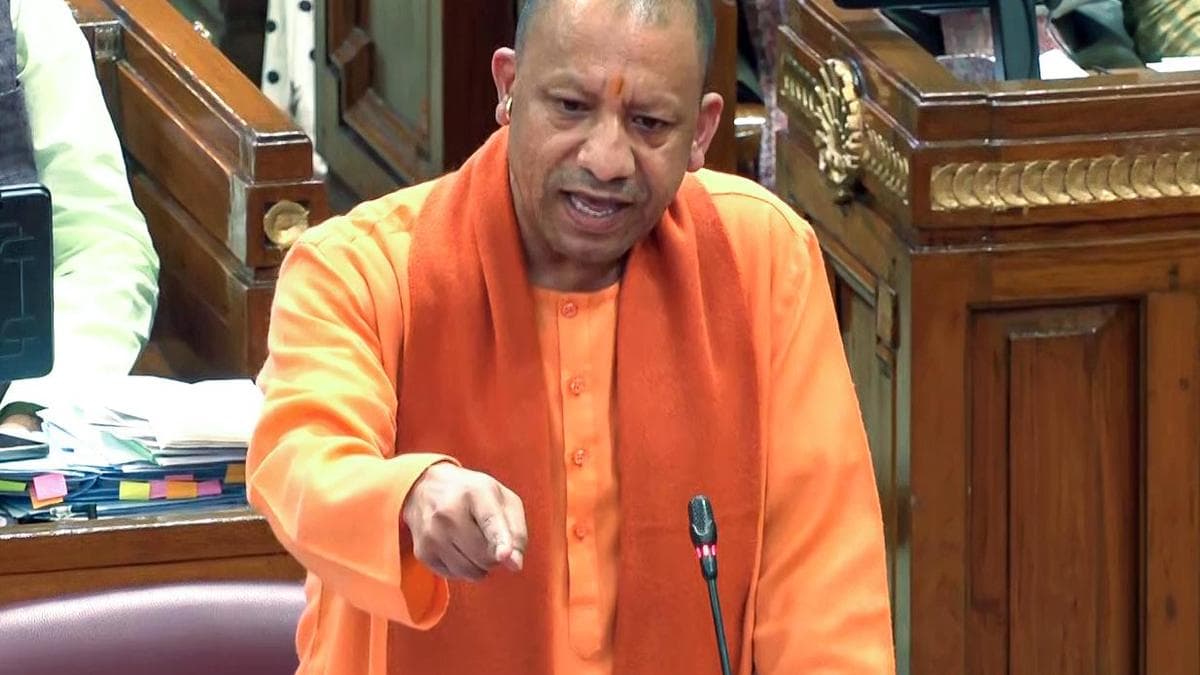
Uttar Pradesh Chief Minister Yogi Adityanath, in an Assembly speech, indicated a strategic shift towards fostering 'fearless business' and enhancing 'trust of doing business'. He asserted that the state has moved past its 'Bimaru' status to become a revenue-surplus economy. This transformation is significant for understanding state economic development and governance models, crucial for competitive exams, especially State PSCs, highlighting policy direction.
Key Points
- 1Uttar Pradesh Chief Minister Yogi Adityanath made the statement during a speech in the State Assembly.
- 2The CM signaled a shift in focus towards promoting 'fearless business' and 'trust of doing business' in the state.
- 3He claimed that Uttar Pradesh has successfully shed its former 'Bimaru' tag.
- 4CM Yogi stated that Uttar Pradesh has emerged as a 'revenue-surplus powerhouse'.
- 5The term 'Bimaru' is an acronym for Bihar, Madhya Pradesh, Rajasthan, and Uttar Pradesh, historically indicating poor economic and social indicators.
In-Depth Analysis
Uttar Pradesh Chief Minister Yogi Adityanath's recent statement in the State Assembly, signaling a strategic shift towards fostering 'fearless business' and enhancing 'trust of doing business', marks a pivotal moment in the narrative of India's most populous state. His assertion that Uttar Pradesh has shed its notorious 'Bimaru' tag to emerge as a 'revenue-surplus powerhouse' encapsulates an ambitious vision for economic transformation.
**Background Context: The 'Bimaru' Legacy**
The term 'Bimaru' is an acronym coined by demographer Ashish Bose in the late 1980s, referring to Bihar, Madhya Pradesh, Rajasthan, and Uttar Pradesh. It literally translates to 'sick' in Hindi, and was used to highlight the poor economic and social indicators of these states, particularly their high population growth, low literacy rates, poor health infrastructure, and overall underdevelopment. For decades, Uttar Pradesh, with its vast population and complex socio-political landscape, epitomized many of these challenges. It struggled with issues like pervasive law and order problems, corruption, bureaucratic hurdles, inadequate infrastructure, and an agrarian economy that often failed to generate sufficient employment or attract significant industrial investment. This historical context of underperformance makes the CM's claim of shedding the 'Bimaru' tag a powerful political and economic statement.
**What Happened: A Stated Policy Shift**
CM Adityanath's speech outlined a clear departure from the past. 'Fearless business' directly addresses the historical concerns of law and order, extortion, and political interference that deterred investors. It implies a robust crackdown on criminal elements and a commitment to ensuring security for businesses and their personnel. 'Trust of doing business', on the other hand, points towards improving the ease of doing business environment – simplifying regulations, ensuring policy stability, expediting clearances, and fostering a predictable, transparent administrative framework. The claim of becoming a 'revenue-surplus powerhouse' is significant, as it indicates that the state's own revenues (tax and non-tax) are now sufficient to cover its non-debt expenditures, reducing reliance on central grants and borrowing. This suggests improved fiscal management and potentially higher economic activity leading to increased tax collection.
**Key Stakeholders Involved**
1. **Uttar Pradesh Government (CM Yogi Adityanath and bureaucracy)**: As the primary policy architect and implementer, the state government is responsible for enacting reforms, ensuring law and order, and creating an investor-friendly ecosystem. Their commitment and efficiency are crucial for the success of this shift.
2. **Businesses and Investors (Domestic and International)**: These are the direct beneficiaries and primary drivers of economic growth. Their confidence in the state's environment – both in terms of security and ease of operations – will determine the actual flow of investment and job creation.
3. **Citizens of Uttar Pradesh**: The ultimate beneficiaries of economic development through job opportunities, improved public services, better infrastructure, and enhanced quality of life. Their perception of governance and security is also vital.
4. **Central Government**: While state-led, this initiative aligns with national policies like 'Make in India' and 'Atmanirbhar Bharat'. The Central government, through various schemes, fiscal transfers (as per Finance Commission recommendations under Article 280), and its 'Ease of Doing Business' framework, influences the states' economic trajectory.
**Significance for India**
Uttar Pradesh, home to over 240 million people, is India's largest state by population and contributes significantly to the national economy. A thriving UP directly impacts India's overall GDP growth, poverty reduction efforts, and human development indicators. Its economic resurgence can significantly reduce regional disparities, a long-standing challenge for India's federal structure. By attracting investment and creating jobs, UP can harness its massive demographic dividend, turning its large youth population into an asset rather than a liability. Furthermore, a successful transformation in UP can serve as a powerful model for other states grappling with similar developmental challenges, reinforcing the principles of cooperative federalism.
**Historical Context and Future Implications**
Historically, UP's potential was often hampered by socio-political issues and economic stagnation. While the 'Bimaru' tag highlighted a grim reality, recent years have seen concerted efforts by the state government to address these structural issues. The 'Uttar Pradesh Industrial Investment and Employment Promotion Policy' and various sector-specific policies are examples of these efforts. The future implications are profound. If the state can sustain this momentum, it could firmly establish itself as a leading investment destination, fostering industrialization, boosting manufacturing, and expanding its service sector. This would lead to substantial employment generation, improved per capita income, and better social indicators like education and healthcare. However, the challenge lies in ensuring inclusive growth that benefits all sections of society, maintaining political stability, and continuously adapting policies to global economic changes. Sustaining the 'trust of doing business' requires long-term commitment to transparency, rule of law, and efficient administration.
**Related Constitutional Articles, Acts, and Policies**
* **Seventh Schedule (State List - List II)**: Grants states the power over 'industries' (Entry 24), 'trade and commerce within the state' (Entry 26), and 'public order' (Entry 1). This forms the constitutional basis for state-led economic and law enforcement reforms.
* **Article 282**: Allows the Union or a State to make grants for any public purpose, including promoting industrial development and infrastructure, vital for attracting investment.
* **Article 243G & 243W**: Pertain to powers, authority, and responsibilities of Panchayats and Municipalities, crucial for local-level development and ease of doing business at the grassroots.
* **Ease of Doing Business (EoDB) Index**: While a global World Bank report, the Department for Promotion of Industry and Internal Trade (DPIIT) conducts state-level EoDB rankings, pushing states like UP to improve their regulatory environment. Reforms often involve amendments to state-level acts concerning labour, land, and municipal clearances.
* **Uttar Pradesh Industrial Investment & Employment Promotion Policy**: A key state policy framework designed to attract investment and create jobs.
* **MSME Policy of Uttar Pradesh**: Focuses on supporting Micro, Small, and Medium Enterprises, which are crucial for grassroots economic development and employment.
* **Fiscal Responsibility and Budget Management (FRBM) Act (State Level)**: State-specific FRBM Acts aim to ensure fiscal discipline, which is essential for achieving and maintaining a 'revenue-surplus' status.
Exam Tips
This topic falls under 'Indian Economy' (GS-III for UPSC and State PSCs) and 'Indian Polity and Governance' (GS-II for UPSC and State PSCs). Focus on the concept of 'Bimaru' states, state fiscal health, and ease of doing business reforms.
Study related topics like Fiscal Federalism (Article 280, Finance Commission), Human Development Index (HDI) and its regional disparities, and the role of state policies in attracting investment. Understand the difference between revenue surplus and fiscal surplus.
Common question patterns include: analytical questions on the challenges of regional disparities and state-led development, direct questions on the 'Bimaru' concept, policy initiatives for improving ease of doing business, and the impact of large states' economic performance on national growth.
Related Topics to Study
Full Article
The State has shed its former ‘Bimaru’ tag to emerge as a revenue-surplus powerhouse, he said