


Relevant for Exams
Tribal student scholarships for 2025-26: ₹100.93 crore disbursed to 59,297 beneficiaries.
Summary
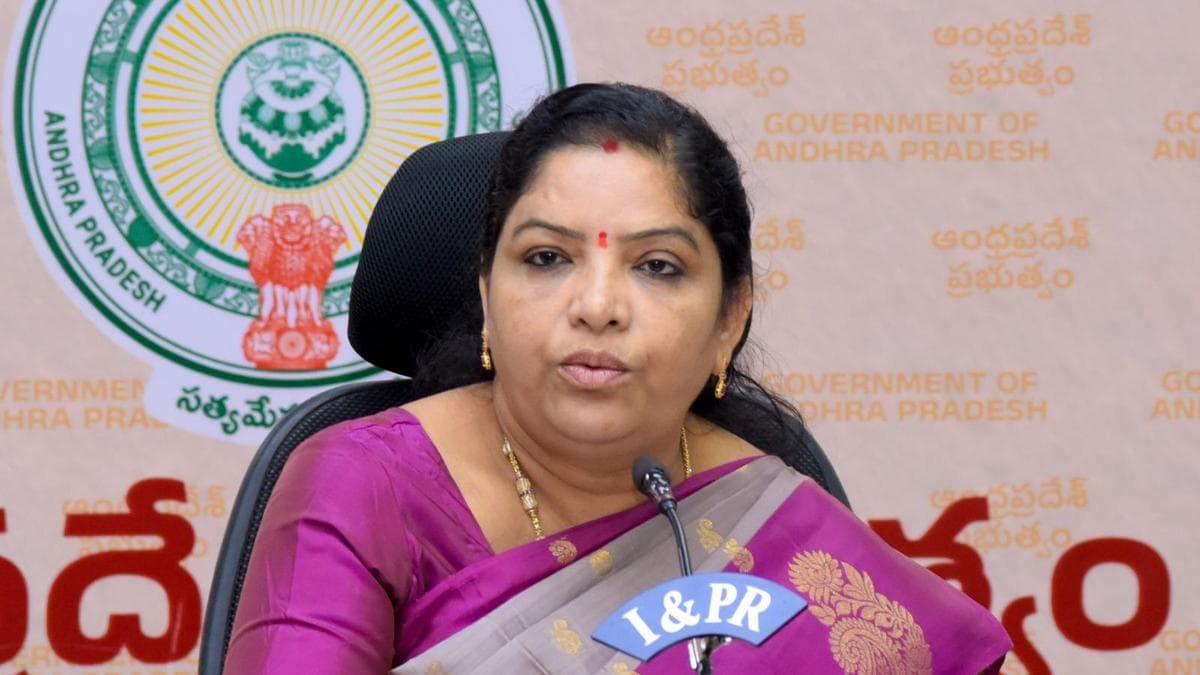
Minister Sandhya Rani announced the ongoing release of scholarships for tribal students for the 2025-26 academic year. So far, ₹100.93 crore has been disbursed, benefiting 59,297 students. This initiative highlights government efforts in tribal welfare and education, making specific figures and scheme details relevant for competitive exams focusing on social sector schemes and government expenditure.
Key Points
- 1Scholarships are being released for Tribal students.
- 2The funds are for the 2025-26 academic year.
- 3Minister Sandhya Rani made the announcement regarding the scholarship release.
- 4A total of ₹100.93 crore has been disbursed so far.
- 5The scholarship scheme has benefited 59,297 students.
In-Depth Analysis
The announcement by Minister Sandhya Rani regarding the ongoing release of scholarships for tribal students for the 2025-26 academic year, with ₹100.93 crore already disbursed to 59,297 beneficiaries, underscores India's unwavering commitment to inclusive development. This initiative is far more than a mere financial transaction; it represents a critical pillar in the nation's strategy to uplift its Scheduled Tribe (ST) population, integrate them into the mainstream, and ensure equitable access to education and opportunities.
**Background and Historical Context:** India's tribal communities, often residing in remote and geographically challenging regions, have historically faced significant socio-economic disadvantages, including poverty, illiteracy, and lack of access to basic services. Post-independence, the framers of the Indian Constitution recognized the unique challenges faced by these communities and enshrined special provisions to protect their rights and promote their welfare. The concept of 'Scheduled Tribes' was introduced to identify these groups, and the state was mandated to undertake affirmative action. Over the decades, various policies and schemes have been launched, ranging from land reforms and forest rights to reservations in education and employment, all aimed at correcting historical injustices and fostering their development. Scholarships, in particular, have emerged as a crucial tool to break the cycle of poverty and illiteracy by enabling tribal youth to pursue education without financial burden.
**What Happened:** The recent announcement confirms the continuity and scale of government efforts in tribal welfare. For the upcoming 2025-26 academic year, the process of disbursing scholarships to eligible tribal students is already in motion. The figures — ₹100.93 crore disbursed to nearly 60,000 students — highlight the significant financial outlay and the wide reach of these schemes. This proactive release of funds ensures that students can plan their academic year without financial anxiety, reinforcing the government's commitment to timely support.
**Key Stakeholders Involved:** At the forefront are the **Ministry of Tribal Affairs** at the Union level and the respective **State Welfare Departments**, which are responsible for designing, funding, and implementing these scholarship schemes. They act as the primary policy formulators and disbursing authorities. The direct **beneficiaries** are the tribal students and their families, for whom these scholarships open doors to education and better livelihoods. **Educational institutions** (schools, colleges, universities) play a crucial role in facilitating admissions, verifying eligibility, and supporting students through their academic journey. Civil society organizations and NGOs often assist in outreach and ensuring that eligible students are aware of and can access these benefits.
**Significance for India:** This scholarship program holds immense significance for India's socio-economic fabric. Firstly, it is a testament to the nation's commitment to **social justice and equity**, aligning with the Directive Principles of State Policy. By reducing financial barriers, these scholarships promote inclusive education, leading to higher literacy rates and better human capital development within tribal communities. Educated tribal youth are better equipped to participate in the formal economy, leading to **economic empowerment** and reducing regional disparities. This also contributes to national integration by bringing marginalized communities into the mainstream of development. Furthermore, such initiatives are vital for India to achieve its Sustainable Development Goals (SDGs), particularly **SDG 4 (Quality Education)** and **SDG 10 (Reduced Inequalities)**.
**Constitutional Provisions and Policies:** The foundation for such welfare measures lies firmly in the Indian Constitution. **Article 46** mandates the State to promote with special care the educational and economic interests of the weaker sections of the people, and, in particular, of the Scheduled Castes and the Scheduled Tribes. **Article 15(4)** allows the State to make special provisions for the advancement of any socially and educationally backward classes or for the Scheduled Castes and the Scheduled Tribes. Similarly, **Article 16(4)** allows for reservations in public employment. **Article 244** deals with the administration of Scheduled Areas and Tribal Areas, while **Article 338A** establishes the National Commission for Scheduled Tribes to safeguard their interests. Various schemes like the Post-Matric Scholarship for STs, Pre-Matric Scholarship, National Overseas Scholarship, and the Top Class Education Scheme for STs are direct manifestations of these constitutional mandates, aiming to provide financial assistance at different educational levels. The Tribal Sub-Plan (TSP) strategy and the Integrated Tribal Development Projects (ITDPs) are broader policy frameworks under which such schemes operate.
**Future Implications:** The continued focus on tribal scholarships signals a sustained government effort towards tribal welfare. In the future, we can expect greater emphasis on efficient delivery mechanisms, possibly through the further leveraging of **Direct Benefit Transfer (DBT)** to ensure funds reach beneficiaries directly and transparently, minimizing leakages. There might also be a push for improving the quality of education in tribal areas and linking scholarships with skill development programs to enhance employability. Challenges, such as ensuring last-mile connectivity for students in remote areas, addressing digital literacy gaps for online applications, and monitoring the impact of these scholarships on actual educational outcomes and employment rates, will remain crucial. The long-term impact is expected to be a more educated, empowered, and integrated tribal population, contributing significantly to India's overall growth story.
Exam Tips
This topic falls under 'Social Justice', 'Government Schemes', and 'Indian Polity' sections of competitive exam syllabi. Focus on the constitutional provisions for Scheduled Tribes and the specific welfare programs.
Study related topics like the functions of the Ministry of Tribal Affairs, the National Commission for Scheduled Tribes (NCST), and other major tribal welfare schemes (e.g., Eklavya Model Residential Schools, Forest Rights Act, PESA Act) to gain a holistic understanding.
Expect questions that are factual (e.g., 'Which article of the Constitution deals with the promotion of educational interests of STs?'), analytical (e.g., 'Discuss the impact of scholarship schemes on tribal empowerment.'), or policy-based (e.g., 'Identify the key features of the Post-Matric Scholarship Scheme for STs.').
Pay attention to specific figures mentioned in news (like the amount disbursed or number of beneficiaries) as they can appear in preliminary exams, but also understand the broader implications for mains.
Understand the concept of Direct Benefit Transfer (DBT) and its role in improving the efficiency and transparency of scholarship disbursement, as this is a recurring theme in governance questions.
Related Topics to Study
Full Article
For the 2025–26 academic year, the release of funds to eligible students is currently underway. So far, ₹100.93 crore has been disbursed, benefiting 59,297 students, the Minister says