


Relevant for Exams
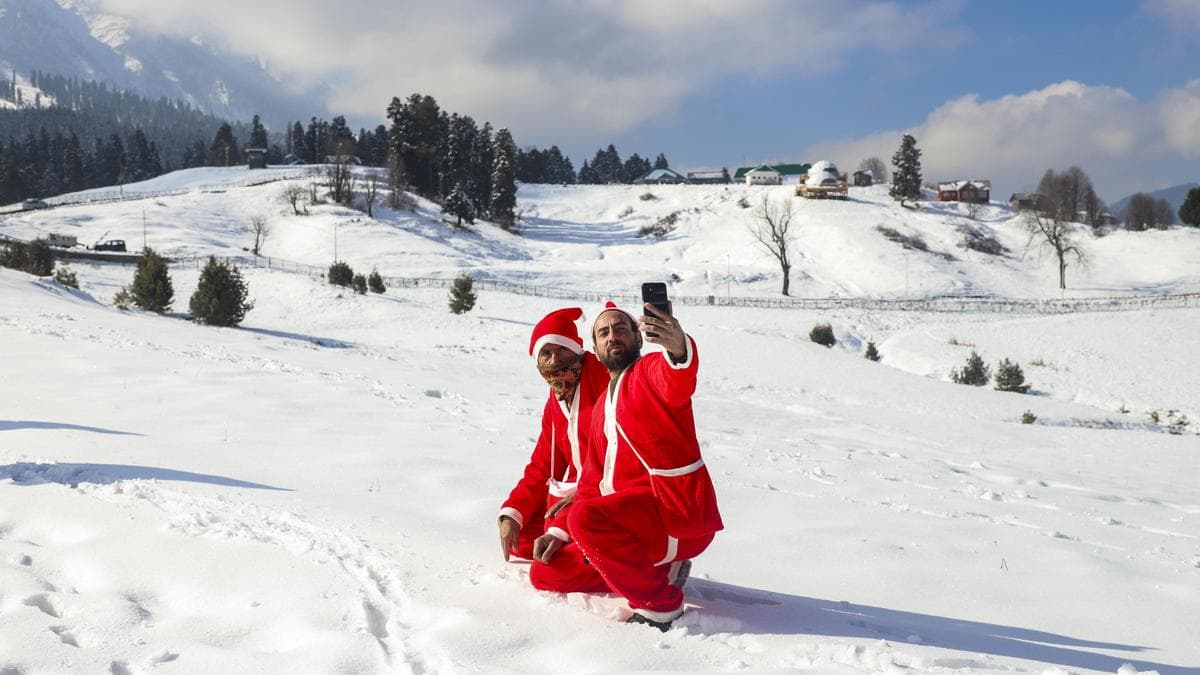
Christmas festivities boost Kashmir tourism; hotel occupancy jumps from 20% to 70%.
Summary
Christmas festivities significantly boosted Kashmir's tourism sector this winter, marking a positive trend for the region's economy. Hotel occupancy rates reportedly surged from around 20% to 70% on Christmas Eve, indicating a revival for the previously stagnant industry. This event highlights the impact of seasonal events on regional economies and is relevant for understanding economic trends and regional development for competitive exams.
Key Points
- 1Kashmir's tourism sector experienced a significant uplift during the recent Christmas festivities.
- 2Hotel occupancy rates in Kashmir surged from approximately 20% to around 70%.
- 3This substantial increase in occupancy was observed specifically on the eve of Christmas.
- 4The data regarding the occupancy jump was reported by local hoteliers in the region.
- 5The festive season helped revive the previously 'moribund' (stagnant) Kashmir tourism industry.
In-Depth Analysis
The recent surge in Kashmir's tourism sector during the Christmas festivities, with hotel occupancy rates reportedly jumping from 20% to 70% on Christmas Eve, offers a compelling narrative of resilience and potential economic revival in a region long beleaguered by conflict. This positive trend, reported by local hoteliers, signifies more than just a seasonal boost; it points towards a gradual return of confidence among tourists and a glimmer of hope for the local economy.
Historically, Jammu and Kashmir (J&K) has been renowned as "Paradise on Earth," attracting a steady stream of domestic and international tourists drawn to its stunning landscapes, serene lakes, and vibrant culture. However, this idyllic image was severely impacted by the onset of insurgency in the late 1980s, which led to a precipitous decline in tourism. Decades of political instability, security concerns, and periodic unrest kept visitors away, rendering the once-thriving industry 'moribund' or stagnant. The abrogation of Article 370 and Article 35A on August 5, 2019, which granted special status to J&K, was a pivotal moment. While aimed at greater integration and development, it was followed by a period of heightened security measures and communication shutdowns, further impacting tourism. The subsequent global COVID-19 pandemic also delivered a severe blow to the travel industry worldwide, including Kashmir.
The recent Christmas surge, therefore, is a significant indicator. It suggests that despite past challenges, the allure of Kashmir remains strong, especially for domestic tourists seeking winter experiences like snow sports in Gulmarg. This influx provides a much-needed economic shot in the arm for local communities, directly benefiting hoteliers, guesthouse owners, shikara wallahs, taxi drivers, handicraft artisans, and countless others whose livelihoods depend on tourism.
Key stakeholders in this scenario include the **local population and service providers** (hoteliers, artisans, guides), who are the direct beneficiaries of increased tourist footfall. Their economic well-being is intrinsically linked to the sector's performance. **Tourists**, both domestic and international, are the demand drivers, and their willingness to visit reflects their perception of safety and the attractiveness of the destination. The **Jammu & Kashmir Administration**, under the central government's oversight, plays a crucial role in promoting tourism, ensuring security, and developing necessary infrastructure. Its policies regarding tourism promotion, investment, and maintaining law and order are vital. The **Central Government** in Delhi has a strategic interest in the economic upliftment and integration of J&K, viewing tourism as a key avenue for job creation and normalcy.
This development matters immensely for India. Economically, a thriving tourism sector in J&K contributes to the national GDP, generates employment, and fosters entrepreneurship. It can help alleviate poverty and create opportunities for the youth, who might otherwise be susceptible to radicalization. Politically, a stable and prosperous Kashmir, evidenced by robust tourism, strengthens the narrative of peace and normalcy returning to the region following the constitutional changes. It counters negative international perceptions and showcases the success of government policies aimed at integrating J&K into the national mainstream. Socially, increased tourism encourages people-to-people contact, fostering understanding and national integration. It allows visitors to experience the unique culture of Kashmir firsthand, dispelling myths and building bridges.
From a constitutional and policy perspective, the **Jammu and Kashmir Reorganisation Act, 2019**, which bifurcated the state into the Union Territories of J&K and Ladakh, fundamentally altered the administrative and legal framework. This act, by removing the erstwhile special status under **Article 370**, aimed to facilitate greater investment and development, including in tourism infrastructure, by making central laws fully applicable. The central government's various tourism promotion schemes, such as the **Swadesh Darshan Scheme** and **PRASAD Scheme** (Pilgrimage Rejuvenation and Spiritual Augmentation Drive), could potentially be leveraged more effectively for J&K's diverse tourism offerings, from pilgrimage sites like Vaishno Devi to adventure tourism in the Himalayas. The 'Naya Kashmir' initiative also emphasizes economic development and job creation, with tourism being a central pillar.
Looking ahead, the future implications are significant. Sustaining this momentum requires continued investment in tourism infrastructure, including improving road and air connectivity, upgrading accommodation facilities, and ensuring efficient waste management. Skill development programs for local youth in hospitality and tourism services are crucial to ensure quality service and local employment. Most importantly, continued peace and political stability are paramount. Any resurgence of security concerns could quickly reverse these positive trends. The administration must also focus on diversifying tourism beyond traditional circuits, promoting lesser-known destinations, adventure sports, cultural festivals, and eco-tourism to ensure year-round appeal and reduce pressure on popular spots. Attracting private sector investment will be key to unlocking J&K's full tourism potential and ensuring sustainable, inclusive growth.
Exam Tips
This topic falls under GS Paper I (Geography of India, Indian Society - Regional development), GS Paper II (Polity & Governance - Federalism, J&K Reorganisation, Internal Security), and GS Paper III (Indian Economy - Tourism, Regional Development, Employment). It's also highly relevant for Current Affairs.
When studying, link this event to broader themes like the economic impact of political stability, the role of government policies in regional development, and the challenges of promoting tourism in conflict-affected areas. Understand the historical context of J&K's economy.
Expect questions on the economic implications of tourism for J&K, the role of government initiatives (e.g., specific schemes, Article 370 abrogation) in its revival, and the challenges facing sustainable tourism in the region. MCQs might test specific dates or acts (e.g., J&K Reorganisation Act, 2019).
Prepare for descriptive questions asking about the 'peace dividend' in Kashmir, the steps taken by the government to boost tourism, or the socio-economic significance of a thriving tourism sector in the UT.
Related Topics to Study
Full Article
According to local hoteliers, occupancy of most hotels jumped from around 20% to around 70% on eve of Christmas