


Relevant for Exams
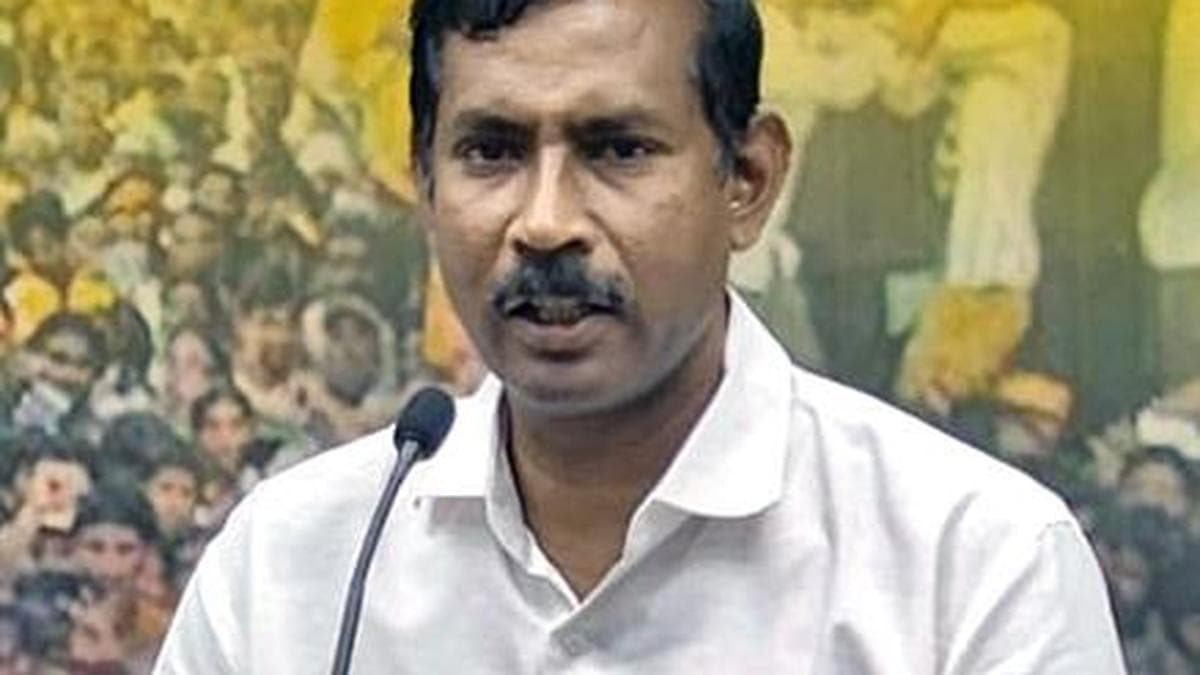
TDP chief flays YSRCP for alleged weapon display during Jagan Reddy's birthday celebrations.
Summary
TDP chief Palla Srinivasa Rao criticized the YSRCP over reports of its supporters allegedly wielding sharp weapons during former Chief Minister Y.S. Jagan Mohan Reddy's birthday celebrations. This incident highlights ongoing political tensions and law and order concerns in Andhra Pradesh. While primarily a regional political issue, it underscores the importance of maintaining peace during political events, a topic occasionally relevant for state-level administrative exams concerning public order.
Key Points
- 1TDP chief Palla Srinivasa Rao issued a statement criticizing the YSRCP.
- 2The criticism stemmed from alleged processions by YSRCP supporters wielding sharp weapons.
- 3The incident occurred on the occasion of former Chief Minister Y.S. Jagan Mohan Reddy's birthday.
- 4Specific weapons mentioned in reports included 'hunting sickles'.
- 5The issue highlights political rivalry and law and order concerns in Andhra Pradesh.
In-Depth Analysis
The recent condemnation by TDP chief Palla Srinivasa Rao regarding alleged processions by YSRCP supporters wielding sharp weapons during former Chief Minister Y.S. Jagan Mohan Reddy's birthday celebrations brings to the forefront critical issues concerning law and order, political culture, and democratic principles in India, particularly in Andhra Pradesh. This incident, while seemingly localized, offers a valuable lens through which to examine broader themes relevant for competitive exam aspirants.
**Background Context and What Happened:**
Andhra Pradesh has a history of intense political rivalry, primarily between the Telugu Desam Party (TDP) and the YSR Congress Party (YSRCP). The state recently witnessed a significant political shift in the 2024 general elections, where the TDP-led alliance (including JSP and BJP) secured a landslide victory, dislodging the YSRCP from power. This electoral outcome has naturally heightened political tensions. The incident in question involves reports of YSRCP supporters allegedly taking out processions and openly brandishing sharp weapons, specifically 'hunting sickles,' during the birthday celebrations of their party's former leader, Jagan Mohan Reddy. Palla Srinivasa Rao, a prominent TDP leader, swiftly criticized this act, labeling it a 'culture of intimidation' and raising serious concerns about public safety and the rule of law. Such displays of aggression, even if symbolic, can be perceived as an attempt to assert dominance or intimidate political opponents and the general populace.
**Key Stakeholders Involved:**
1. **Telugu Desam Party (TDP):** As the ruling party, represented by Palla Srinivasa Rao, they are the accusers and have a vested interest in maintaining law and order and establishing their authority. Their response reflects the responsibility of a governing party to address public safety concerns.
2. **YSR Congress Party (YSRCP):** As the opposition, their supporters are alleged to have engaged in the activity. The party leadership faces the responsibility of ensuring discipline among its cadre and upholding peaceful political conduct.
3. **Andhra Pradesh Police and Law Enforcement Agencies:** These are the primary governmental bodies responsible for maintaining public order, investigating such incidents, and taking appropriate legal action against those who violate the law. Their impartiality and effectiveness are crucial.
4. **Citizens of Andhra Pradesh:** They are the ultimate beneficiaries or victims of the political environment. Their safety, sense of security, and trust in the democratic process are directly impacted by such events.
**Why This Matters for India:**
This incident underscores several critical issues pertinent to India's democratic fabric and governance. Firstly, it highlights persistent challenges in maintaining **law and order** during political events. The open display of weapons, regardless of intent, is a serious violation of public peace and can incite fear and violence. Secondly, it speaks to the **political culture** prevalent in some regions, where intimidation tactics and aggressive posturing are sometimes used. This undermines healthy democratic discourse, which thrives on debate and dissent, not coercion. Thirdly, it touches upon **governance and the rule of law**. The ability of the state administration, particularly the police, to act decisively and impartially against lawbreakers, irrespective of their political affiliation, is a litmus test for good governance. If such incidents are not adequately addressed, it can erode public trust in institutions and the state's capacity to protect its citizens.
**Historical Context and Constitutional Provisions:**
India has a history of political rivalries, and unfortunately, instances of political violence are not uncommon across various states. The use of force or intimidation by political cadres often escalates during and after elections, reflecting intense competition for power. From a constitutional perspective, such acts directly impinge upon fundamental rights and the state's duties. **Article 19(1)(b)** of the Indian Constitution guarantees the right to assemble peacefully and without arms. The alleged act of wielding sharp weapons clearly violates this fundamental right's spirit and letter. Furthermore, the state's obligation to protect life and personal liberty, enshrined in **Article 21**, is jeopardized when public order is threatened. Law and order, including 'Police' (Entry 2) and 'Public Order' (Entry 1), fall under the **State List** of the Seventh Schedule, making it primarily the responsibility of state governments to maintain peace and enforce relevant laws. The **Indian Penal Code (IPC)** contains several provisions to address such situations, including sections related to unlawful assembly (e.g., Section 141, 144), rioting (Section 147), and carrying dangerous weapons with intent to cause harm (e.g., Section 324, 326). The **Code of Criminal Procedure (CrPC)** empowers police to prevent such unlawful gatherings and maintain peace.
**Future Implications:**
The incident carries significant future implications. If left unaddressed, it could set a dangerous precedent, normalizing the use of intimidation in political activities and potentially leading to escalating violence. For the newly formed TDP government, it presents an immediate challenge to demonstrate its commitment to law and order and impartial governance. For the YSRCP, it necessitates a critical review of cadre discipline and a commitment to peaceful political engagement. Such events can deter investment, impact social harmony, and ultimately undermine the democratic process in the long run. It calls for all political parties to uphold democratic norms, condemn violence, and ensure their supporters abide by the law, fostering a more constructive and peaceful political environment in Andhra Pradesh and across India.
This incident serves as a stark reminder that robust democratic institutions and a strong commitment to the rule of law are essential to prevent political rivalry from degenerating into lawlessness and intimidation.
Exam Tips
This topic primarily falls under 'Indian Polity & Governance' and 'Internal Security' sections of the UPSC Civil Services Exam (Prelims & Mains GS-II & GS-III) and State Public Service Commission exams. Focus on constitutional provisions related to fundamental rights (Article 19, 21), distribution of powers (Seventh Schedule - State List), and the role of law enforcement.
Study related topics such as 'Role of Political Parties in a Democracy,' 'Electoral Reforms,' 'Police Reforms,' 'Maintenance of Law & Order,' and 'Fundamental Rights and their Reasonable Restrictions.' Understand how political culture impacts governance and public safety.
Common question patterns include: (a) Direct questions on specific articles (e.g., 'Discuss the implications of Article 19(1)(b) in the context of political protests.'), (b) Case studies on law and order situations requiring analysis of state response and constitutional provisions, (c) Essay questions on political violence, democratic values, or the role of state administration in maintaining peace.
Related Topics to Study
Full Article
Palla Srinivasa Rao reacts to reports of YSRCP supporters allegedly taking out processions while wielding sharp weapons, including hunting sickles, on the occasion of former Chief Minister Y.S. Jagan Mohan Reddy’s birthday