


Relevant for Exams
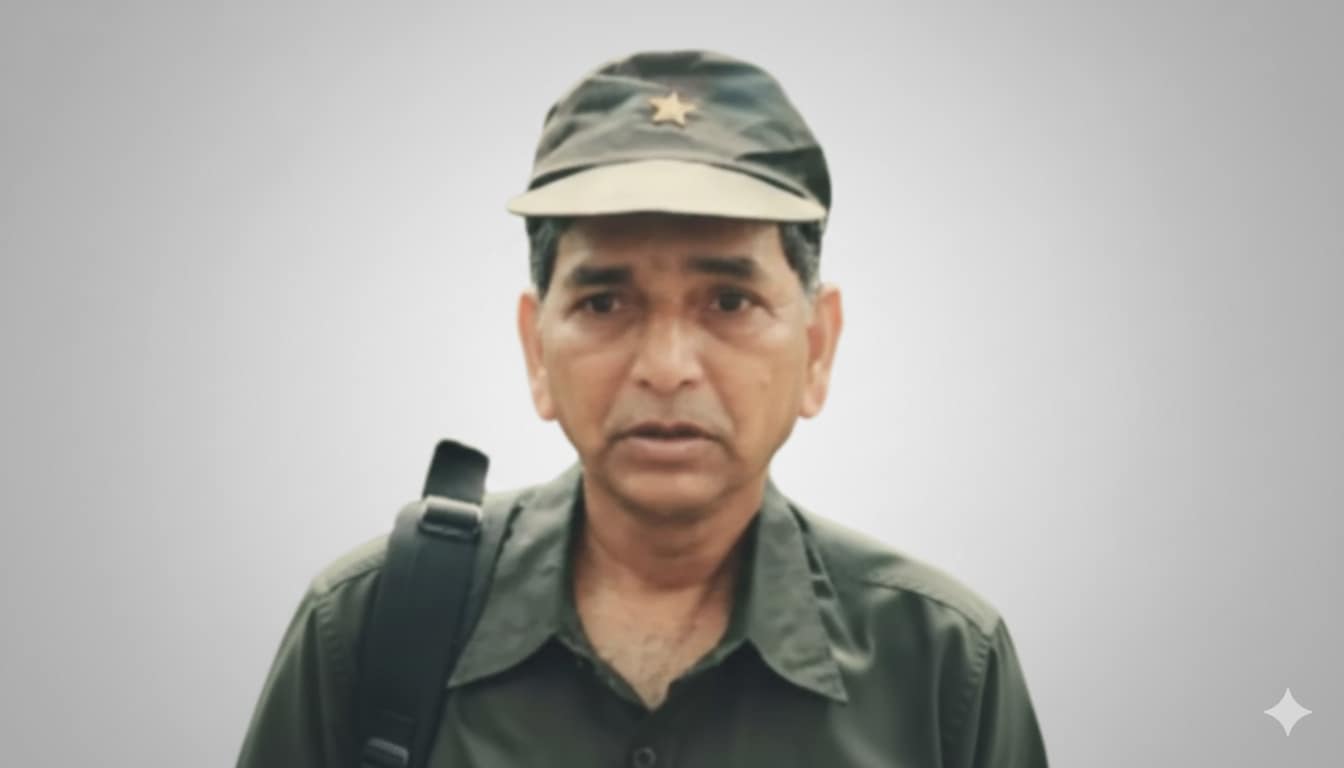
Top Maoist leader Paka Hanumanthu from Nalgonda killed in Odisha encounter.
Summary
A top Maoist leader, Paka Hanumanthu, reportedly from Nalgonda, was shot dead in an encounter in Odisha, according to officials. This incident is significant for India's internal security landscape, highlighting ongoing anti-Maoist operations in affected regions. For competitive exams, it underscores the persistent challenge of Naxalism and the geographical areas of its influence, despite the lack of further detailed information in the provided content.
Key Points
- 1Paka Hanumanthu, identified as a top Maoist leader, was reportedly shot dead.
- 2The incident occurred during an encounter in the state of Odisha.
- 3The Maoist leader Paka Hanumanthu was stated to be from Nalgonda.
- 4The event signifies ongoing anti-Maoist operations by security forces.
- 5Paka Hanumanthu's death is a development in India's internal security efforts against Naxalism.
In-Depth Analysis
The news of Paka Hanumanthu, a prominent Maoist leader from Nalgonda, being shot dead in an encounter in Odisha, serves as a stark reminder of India's enduring battle against Left Wing Extremism (LWE). This incident, while specific, encapsulates the broader dynamics of internal security challenges, government strategies, and the socio-economic complexities that fuel the Naxalite movement.
**Background Context: The Genesis of Left Wing Extremism**
To truly understand the significance of this event, one must delve into the historical roots of Naxalism. The movement originated in the Naxalbari village of West Bengal in 1967, led by Charu Majumdar, Kanu Sanyal, and Jangal Santhal. It was born out of peasant uprisings against feudal landlords, advocating for radical land reforms and the empowerment of marginalized communities, particularly tribals and landless labourers. Drawing inspiration from Mao Zedong's philosophy of 'protracted people's war,' Naxalites aimed to overthrow the existing state machinery through armed struggle. Over the decades, the movement evolved, consolidating into various factions, with the Communist Party of India (Maoist) – formed in 2004 by the merger of the People’s War Group and the Maoist Communist Centre of India – becoming the most formidable. Their ideology exploits grievances related to land alienation, displacement due to development projects, lack of basic services, and perceived state neglect, particularly in the forested, mineral-rich, and tribal-dominated regions often referred to as the 'Red Corridor.'
**The Incident and Key Stakeholders**
The reported killing of Paka Hanumanthu in Odisha signals the relentless pressure exerted by security forces on Maoist cadres. While details of the encounter are sparse, it implies a successful intelligence-led operation. Paka Hanumanthu, identified as a top leader from Nalgonda, suggests a deep-rooted presence and operational reach across state borders. The primary stakeholders in this conflict are:
1. **Maoist/Naxalite Groups (e.g., CPI (Maoist))**: These groups, including leaders like Paka Hanumanthu, aim to establish a 'people's government' by overthrowing the democratic Indian state. They employ guerrilla warfare, extortion, and intimidation tactics, often targeting security forces, government infrastructure, and those who resist their ideology. His death represents a blow to their leadership structure and operational capabilities.
2. **Security Forces**: This includes Central Armed Police Forces (CAPFs) like the Central Reserve Police Force (CRPF), Border Security Force (BSF), and state police forces (e.g., Odisha Police, Telangana Police). Their role is to maintain law and order, conduct anti-insurgency operations, protect critical infrastructure, and facilitate development. Encounters like this are a result of their sustained counter-insurgency efforts, intelligence gathering, and operational planning.
3. **Government (Central and State)**: The Ministry of Home Affairs (MHA) at the Centre, along with various state governments, formulates and implements policies to combat LWE. Their strategy is multi-pronged: security operations, development initiatives, and rehabilitation/surrender policies. The SAMADHAN doctrine, introduced in 2017, outlines a comprehensive approach focusing on Smart leadership, Aggressive strategy, Motivation, Actionable intelligence, Dashboard-based KPIs, Harnessing technology, Action plan for each theatre, and No access to financing.
4. **Local Population**: Often caught in the crossfire, the tribal and rural populations in LWE-affected areas are critical stakeholders. They are both victims of Naxalite violence and beneficiaries/targets of government development schemes. Their support, or lack thereof, is crucial for either side.
**Significance for India**
Paka Hanumanthu's death carries significant implications for India's internal security landscape. Firstly, it represents a tactical victory for security forces, potentially disrupting Maoist networks and command structures. The elimination of senior leaders can demoralize cadres and weaken their ability to plan and execute major attacks. Secondly, it underscores the persistent challenge of LWE, particularly in states like Odisha, Chhattisgarh, Jharkhand, and parts of Andhra Pradesh and Telangana. Despite significant gains made by the government in reducing the geographical spread and intensity of LWE, the threat remains potent.
From a developmental perspective, LWE-affected regions often lag in socio-economic indicators due to the disruption caused by conflict. Roads, schools, health centres, and other infrastructure projects are frequently targeted or stalled. Reducing the Naxalite threat is crucial for enabling development, bringing these regions into the national mainstream, and addressing the root causes of discontent. Politically, the state's ability to assert its authority and ensure governance in these remote areas is paramount for maintaining democratic integrity.
**Historical Context and Constitutional Provisions**
The government's response to Naxalism has evolved from a purely law-and-order approach to a more holistic strategy. Early responses were often reactive, but over time, policies began to integrate development and good governance. The constitutional framework empowers both the Union and State governments to tackle LWE. 'Public Order' and 'Police' fall under the State List (Entry 1 and 2 of List II, Seventh Schedule), giving states primary responsibility. However, the Union government supports states through financial assistance, deployment of CAPFs, intelligence sharing, and capacity building, exercising its duty under Article 355 to protect states against internal disturbance. The Unlawful Activities (Prevention) Act (UAPA), 1967, is a key legislative tool used to combat terrorist and unlawful activities, including those perpetrated by Maoist groups. Furthermore, the conflict often intersects with fundamental rights, particularly Article 21 (Right to Life and Personal Liberty), necessitating judicial scrutiny of encounter killings to ensure due process and prevent human rights abuses.
**Future Implications**
The death of a top Maoist leader can have several future implications. It might lead to a temporary leadership vacuum and internal power struggles within the CPI (Maoist). Security forces will likely intensify operations to capitalize on this disruption, focusing on intelligence-led strikes and further dismantling Maoist networks. However, history suggests that Maoist groups often adapt, and new leaders may emerge. There's also a potential for retaliatory attacks by Naxalites to assert their presence and avenge their fallen comrade. For the government, this incident provides an opportunity to further consolidate peace and accelerate development in affected areas, alongside strengthening intelligence gathering and community policing efforts. Success in combating LWE ultimately hinges on a sustained, coordinated approach that balances robust security operations with equitable development and effective governance, addressing the socio-economic grievances that continue to fuel the insurgency.
Exam Tips
This topic primarily falls under GS Paper 3 (Internal Security) of the UPSC Civil Services Exam. Be prepared for questions on the causes, consequences, and government strategies to counter Left Wing Extremism (LWE).
Study the 'SAMADHAN' doctrine and other government policies (e.g., Security Related Expenditure Scheme, Special Infrastructure Scheme, surrender and rehabilitation policies) in detail. Understand their objectives and effectiveness.
Expect questions requiring analytical thinking: 'Critically evaluate the multi-pronged strategy adopted by the Government of India to tackle Left Wing Extremism. What are its successes and challenges?' or 'Discuss the socio-economic factors contributing to the spread of Naxalism and suggest measures to address them.'