


Relevant for Exams
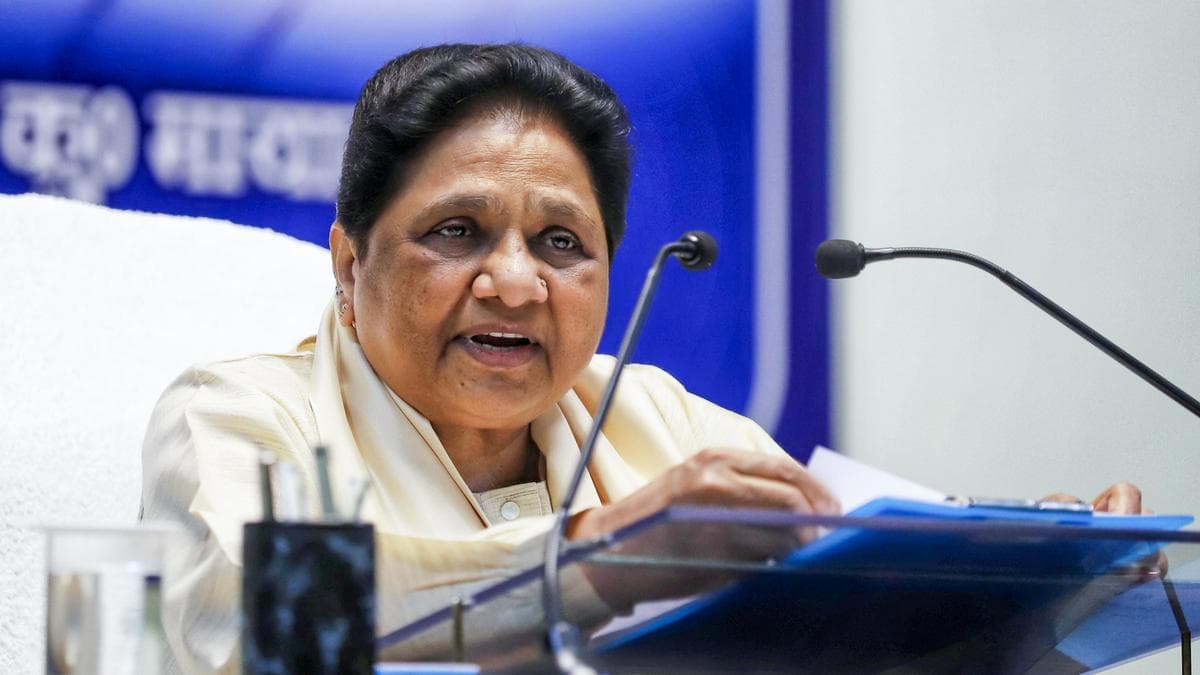
Mayawati expresses concern over harassment of Hindu minorities in Bangladesh, citing threats to life, property, and religion.
Summary
BSP president Mayawati expressed deep concern over the escalating harassment of Hindu minorities in Bangladesh, highlighting incidents targeting their life, property, and religion. This statement by a prominent Indian political leader underscores the humanitarian aspect of cross-border issues and their potential impact on India-Bangladesh relations. For competitive exams, this points to general awareness regarding regional human rights concerns and the role of political parties in international matters.
Key Points
- 1BSP President Mayawati voiced concern regarding 'anti-India and anti-Hindu incidents' in Bangladesh.
- 2The concern specifically relates to the harassment of Hindu minorities in Bangladesh.
- 3The harassment targets the life, property, and religion of these minorities.
- 4Mayawati stated that these incidents have created a wave of concern in India and elsewhere.
- 5The statement was made by the leader of the Bahujan Samaj Party (BSP).
In-Depth Analysis
The statement by Bahujan Samaj Party (BSP) President Mayawati regarding the harassment of Hindu minorities in Bangladesh brings to the forefront a complex issue with deep historical roots and significant implications for India's foreign policy, internal security, and humanitarian concerns. This is not an isolated incident but part of a recurring pattern that has often strained relations between India and Bangladesh, while also resonating within India's domestic political landscape. To fully grasp its significance, we must delve into the historical context, identify key stakeholders, and understand its multifaceted impact.
The background to the plight of minorities in Bangladesh dates back to the Partition of India in 1947, which led to the creation of East Pakistan (later Bangladesh). The Hindu population, which constituted around 28% of East Pakistan in 1947, steadily declined over the decades due to various factors including communal riots, discriminatory policies, and economic pressures. The 1971 Bangladesh Liberation War, in which India played a crucial role, was fought on the ideals of secularism, democracy, and Bengali nationalism. However, after the assassination of Sheikh Mujibur Rahman in 1975, subsequent military regimes and political changes led to a gradual Islamisation of the state, eroding the secular fabric and further marginalizing religious minorities. Incidents of communal violence, often linked to political instability, elections, or specific religious festivals, have periodically targeted Hindu properties, temples, and lives, creating a climate of fear and insecurity.
Mayawati's expression of concern highlights these persistent 'anti-India and anti-Hindu incidents,' specifically mentioning the targeting of life, property, and religion. This statement by a prominent Indian political leader underscores the humanitarian dimension of the issue. Key stakeholders in this scenario include the Hindu minorities in Bangladesh, who are the primary victims; the Government of Bangladesh, which bears the responsibility to protect its citizens and uphold its constitutional guarantees of minority rights; the Government of India, which has a moral and strategic interest in the welfare of minorities in its neighborhood, especially those with ethnic and religious ties to India; and Indian political parties like the BSP, which often vocalize such concerns, sometimes for humanitarian reasons and sometimes with an eye on domestic political implications.
This issue matters profoundly for India on multiple fronts. Firstly, there is a strong humanitarian concern for the safety and well-being of a community with deep historical and cultural ties to India. The persecution of Hindus in Bangladesh can lead to an influx of refugees into India, posing demographic and resource challenges, particularly in border states like West Bengal and Assam. This refugee issue has historically been a sensitive subject and was a key driver behind the Citizenship Amendment Act (CAA) 2019, which seeks to provide a path to Indian citizenship for religious minorities (excluding Muslims) who have faced persecution in Pakistan, Bangladesh, and Afghanistan. Secondly, such incidents can strain India-Bangladesh bilateral relations. Bangladesh is a crucial partner in India's 'Neighbourhood First' policy, vital for regional stability, trade, and counter-terrorism efforts. Any deterioration in its internal communal harmony can have ripple effects on regional security and India's strategic interests. Thirdly, the issue has significant internal political ramifications in India, where the welfare of Hindus abroad can become a potent electoral issue, influencing voter sentiment and political discourse, especially among right-wing parties. Mayawati's statement, while coming from a party with a different ideological base, still adds to the chorus of concern.
Historically, the issue of minority persecution in Bangladesh has been a sensitive point in India-Bangladesh relations. While India generally maintains a policy of non-interference in the internal affairs of sovereign nations, the humanitarian aspect and potential for cross-border migration compel a careful diplomatic approach. India's Constitution, through Article 51, mandates the promotion of international peace and security and respect for international law. While it doesn't directly address the protection of minorities in other countries, the spirit of fundamental rights (Articles 25-28 guaranteeing religious freedom, and Article 29 protecting minority interests) within India often extends to a moral imperative concerning related communities abroad. The CAA 2019 is a direct policy response to this historical and ongoing issue of religious persecution in neighboring countries.
The future implications are significant. Continued harassment of minorities could further destabilize Bangladesh, leading to greater extremism, which would be detrimental to regional peace. It could also intensify the refugee crisis, placing more pressure on India's borders and resources. Diplomatic efforts will be crucial for India to impress upon Bangladesh the importance of protecting its minorities, ensuring that such incidents do not escalate and that perpetrators are brought to justice. This requires a delicate balance between asserting humanitarian concerns and maintaining strong bilateral ties. For Bangladesh, upholding minority rights is essential for its own image as a secular and democratic nation, as well as for its long-term stability and economic development. The international community, including human rights organizations, also plays a role in monitoring and advocating for the rights of these vulnerable populations, ensuring global attention to this critical human rights issue.
Exam Tips
This topic falls under GS Paper 2 (International Relations, Indian Polity, Social Justice) and GS Paper 3 (Internal Security) for UPSC. For SSC/State PSCs, it's relevant for General Awareness/Current Affairs, particularly concerning India-Bangladesh relations and humanitarian issues.
When studying, link this to India's 'Neighbourhood First' policy, the Citizenship Amendment Act (CAA) 2019, and the broader issue of minority rights (both within India and globally). Understand the historical context of Partition and the Bangladesh Liberation War.
Common question patterns include: 'Analyze the impact of minority persecution in Bangladesh on India-Bangladesh relations,' 'Discuss the humanitarian concerns arising from the situation of Hindus in Bangladesh and India's policy response,' or 'Evaluate the role of Indian political parties in raising cross-border humanitarian issues.' Be prepared to discuss constitutional provisions like Article 51 and the rationale behind the CAA.
Focus on the diplomatic dimension: how India balances its strategic interests with humanitarian concerns. Also, understand the internal political dynamics in both countries that influence this issue.
Related Topics to Study
Full Article
The way Hindu minorities in Bangladesh are being harassed by targeting their life, property and religion has created a wave of concern not only in our country but also elsewhere, says BSP president Mayawati