


Relevant for Exams
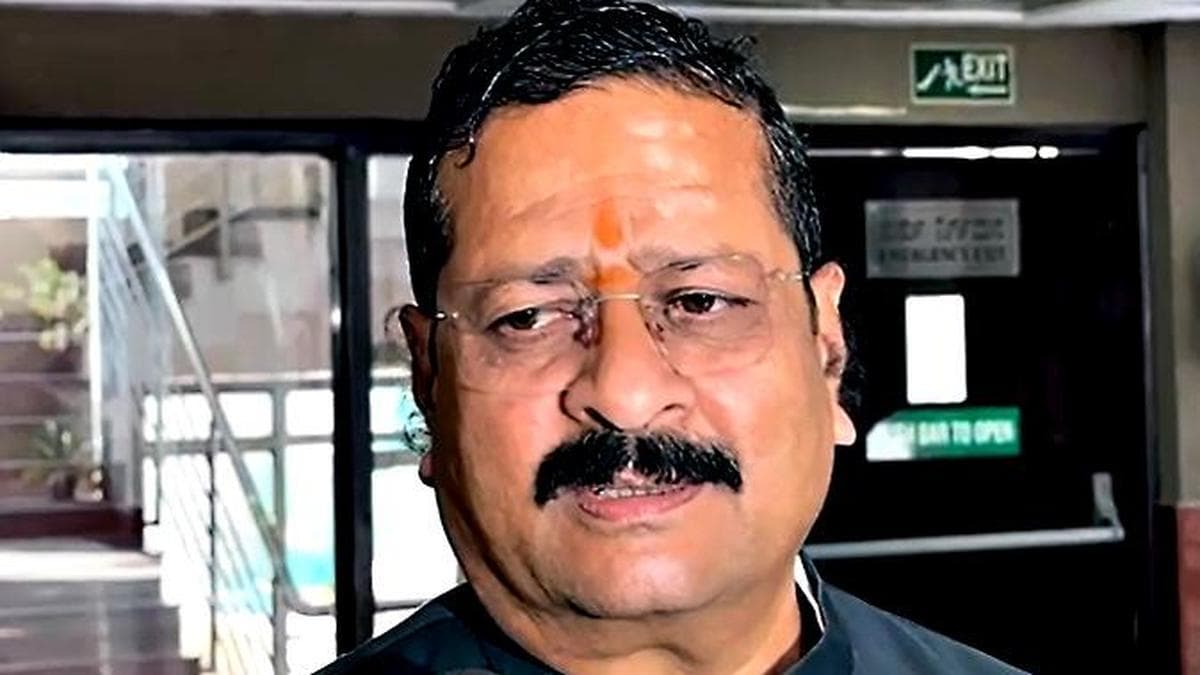
Karnataka MLA B. P. Yatnal demands safety audit of all buses post-accident, seeks strict action.
Summary
Following a bus accident in Karnataka, MLA B. P. Yatnal has urged the state government to conduct a comprehensive safety audit of all buses. He advocates for strict measures, including the cancellation of licences for buses violating safety protocols and the jailing of their owners. This demand highlights the critical need for enhanced road safety and accountability in public transport, a recurring concern for competitive exams related to governance and public welfare.
Key Points
- 1Karnataka MLA B. P. Yatnal called for a safety audit of all buses in the state.
- 2The demand was made in response to a recent bus accident in Karnataka.
- 3MLA Yatnal proposed that licences of buses found violating safety protocols should be cancelled.
- 4He also suggested that owners of buses violating safety protocols should be jailed.
- 5The initiative aims to enhance safety standards and accountability within Karnataka's public transport system.
In-Depth Analysis
The recent demand by Karnataka MLA B. P. Yatnal for a comprehensive safety audit of all buses in the state, coupled with his call for stringent actions like licence cancellation and jailing of owners for safety protocol violations, brings to the forefront India's persistent and critical challenge of road safety. This incident, likely triggered by a recent bus accident in Karnataka, underscores the urgent need for enhanced accountability and enforcement within the public transport sector, a domain directly impacting millions of citizens daily.
India unfortunately bears a disproportionately high burden of global road accident fatalities. According to the Ministry of Road Transport and Highways, over 1.5 lakh people die in road accidents annually, with millions more sustaining injuries. These statistics highlight a systemic issue, where factors like driver negligence, poorly maintained vehicles, inadequate road infrastructure, and lax enforcement contribute significantly. The economic cost of these accidents is also staggering, estimated to be 3-5% of the GDP, encompassing loss of productivity, healthcare expenses, and property damage. Therefore, the MLA's demand, while specific to Karnataka, resonates with a nationwide imperative for robust road safety measures.
Key stakeholders in this issue include the **Karnataka State Government**, particularly its Transport Department, which is responsible for framing and enforcing transport regulations, conducting vehicle fitness tests, and issuing licences. Their efficiency and integrity are paramount. **Bus owners and operators**, whether private entities or State Transport Undertakings (STUs), bear the primary responsibility for ensuring vehicle roadworthiness, driver competency, and adherence to safety norms. The **passengers and general public** are the direct beneficiaries of safe transport and often the victims of negligence, making their safety paramount. **Legislators like MLA B. P. Yatnal** play a crucial role in voicing public concerns, advocating for policy changes, and holding the executive accountable. Other stakeholders include the **police and traffic enforcement agencies**, who are on the ground ensuring compliance, and the **judiciary**, which interprets laws and delivers justice in accident cases.
This issue holds immense significance for India. From a **social perspective**, every accident represents a human tragedy, leading to loss of life, severe injuries, and long-term trauma for families. Many families are pushed into poverty due to the loss of a primary earner or the high cost of medical treatment. From an **economic standpoint**, the continuous loss of young, productive lives and the healthcare burden impede national development. Politically, the government's ability to ensure public safety and provide reliable, safe public services directly impacts public trust and governance efficacy. Such demands from elected representatives reflect the public's growing expectation for accountability and effective governance.
Historically, India has grappled with road safety for decades. The **Motor Vehicles Act, 1988**, was the primary legislation governing motor vehicles. However, recognizing its limitations in addressing modern challenges, the Parliament enacted the **Motor Vehicles (Amendment) Act, 2019**. This landmark amendment introduced significantly higher penalties for traffic violations, aimed to streamline licensing and registration, promoted the use of technology for enforcement, and included provisions for the protection of 'Good Samaritans'. The amendment also sought to reduce road accident fatalities by 50% by 2020, a target that remains largely unachieved, underscoring the gap between legislation and implementation.
From a constitutional perspective, the subject of 'mechanically propelled vehicles' falls under the **Concurrent List (Entry 35 of the Seventh Schedule)**, empowering both the Union and State governments to legislate on it. This allows states like Karnataka to enact specific rules within the broader framework of central legislation. More fundamentally, the right to safe public transport can be implicitly linked to **Article 21 of the Constitution**, which guarantees the 'Right to Life and Personal Liberty'. A safe environment, including safe public services, is integral to a dignified life. Furthermore, the **Directive Principles of State Policy (DPSP)**, particularly **Article 38** (State to secure a social order for the promotion of welfare of the people) and **Article 47** (Duty of the State to raise the level of nutrition and the standard of living and to improve public health), reinforce the state's responsibility to ensure public well-being, which includes road safety.
Looking ahead, the MLA's call could catalyze several future implications. It might lead to **stricter enforcement drives** by the Karnataka government, including more frequent and thorough safety audits. There could be a renewed focus on **driver training and licensing reforms**, possibly incorporating advanced simulator training and regular psychological evaluations. The emphasis on jailing owners points towards increased **legal accountability** for negligence. The integration of **technology**, such as AI-powered surveillance, GPS tracking, and mandatory speed limiters, could become more widespread. Ultimately, such incidents and demands push for a holistic approach to road safety, involving infrastructure improvements, public awareness campaigns, and better inter-departmental coordination to create a safer transport ecosystem for all.
Exam Tips
This topic is highly relevant for GS Paper II (Governance, Social Justice) focusing on government policies, public administration, and constitutional provisions related to transport and safety. Questions might involve policy implementation challenges or the role of various government bodies.
For Prelims, focus on the Motor Vehicles (Amendment) Act, 2019 (key provisions, penalties), relevant Constitutional Articles (Article 21, 7th Schedule - Concurrent List Entry 35), and national road safety statistics. Know the difference between the 1988 and 2019 Acts.
For Mains, connect this issue to broader themes like 'Challenges to Internal Security' (road safety aspect), 'Social Justice' (right to safe public services), and 'Government Policies and Interventions'. Be prepared to discuss the economic and social costs of road accidents and suggest comprehensive solutions.
Practice essay writing on topics like 'Road Safety: A National Priority' or 'Balancing Development with Safety in India's Transport Sector'. Structure your essay with background, causes, impacts, government initiatives, and future recommendations.
Study related topics like the National Road Safety Policy (2010) and its '4 Es' (Engineering, Enforcement, Education, Emergency Care). Understand the role of various ministries (MoRTH, Home Affairs) and state transport departments in ensuring road safety.
Related Topics to Study
Full Article
If any bus is found violating safety protocols, their licence should be cancelled and their owners should be jailed, says MLA