


Relevant for Exams
T.N. govt declares IIT-Kanpur's ED-tasked sand mining survey illegal, citing jurisdictional conflict.
Summary
The Tamil Nadu government declared a survey conducted by IIT-Kanpur to assess the extent of sand mining as illegal. The Enforcement Directorate (ED) had tasked IIT-Kanpur with this assessment at 28 permitted sites during October-November 2023. This issue highlights the ongoing conflict between central agencies and state governments over resource management and regulatory authority, making it relevant for understanding federalism and environmental governance in India for competitive exams.
Key Points
- 1The Enforcement Directorate (ED) tasked IIT-Kanpur to conduct a survey.
- 2The survey aimed to assess the quantum of sand mined at specific locations.
- 3It covered 28 permitted sand mining sites located in Tamil Nadu.
- 4The assessment period for the sand mining survey was October-November 2023.
- 5The Tamil Nadu government officially declared the IIT-Kanpur survey as illegal.
In-Depth Analysis
The declaration by the Tamil Nadu government that the survey conducted by IIT-Kanpur to assess sand mining was illegal brings to the forefront a complex interplay of environmental governance, federalism, and the powers of central agencies in India. This incident, where the Enforcement Directorate (ED) tasked IIT-Kanpur to assess the quantum of sand mined at 28 permitted sites in Tamil Nadu during October-November 2023, is not merely a procedural dispute but a significant flashpoint in Centre-state relations.
**Background Context and Genesis of the Conflict:**
Illegal sand mining has been a rampant issue across India, including Tamil Nadu, leading to severe environmental degradation, revenue loss for state governments, and often, nexus between politicians, bureaucrats, and the mining mafia. This activity depletes riverbeds, affects groundwater levels, destroys aquatic ecosystems, and weakens bridges and other infrastructure. For years, environmental activists and local communities have highlighted the devastating impact of unregulated sand extraction. The economic incentive is enormous, leading to a thriving black market. State governments are primarily responsible for regulating minor minerals like sand, as per the Mines and Minerals (Development and Regulation) Act, 1957 (MMDR Act). However, enforcement often falls short, prompting interventions from various quarters, including the judiciary and, increasingly, central agencies like the ED.
**What Happened:**
The Enforcement Directorate, which investigates financial crimes under the Prevention of Money Laundering Act (PMLA), 2002, had initiated probes into alleged illegal sand mining in Tamil Nadu. The ED's rationale for intervention typically stems from the proceeds of illegal mining being laundered, thereby constituting a 'predicate offense' under PMLA. As part of its investigation, the ED tasked IIT-Kanpur, a premier technical institute, to conduct a scientific assessment of the quantum of sand mined in the state. This move aimed to quantify the illegal extraction and associated financial implications. However, the Tamil Nadu government, led by the DMK, swiftly declared this survey illegal, asserting that the ED had no jurisdiction to conduct such an assessment without the state government's consent or involvement. The state argued that mining is a state subject and its departments are fully capable of monitoring and regulating such activities.
**Key Stakeholders Involved:**
1. **Enforcement Directorate (ED):** A central investigative agency under the Ministry of Finance, tasked with enforcing economic laws like PMLA. Its involvement reflects a growing trend of central agencies intervening in matters traditionally handled by states, especially where large-scale financial irregularities are suspected.
2. **IIT-Kanpur:** A prestigious academic institution, providing technical expertise for the survey. Their involvement highlights the reliance on scientific methods for evidence collection in complex cases.
3. **Tamil Nadu Government:** The primary authority responsible for regulating minor minerals, including sand. Its objection underscores the state's assertion of its constitutional autonomy and jurisdiction over resource management.
4. **Ministry of Environment, Forest and Climate Change (MoEFCC):** Though not directly involved in this specific dispute, it sets national environmental policies and guidelines for mining, impacting state regulations.
5. **Local Communities & Environmental Groups:** Victims of illegal mining and advocates for sustainable practices, they are indirect but crucial stakeholders pushing for accountability.
**Why This Matters for India:**
This incident is a microcosm of the larger challenges facing Indian federalism and environmental governance. Firstly, it highlights the increasing friction between the Centre and states, particularly those ruled by opposition parties, regarding the jurisdiction and powers of central agencies. States often accuse agencies like the ED of political vendetta and overreach into state subjects. Secondly, it underscores the persistent issue of illegal mining and its devastating environmental and economic costs. Proper assessment and regulation are crucial for sustainable development and revenue generation. Thirdly, it raises questions about the scope of the ED's powers. While the ED can investigate money laundering, its direct involvement in assessing mineral extraction, a state subject, tests the boundaries of its mandate and potentially encroaches on state autonomy.
**Historical Context and Constitutional Provisions:**
Historically, resource management, especially of minor minerals, has been firmly within the purview of state governments. The **Seventh Schedule of the Indian Constitution** delineates powers between the Union and states. **Entry 23 of the State List** empowers states to regulate 'Regulation of mines and mineral development subject to the provisions of List I with respect to regulation and development under the control of the Union.' Conversely, **Entry 54 of the Union List** allows the Union to regulate 'Regulation of mines and mineral development to the extent to which such regulation and development under the control of the Union is declared by Parliament by law to be expedient in the public interest.' The MMDR Act, 1957, primarily governs this, with minor minerals largely left to state rules. The ED's intervention, while based on PMLA, enters a domain traditionally managed by the state. This creates tension regarding **Article 246**, which outlines the subject matter of laws made by Parliament and by the Legislatures of States, and the principle of **cooperative federalism**.
**Future Implications:**
This conflict could lead to further legal battles, potentially reaching the Supreme Court, to clarify the jurisdictional boundaries between central agencies and state governments in matters of resource management. It may also prompt a re-evaluation of guidelines for central agency interventions in state subjects. The outcome will significantly impact the balance of power in Indian federalism and set precedents for future environmental enforcement and resource governance. A clear framework is needed to ensure effective environmental protection without undermining state autonomy, fostering genuine cooperative federalism.
**Related Constitutional Articles, Acts, or Policies:**
* **Article 246:** Distribution of legislative powers between Union and States.
* **Seventh Schedule:** Union List (Entry 54), State List (Entry 23).
* **Mines and Minerals (Development and Regulation) Act, 1957 (MMDR Act):** Governs mining in India.
* **Prevention of Money Laundering Act (PMLA), 2002:** Empowers the ED to investigate money laundering and attach properties.
* **Environmental Protection Act, 1986:** Provides for the protection and improvement of environment.
* **Article 48A:** Directive Principle of State Policy, obligating the state to protect and improve the environment.
* **Article 51A(g):** Fundamental Duty, requiring citizens to protect and improve the natural environment.
Exam Tips
This topic falls under GS Paper II (Polity & Governance - Federalism, Centre-State Relations, Role of Central Agencies) and GS Paper III (Environment & Economy - Resource Management, Environmental Degradation, Illegal Mining).
Prepare for analytical questions on the balance of power in Indian federalism, the legitimate scope of central agencies' investigations (especially ED under PMLA), and the challenges of environmental governance in a federal structure. Case studies on specific instances like this are common.
Study the constitutional provisions related to federalism (Articles 245, 246, Seventh Schedule), the MMDR Act 1957, and the PMLA 2002 in detail. Understand the distinction between 'minor minerals' and 'major minerals' and their respective regulatory frameworks.
Relate this to broader themes like cooperative vs. competitive federalism, the misuse of central agencies for political ends (as often alleged by states), and the economic and environmental costs of illegal resource extraction.
Be prepared to discuss solutions for better Centre-state coordination in resource management and environmental protection, including independent oversight mechanisms and clearer jurisdictional guidelines.
Related Topics to Study
Full Article
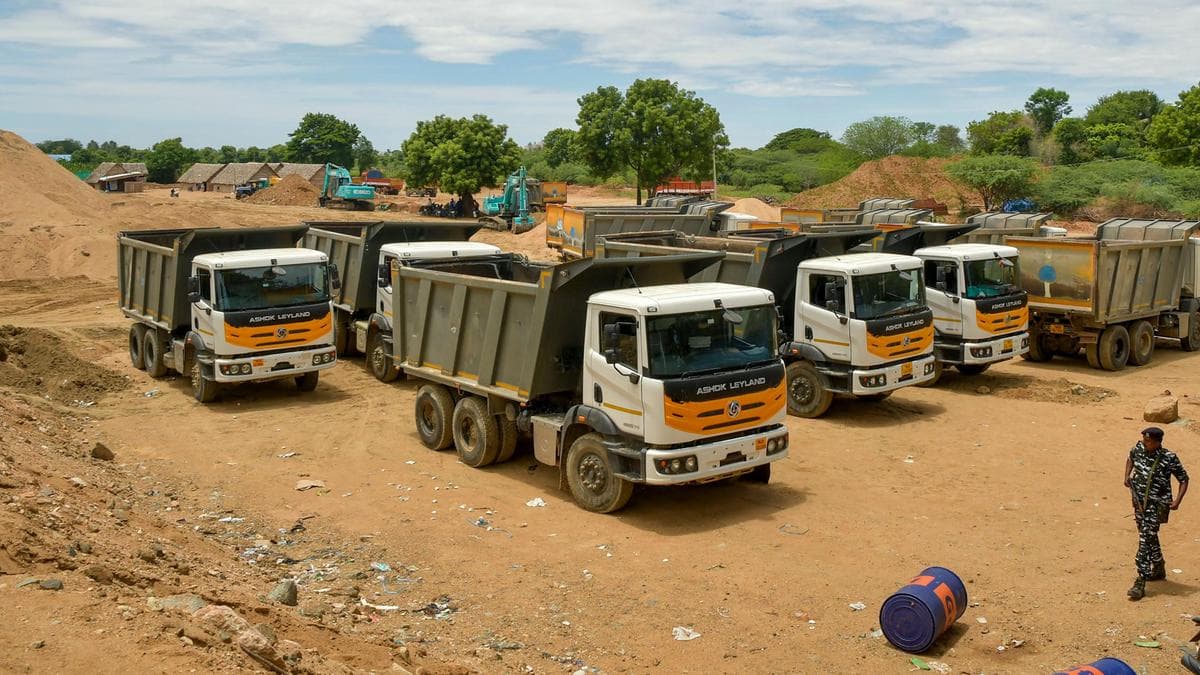
ED had tasked the institute to assess the quantum of sand mined at 28 permitted sites during October-November 2023