


Relevant for Exams
Karnataka Houses debated India's first anti-hate law, a key legislative development.
Summary
Karnataka's legislative houses recently debated what the article terms 'India's first anti-hate law'. This development is significant for understanding the legislative process at the state level and the evolving legal landscape concerning hate speech in the country. For competitive exams, it highlights the importance of new laws, their constitutional implications, and the intricacies of legislative debates.
Key Points
- 1Karnataka's legislative houses engaged in a debate regarding a proposed anti-hate law.
- 2The debated legislation is referred to as potentially 'India's first anti-hate law'.
- 3The debate was characterized by 'sound and heat but little light', indicating intense discussion without clear resolution.
- 4This initiative represents a state-level legislative effort to address hate speech.
- 5The article focuses on the parliamentary proceedings within Karnataka's legislative bodies.
In-Depth Analysis
Karnataka's recent legislative debate on a proposed 'anti-hate law' marks a significant moment in India's ongoing struggle to balance freedom of speech with the imperative to maintain public order and social harmony. While the specific provisions of the bill are not detailed, the very act of a state legislature proposing such a comprehensive law, termed potentially 'India's first anti-hate law,' highlights a growing recognition of the inadequacies of existing legal frameworks in tackling the pervasive issue of hate speech.
The background context for this legislative push is rooted in the alarming rise of hate speech incidents across India, often amplified by digital platforms. These incidents frequently target religious, caste, or linguistic minorities, fostering an environment of fear and division. The existing legal provisions, primarily within the Indian Penal Code (IPC), such as Sections 153A (promoting enmity between different groups), 295A (deliberate and malicious acts intended to outrage religious feelings), and 505 (statements conducing to public mischief), have often been criticized for being too broad, difficult to enforce effectively, or sometimes even misused. The Supreme Court of India has, on numerous occasions, expressed concern over the spread of hate speech and called for stricter measures, underscoring the urgency for legislative action.
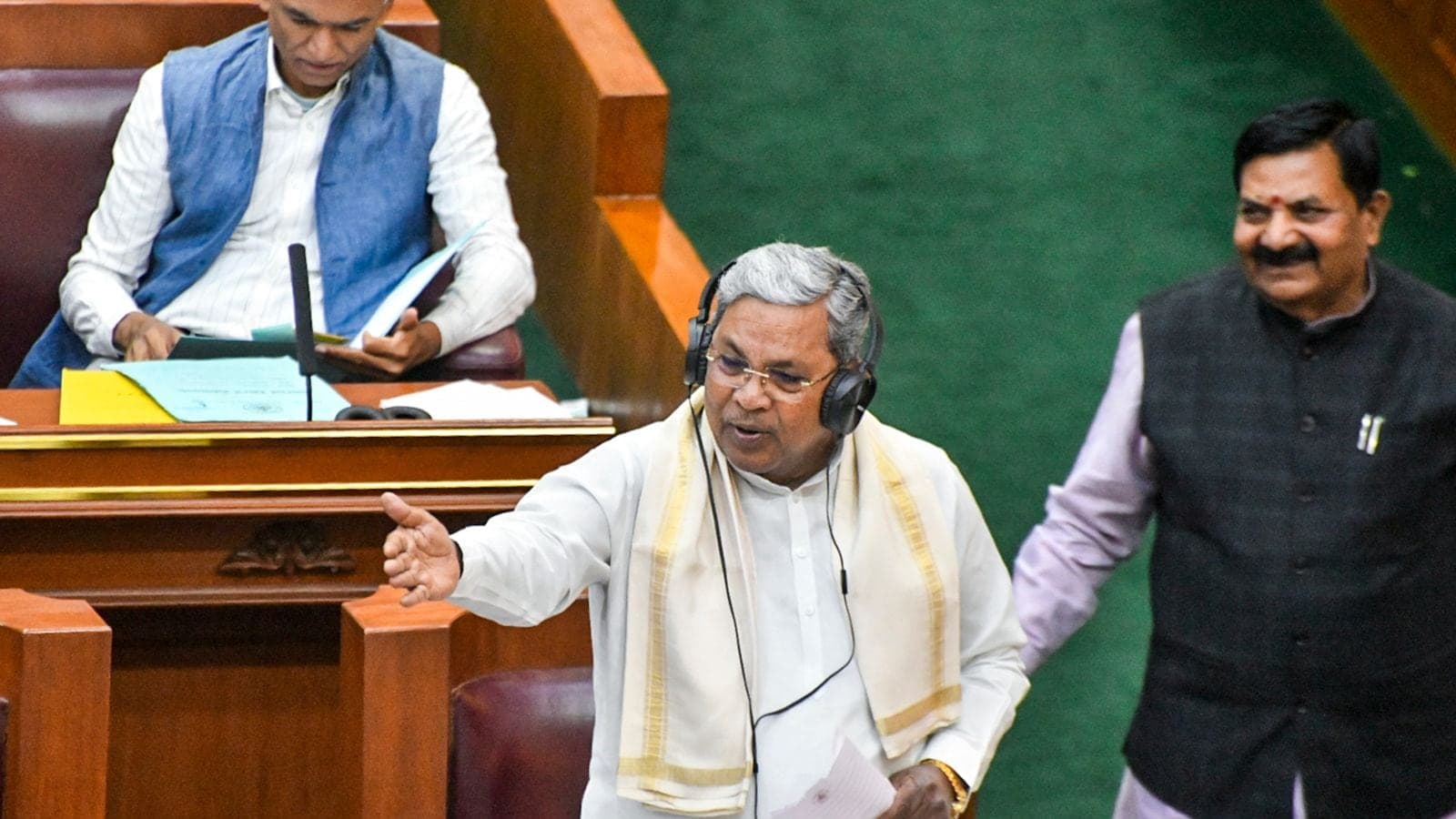
What transpired in Karnataka's legislative houses—the Legislative Assembly and the Legislative Council—was a robust debate characterized by 'sound and heat but little light.' This phrase suggests intense discussion and passionate arguments from various political factions, but perhaps without reaching a clear consensus or a definitive path forward at that immediate juncture. Such a dynamic is typical in legislative bodies when dealing with sensitive issues that touch upon fundamental rights and public sentiments. The debate likely revolved around the definition of hate speech, the scope of restrictions, potential for misuse, and the balance between free expression and the need to prevent incitement to violence or discrimination.
Key stakeholders involved in this process include the **Karnataka State Government**, which initiated the bill, driven by its political agenda and a perceived societal need to curb hate speech. **Legislators** from both the ruling and opposition parties are central, as they voice diverse opinions, scrutinize the bill's provisions, and ultimately vote on its passage. Civil society organizations, legal experts, and human rights activists also play a crucial role by influencing public discourse and advocating for or against specific aspects of such legislation. Finally, the **Judiciary** remains an overarching stakeholder, as any law passed would be subject to judicial review to ensure its constitutional validity.
This development holds immense significance for India. Firstly, it represents a bold step by a state government to address a national problem, potentially setting a precedent for other states or even prompting the Central government to formulate a uniform national law. Secondly, it reignites the perennial debate on the delicate balance between **Article 19(1)(a)**, which guarantees freedom of speech and expression, and **Article 19(2)**, which allows for reasonable restrictions on this freedom in the interests of public order, decency, morality, or incitement to an offence. A well-crafted anti-hate law could provide much-needed clarity on what constitutes 'hate speech' and how it can be legally curbed without infringing on legitimate dissent or criticism. Conversely, a poorly drafted law could be weaponized, stifling free expression and dissent, thereby undermining democratic principles.
Historically, India has grappled with the implications of speech on public order since its inception. The First Amendment to the Constitution in 1951 itself introduced 'public order' as a ground for restricting free speech, responding to early challenges of communal disharmony. Various Law Commission Reports, notably the 267th Report in 2017, have also recommended specific amendments to the IPC to make hate speech a separate offense, suggesting a legislative gap that state-level initiatives like Karnataka's aim to fill. The ongoing debate mirrors global discussions on regulating online content and hate speech, reflecting broader themes of digital governance and social responsibility.
The future implications of Karnataka's anti-hate law, if passed, are manifold. Its implementation would be closely watched, particularly regarding its effectiveness in curbing hate speech and the potential for its misuse against political opponents or dissenting voices. It would likely face rigorous judicial scrutiny, testing its adherence to the principles of proportionality and reasonableness enshrined in the Constitution. The outcome in Karnataka could serve as a blueprint or a cautionary tale, influencing policy decisions at the national level and in other states. Moreover, it could spur a broader public dialogue on civic duties, media ethics, and the role of technology platforms in mitigating the spread of harmful content, ultimately shaping the landscape of free speech and social cohesion in India.
Exam Tips
This topic falls under GS Paper II (Polity & Governance, Social Justice) for UPSC Civil Services Exam. Understand the constitutional provisions related to Freedom of Speech (Article 19) and reasonable restrictions (Article 19(2)).
Study related legal provisions like IPC Sections 153A, 295A, 505. Be prepared for analytical questions comparing the effectiveness and potential misuse of existing laws versus a new dedicated anti-hate law.
Familiarize yourself with the concept of federalism in India (state vs. central legislative powers) as this is a state-level initiative with national implications. Questions might ask about the role of states in social legislation.
Common question patterns include: 'Discuss the challenges in defining hate speech and balancing it with freedom of expression,' 'Critically analyze the need for a dedicated anti-hate law in India,' or 'Examine the constitutional validity of laws restricting free speech in India.'
Keep track of recent Supreme Court judgments and Law Commission reports on hate speech, as these often form the basis for current affairs questions.