


Relevant for Exams
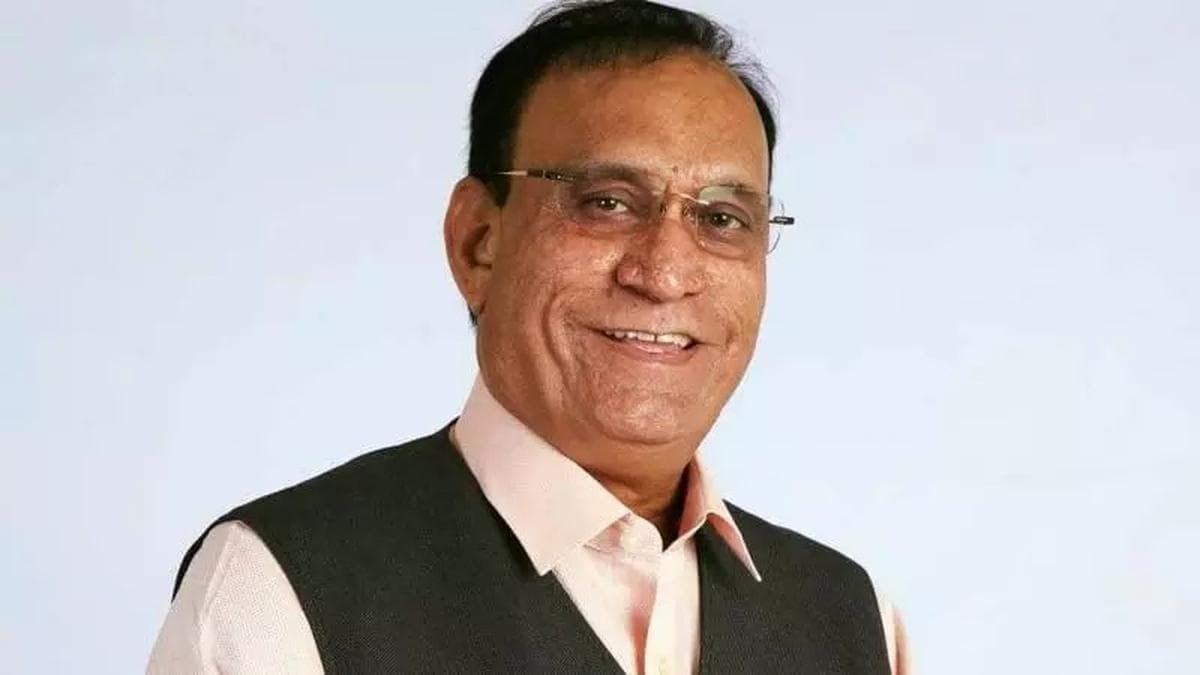
Gujarat Assembly Deputy Speaker Jethabhai Bharwad (BJP) resigns from his post.
Summary
Gujarat Assembly Deputy Speaker Jethabhai Bharwad, a BJP MLA, has resigned from his post. He was initially elected in September 2021 and subsequently re-elected after the 2022 Assembly elections. This development is significant for competitive exams as it pertains to the functioning of state legislative bodies and the roles of constitutional office-bearers, which are key topics in Indian Polity.
Key Points
- 1Jethabhai Bharwad resigned as the Deputy Speaker of the Gujarat Legislative Assembly.
- 2He is a Member of the Legislative Assembly (MLA) representing the Bharatiya Janata Party (BJP).
- 3Bharwad was first elected as Deputy Speaker in September 2021.
- 4He was re-elected to the Deputy Speaker post following the Gujarat Assembly elections held in 2022.
- 5The position of Deputy Speaker in a State Legislative Assembly is a constitutional post, provided for under Article 178 of the Indian Constitution.
In-Depth Analysis
The resignation of Jethabhai Bharwad as the Deputy Speaker of the Gujarat Legislative Assembly, a Bharatiya Janata Party (BJP) MLA, offers a valuable opportunity to delve into the intricacies of state legislative bodies and the constitutional roles within them. This event, while seemingly a routine political development, underscores several fundamental aspects of India's parliamentary democracy and federal structure.
**Background Context and What Happened:**
To understand the significance, it's crucial to first grasp the role of the Deputy Speaker. In every State Legislative Assembly, a Speaker and a Deputy Speaker are elected from amongst its members, as mandated by Article 178 of the Indian Constitution. The Speaker is the principal presiding officer, responsible for maintaining decorum, interpreting the rules of procedure, and ensuring the smooth functioning of the House. The Deputy Speaker performs these duties in the Speaker's absence. Jethabhai Bharwad was first elected to this constitutional post in September 2021 and was subsequently re-elected following the Gujarat Assembly elections in December 2022, where the BJP secured a historic mandate, winning 156 out of 182 seats. His resignation, without an immediately stated public reason, falls under the provisions of Article 179(b), which allows a Deputy Speaker to resign by writing under his hand to the Speaker. Such resignations can be prompted by various factors, including party directives to take on other responsibilities, potential cabinet reshuffles, or personal reasons.
**Key Stakeholders Involved:**
1. **Jethabhai Bharwad:** As the resigning office-bearer, he is central to this event. His political trajectory within the BJP and any future roles he might assume will be watched.
2. **Gujarat Legislative Assembly:** This institution is directly affected as it now has a vacant constitutional post. The Assembly's functioning relies on the presence of presiding officers to conduct its business effectively.
3. **Bharatiya Janata Party (BJP):** As the ruling party with a supermajority in Gujarat, the BJP's internal dynamics and decisions regarding the succession to the Deputy Speaker's post are paramount. The party would likely nominate a new candidate from its ranks.
4. **The Speaker of the Gujarat Legislative Assembly:** The resignation is submitted to the Speaker, who formally accepts it, paving the way for a new election.
5. **The Voters of Gujarat:** Ultimately, the representatives hold these offices based on the mandate given by the electorate, and changes in such roles reflect the broader political landscape.
**Why This Matters for India and Historical Context:**
This event highlights the constitutional framework governing state legislatures, which are vital pillars of India's federal system. The office of the Speaker and Deputy Speaker is crucial for upholding parliamentary conventions, ensuring legislative accountability, and facilitating robust debates. Historically, the role of the presiding officer has evolved from the British parliamentary system, adapted to India's unique constitutional requirements. The Constituent Assembly debates emphasized the need for impartiality and authority in these roles. The resignation, while not a crisis, brings the spotlight back on the process of electing and vacating constitutional offices, reminding us of the checks and balances inherent in our system. It reinforces that these are not merely ceremonial roles but positions of significant constitutional responsibility.
**Future Implications:**
The immediate implication is the need for the Gujarat Legislative Assembly to elect a new Deputy Speaker. This process will involve nominations from members, typically from the ruling party, followed by an election. The BJP, with its dominant majority, will easily ensure the election of its preferred candidate. From Jethabhai Bharwad's perspective, his resignation might open doors for a different role within the party organization or even a position in the state cabinet, depending on the party's strategic decisions. For the Gujarat Assembly, the transition is likely to be smooth, given the established procedures and the ruling party's strong hold. This event serves as a practical example for students to understand the fluidity of political roles and the constitutional mechanisms that govern them, reinforcing the continuous cycle of legislative functioning.
**Related Constitutional Articles, Acts, or Policies:**
* **Article 178: The Speaker and Deputy Speaker of the Legislative Assembly:** This article mandates the election of a Speaker and Deputy Speaker by every State Legislative Assembly from among its members.
* **Article 179: Vacation and resignation of, and removal from, the offices of Speaker and Deputy Speaker:** This article outlines the conditions under which these offices can be vacated, including resignation (clause 'b') or removal by a resolution passed by a majority of all the then members of the Assembly (clause 'c').
* **Article 180: Power of the Deputy Speaker or other person to perform the duties of the office of, or to act as, Speaker:** This article specifies that the Deputy Speaker shall perform the duties of the Speaker's office when it is vacant or when the Speaker is absent from a sitting of the Assembly. The Rules of Procedure and Conduct of Business of the Gujarat Legislative Assembly further detail the election process and the powers of these presiding officers.
Exam Tips
This topic falls under 'Indian Polity' in the UPSC and State PSC syllabi, specifically under 'State Legislature - Structure, Functioning, Conduct of Business, Powers & Privileges'.
Study Articles 178-181 of the Constitution thoroughly, focusing on the election, removal, powers, and functions of the Speaker and Deputy Speaker of State Legislative Assemblies. Compare these with the Speaker and Deputy Speaker of Lok Sabha (Articles 93-96) to understand similarities and differences.
Be prepared for questions on the constitutional provisions related to presiding officers, their role in maintaining neutrality and order, the process of their election and removal, and their significance in parliamentary democracy. Questions might also involve scenarios or comparative analysis.
Understand the concept of 'resignation' in the context of constitutional office-holders and the authority to whom such resignations are submitted.
Familiarize yourself with the general rules of procedure and conduct of business in State Assemblies, as these define the practical application of constitutional provisions.
Related Topics to Study
Full Article
The BJP MLA was elected as the Deputy Speaker for the first time in September 2021 and was re-elected to the post following the Assembly elections in 2022