

Relevant for Exams
Content unavailable for nanobots in targeted cancer treatment.
Summary
The provided article content regarding nanobots for targeted cancer treatment is unavailable. Therefore, a detailed summary explaining specific developments, their significance, or direct implications for competitive exam preparation cannot be generated. The topic of nanobots in medicine is generally important for Science & Technology sections in various competitive exams.
Key Points
- 1No specific details regarding nanobot types or mechanisms were provided in the article.
- 2No names of researchers, institutions, or specific studies were mentioned.
- 3No dates, timelines, or stages of research development were available.
- 4No numerical data on efficacy, trials, or funding was present in the article.
- 5No constitutional, legal, or ethical implications of nanobot use were discussed.
In-Depth Analysis
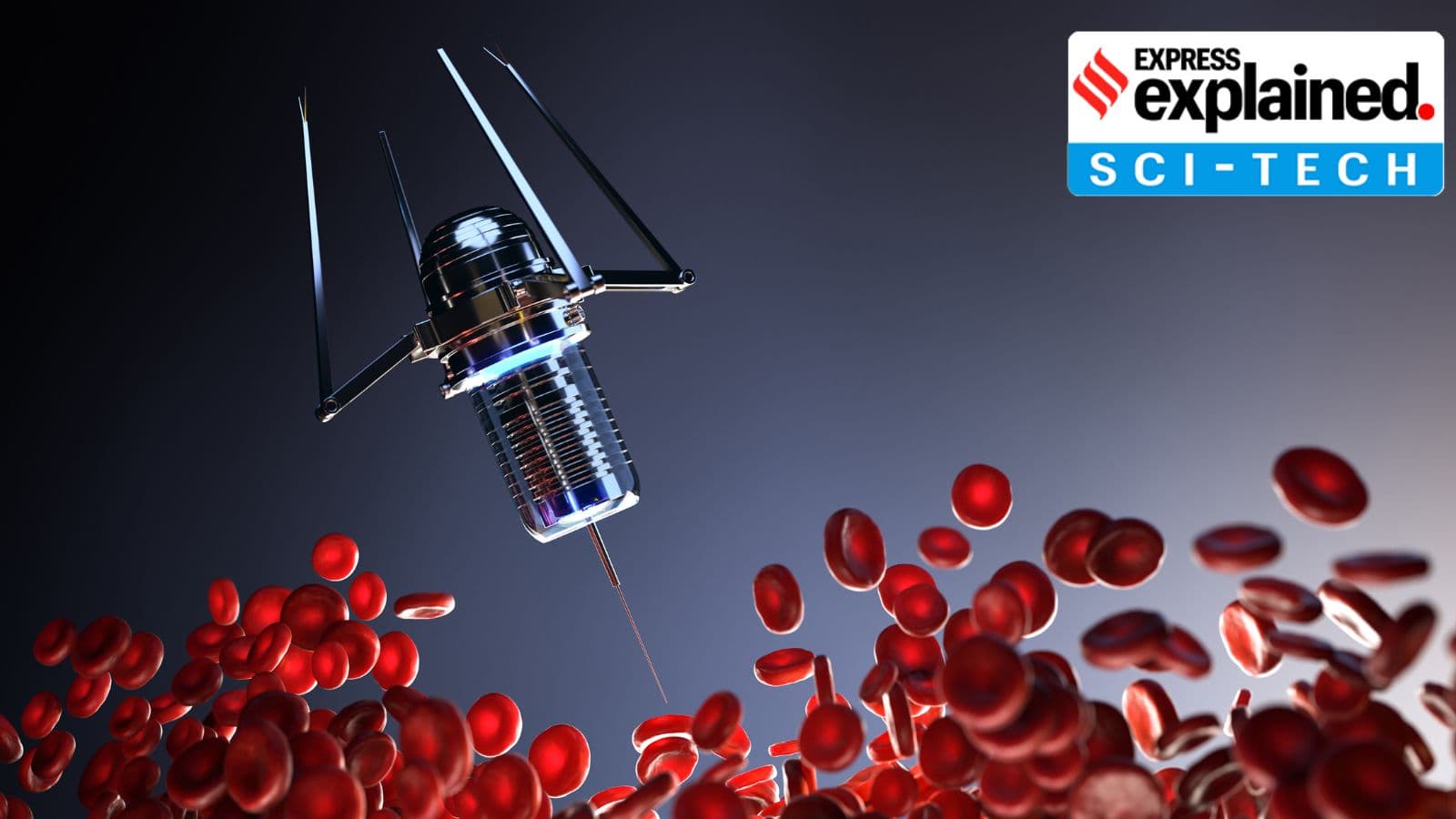
The prospect of nanobots revolutionizing cancer treatment is a beacon of hope in modern medicine, representing a significant leap in targeted drug delivery and therapeutic precision. Traditionally, cancer treatments like chemotherapy and radiation, while effective, often come with severe side effects due to their indiscriminate attack on both cancerous and healthy cells. This inherent lack of specificity has driven relentless research into more targeted approaches, and nanotechnology has emerged as a frontrunner in this quest.
Nanotechnology, broadly defined as the manipulation of matter on an atomic, molecular, and supramolecular scale (typically 1 to 100 nanometers), has roots tracing back to Richard Feynman's visionary 1959 speech, "There's Plenty of Room at the Bottom." He posited the possibility of manipulating individual atoms and molecules, laying the theoretical groundwork for what would become nanotechnology. In the context of cancer, nanobots (more accurately, nanocarriers or nanoparticles) are microscopic devices or structures engineered to operate at the cellular level. They are designed to encapsulate therapeutic agents (drugs, genes, imaging agents) and deliver them precisely to cancer cells or tumors, minimizing damage to surrounding healthy tissues. This targeted delivery can significantly enhance drug efficacy, reduce dosage requirements, and mitigate adverse side effects, thereby improving patient quality of life and treatment outcomes.
Several key stakeholders are involved in advancing this cutting-edge field. Researchers and scientists in universities (such as AIIMS, IISc, IITs in India, and global institutions like MIT, Stanford), government-funded research institutions, and private biotech firms are at the forefront of developing new nanobot designs, materials, and delivery mechanisms. Pharmaceutical companies play a crucial role in scaling up production, conducting clinical trials, and eventually commercializing these therapies. Government funding agencies, like India's Department of Biotechnology (DBT) and Department of Science & Technology (DST), provide essential grants for research and development. Regulatory bodies, such as the Central Drugs Standard Control Organisation (CDSCO) in India, are vital for ensuring the safety and efficacy of these novel treatments before they reach patients. Finally, healthcare providers and, most importantly, patients themselves are direct beneficiaries and integral to the adoption and refinement of these therapies.
For India, the advent of nanobots in cancer treatment holds immense significance. India faces a growing burden of cancer, with millions affected annually and a significant mortality rate. The high cost and debilitating side effects of conventional treatments often strain healthcare resources and impact patient access, particularly in rural areas. Nanobot-based therapies could offer more effective, less toxic, and potentially more affordable treatment options in the long run, aligning with the goals of the National Health Policy. Economically, investing in nanomedicine can boost India's pharmaceutical and biotechnology sectors, fostering innovation, creating high-skilled jobs, and potentially positioning India as a global hub for advanced medical technology, contributing to the 'Make in India' initiative. It can also help reverse brain drain by creating advanced research opportunities within the country.
From a constitutional perspective, the promotion of such advanced medical science aligns with the spirit of Article 21, which guarantees the Right to Life and Personal Liberty, implicitly encompassing the right to health and access to quality healthcare. Furthermore, Article 51A(h) of the Fundamental Duties encourages citizens to "develop the scientific temper, humanism and the spirit of inquiry and reform," a principle that underpins scientific advancements like nanomedicine. The government's role in regulating and promoting such technologies is guided by policies like the National Science, Technology and Innovation Policy and legislative frameworks like the Drugs and Cosmetics Act, 1940, which governs drug approval and manufacturing.
The historical context of cancer treatment shows a progression from surgical interventions and radiation therapy to chemotherapy, hormone therapy, immunotherapy, and now, highly targeted therapies like nanobots. Each stage represents an effort to improve efficacy and reduce collateral damage. Looking ahead, the future implications of nanobots are vast. They could lead to truly personalized medicine, where treatments are tailored to an individual's genetic makeup and specific tumor characteristics. Early detection and even prevention of cancer might become possible through nanoscale diagnostics. However, ethical considerations regarding equitable access, potential environmental impact, and the long-term safety of nanomaterials in the human body must be thoroughly addressed. Robust regulatory frameworks will be crucial to navigate these challenges, ensuring that these revolutionary technologies benefit all sections of society responsibly.
In essence, nanobots represent not just a scientific breakthrough but a paradigm shift in how we approach one of humanity's most formidable diseases. Their potential to transform healthcare in India, both medically and economically, makes this an area of critical importance for policymakers, scientists, and competitive exam aspirants alike.
Exam Tips
This topic primarily falls under the 'Science & Technology' section of the UPSC Civil Services Exam (General Studies Paper III) and General Science for SSC/State PSC exams. Focus on understanding the basic principles of nanotechnology and its applications in medicine.
When studying, connect nanobots to broader themes like 'Biotechnology', 'Healthcare Innovations', 'Drug Delivery Systems', and 'Government Policies on Research & Development'. Understand the 'why' behind this research, i.e., overcoming limitations of traditional cancer treatments.
Common question patterns include conceptual questions (e.g., 'What are nanobots and how do they work?'), application-based questions (e.g., 'Discuss the applications of nanotechnology in healthcare'), questions on India's initiatives in this field, and ethical/regulatory challenges associated with new technologies.
Be prepared to discuss the advantages of nanobot-based treatments over conventional therapies (e.g., targeted delivery, reduced side effects, improved efficacy) and the challenges in their development and implementation (e.g., cost, regulation, safety).
Familiarize yourself with relevant government bodies and policies in India that support scientific research and regulate pharmaceuticals, such as the Department of Biotechnology (DBT), Department of Science & Technology (DST), and the Central Drugs Standard Control Organisation (CDSCO).