


Relevant for Exams
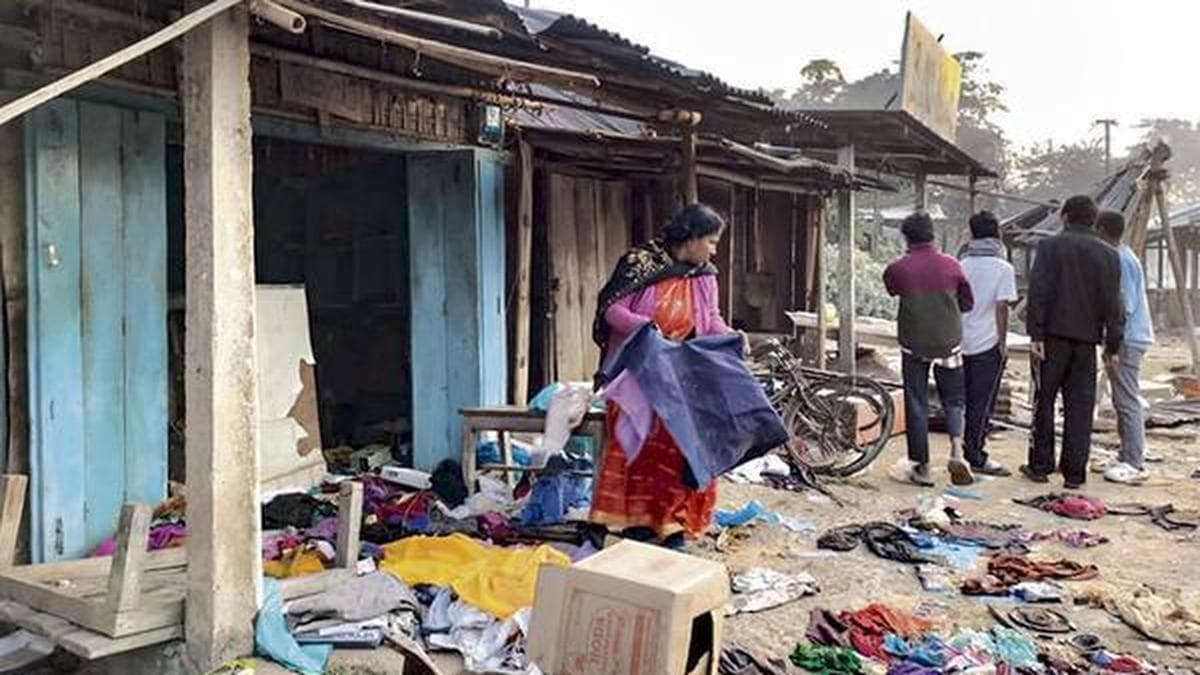
Assam's West Karbi Anglong normalizes post-violence; prohibitory orders, mobile data ban persist.
Summary
West Karbi Anglong district in Assam is gradually returning to normalcy following a period of violence. Despite improvements, prohibitory orders and mobile data suspension remain in effect to maintain law and order. This incident highlights regional security challenges and administrative responses, relevant for understanding internal security and geography for competitive exams.
Key Points
- 1The incident of violence occurred in the West Karbi Anglong district.
- 2West Karbi Anglong is a district located in the state of Assam.
- 3The situation in the district is reported to be 'limping back to normal'.
- 4Prohibitory orders are currently still in force in West Karbi Anglong.
- 5Mobile data suspension also remains active in the affected area.
In-Depth Analysis
The news of West Karbi Anglong district in Assam gradually returning to normalcy after a period of violence, with prohibitory orders and mobile data suspension still in effect, offers a crucial lens through which to examine India's internal security challenges, federal structure, and the complexities of managing diverse ethnic populations. This incident, while localized, reflects deeper issues prevalent across India's northeastern region.
**Background Context and Historical Roots:**
West Karbi Anglong is part of the larger Karbi Anglong district, one of Assam's significant tribal-dominated regions. Historically, this area has been a crucible of ethnic diversity, home to the Karbis, Rengma Nagas, Dimasas, Kukis, and other smaller communities. This demographic mosaic, coupled with competing claims over land, resources, and identity, has frequently led to inter-community tensions and conflicts. The region's history is also marked by demands for greater autonomy, even statehood (often articulated as 'Karbi Anglong state'), and the presence of various insurgent groups, although many have now entered peace processes. These historical grievances and aspirations for self-governance are rooted in a sense of marginalization and a desire to protect distinct cultural identities.
The Karbi Anglong region falls under the ambit of the **Sixth Schedule of the Indian Constitution**, which provides for the administration of tribal areas in Assam, Meghalaya, Tripura, and Mizoram. The **Karbi Anglong Autonomous Council (KAAC)**, established under this schedule, is empowered to legislate on subjects like land, forest, primary education, and local administration, aiming to grant significant autonomy to the tribal communities. However, the functioning of these councils often faces challenges related to funding, demarcation of powers, and the inclusion of non-tribal populations, leading to dissatisfaction and sometimes violence.
**The Recent Incident and Immediate Aftermath:**
While the specific triggers for the recent violence in West Karbi Anglong are not detailed in the provided context, such incidents in the region are typically fueled by land disputes, resource conflicts, or ethnic clashes. The administrative response – imposing prohibitory orders under **Section 144 of the Criminal Procedure Code (CrPC)** and suspending mobile data services – is a standard protocol to prevent escalation, control misinformation, and restore law and order. Section 144 empowers an Executive Magistrate to issue orders in urgent cases of nuisance or apprehended danger. The mobile data suspension, regulated by the **Temporary Suspension of Telecom Services (Public Emergency or Public Safety) Rules, 2017**, is a controversial measure often criticized for infringing on digital rights and freedom of expression, even while being justified by authorities as essential for preventing rumors and mobilizing crowds.
**Key Stakeholders:**
1. **Local Communities:** The various ethnic groups residing in West Karbi Anglong are the primary stakeholders, directly affected by the violence and its aftermath. Their aspirations for peace, security, and development are paramount.
2. **Karbi Anglong Autonomous Council (KAAC):** As the self-governing body, KAAC plays a critical role in local administration, conflict resolution, and development initiatives. Its effectiveness is crucial for long-term stability.
3. **Assam State Government:** Responsible for maintaining overall law and order, providing security forces, and facilitating dialogue between conflicting groups. It also oversees the functioning of the autonomous councils.
4. **Central Government (Ministry of Home Affairs):** Provides financial assistance, security intelligence, and often plays a mediating role in significant peace processes or when state capacity is overwhelmed.
5. **Security Forces:** State police and paramilitary forces are directly involved in enforcing prohibitory orders, patrolling, and ensuring the safety of citizens.
**Significance for India:**
This incident has significant implications for India. Firstly, it underscores the persistent **internal security challenges** in the Northeast, necessitating robust intelligence gathering, proactive conflict resolution mechanisms, and sensitive handling of ethnic issues. Secondly, it highlights the complexities of **federalism and regional autonomy**, particularly the implementation of the Sixth Schedule. The balance between granting self-governance to tribal communities and ensuring the rights of all residents, including non-tribals, is a delicate act. Thirdly, such violence significantly impedes **economic development** in an already underdeveloped region. Instability deters investment, disrupts livelihoods, and strains public resources, hindering India's 'Act East' policy objectives. Lastly, the use of **internet shutdowns** raises critical questions about human rights, digital access, and the proportionality of state actions in maintaining public order versus fundamental freedoms, which are guaranteed under **Article 19 of the Constitution** (freedom of speech and expression, including the right to access information).
**Future Implications:**
For West Karbi Anglong and similar regions, the immediate future demands sustained efforts for peace-building, dialogue, and rehabilitation. Addressing the root causes of conflict – primarily land rights, resource sharing, and identity – through inclusive governance and equitable development is crucial. The effectiveness of the KAAC and other autonomous councils will be continually tested. Furthermore, the debate around internet shutdowns will likely intensify, with calls for clearer guidelines and judicial oversight to balance security concerns with civil liberties. The incident also serves as a reminder for the Central and State governments to revisit and strengthen policies aimed at fostering inclusive growth and resolving ethnic tensions in the Northeast, ensuring that the region's rich diversity becomes a source of strength rather than conflict.
Exam Tips
**UPSC CSE (General Studies Paper III - Internal Security; Paper II - Polity & Governance; Paper I - Geography):** Focus on the causes and consequences of regional conflicts, the role of autonomous councils (Sixth Schedule), the impact of internet shutdowns on governance and rights, and the geographical significance of the Northeast. Practice questions on federalism challenges and special provisions for states like Assam (Article 371B).
**SSC & State PSCs (General Awareness/General Studies):** Expect questions on the geography of Assam (districts, major tribes), the Sixth Schedule of the Constitution, constitutional articles related to special provisions for states, and the administrative tools used for law and order (e.g., Section 144 CrPC). Be aware of current affairs related to peace accords or significant developments in the Northeast.
**Related Topics to Study Together:** When studying this, also cover the history of insurgency in Northeast India, the provisions of the Sixth Schedule in detail, the functioning of other autonomous councils (e.g., Bodoland Territorial Region), and the legal framework surrounding internet shutdowns in India. Understand the challenges of border management and ethnic diversity in the region.
**Common Question Patterns:** Questions often revolve around identifying constitutional provisions (e.g., 'Which Schedule deals with tribal administration in Assam?'), analyzing the impact of government policies (e.g., 'Discuss the implications of internet shutdowns on human rights and law enforcement.'), or understanding the socio-political dynamics of specific regions (e.g., 'Examine the factors contributing to ethnic conflicts in Northeast India.').
Related Topics to Study
Full Article
An official from the district administration said that despite the situation improving fast, prohibitory orders and mobile data suspension will remain as of now