


Relevant for Exams
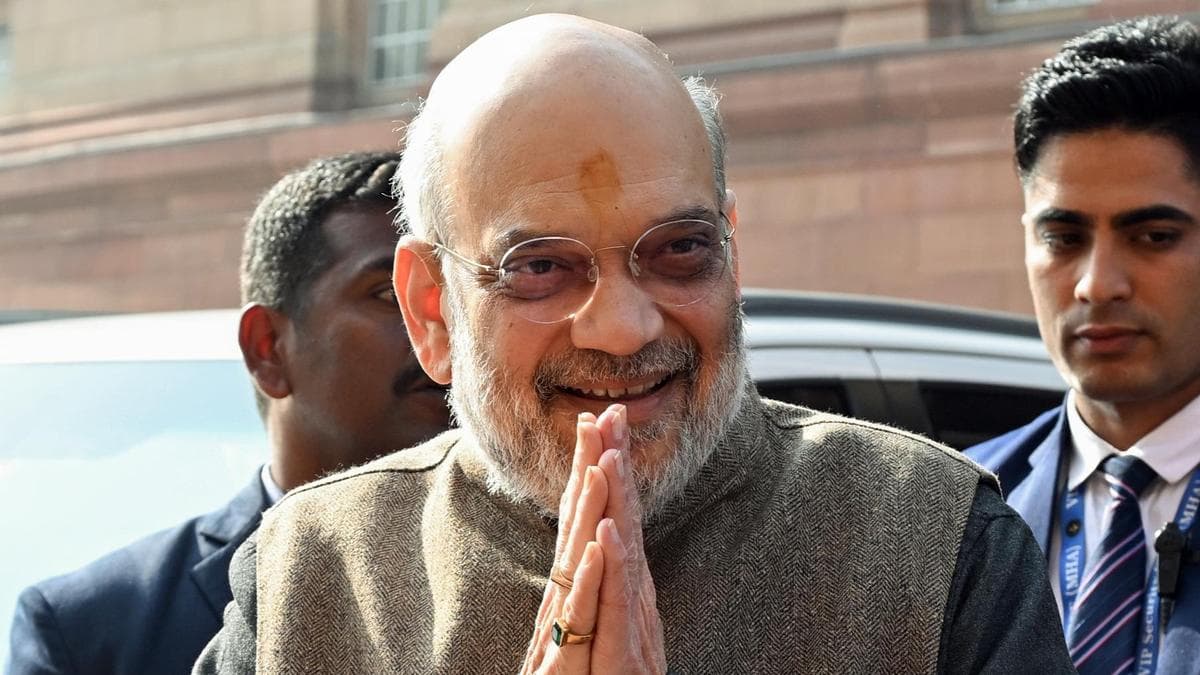
Amit Shah to inaugurate national anti-terror conference on Dec 26 for security strategy.
Summary
Union Home Minister Amit Shah is scheduled to inaugurate a significant anti-terror conference on December 26. This crucial event will convene senior police officers from various states and officials from central agencies and departments dedicated to counter-terrorism. The conference aims to strengthen India's internal security framework by fostering coordinated strategies against terrorism, making it highly relevant for competitive exams focusing on governance, internal security, and national policy.
Key Points
- 1The anti-terror conference will be inaugurated by Union Home Minister Amit Shah.
- 2The conference is scheduled to take place on December 26.
- 3Senior police officers from various States are slated to attend the conference.
- 4Officers from Central agencies and Departments dealing with counter-terrorism will also participate.
- 5The primary focus of the conference is to discuss and strategize on counter-terrorism measures.
In-Depth Analysis
India, a nation with a complex geopolitical landscape, has long grappled with the multifaceted challenge of terrorism. From cross-border infiltration and proxy wars to indigenous extremist movements like Naxalism, the threat to internal security remains persistent and evolving. This backdrop forms the crucial context for the Union Home Minister Amit Shah's inauguration of a significant anti-terror conference on December 26. Such high-level gatherings are not isolated events but rather integral components of India's continuous efforts to fortify its defenses against those who seek to destabilize the nation.
The scheduled conference serves as a critical platform for strategic deliberation and operational coordination. Its primary objective is to bring together senior police officers from various states and officials from central agencies and departments specifically tasked with counter-terrorism. This convergence is vital because terrorism, by its very nature, transcends geographical boundaries and administrative jurisdictions, often requiring a seamless, integrated response that cuts across state and central domains. The discussions typically revolve around intelligence sharing, reviewing existing strategies, identifying emerging threats (such as cyber-terrorism, radicalization through social media, and drone-based threats), and formulating unified action plans to effectively neutralize these dangers.
Several key stakeholders are involved in this crucial endeavor. At the helm is the Union Home Minister, Amit Shah, who provides the political leadership and sets the national policy direction for internal security. His presence underscores the government's unwavering commitment to a zero-tolerance policy against terrorism. Senior police officers from states are pivotal, as 'Public Order' and 'Police' fall under the State List as per the Seventh Schedule of the Indian Constitution, making state police forces the primary responders on the ground. Their insights into local challenges, specific intelligence inputs, and operational capacities are indispensable. Complementing them are officers from central agencies like the National Investigation Agency (NIA), Intelligence Bureau (IB), Research and Analysis Wing (RAW), Central Bureau of Investigation (CBI), and others. These central bodies bring specialized expertise, national intelligence gathering capabilities, and the mandate to handle cases that span multiple states or have international ramifications. Departments dealing with counter-terrorism within the Ministry of Home Affairs and potentially other ministries also contribute to the broader policy framework and resource allocation.
The significance of such a conference for India cannot be overstated. Firstly, it directly impacts national security and stability. An effective counter-terrorism strategy is essential for maintaining peace, protecting citizens, and upholding the rule of law. Secondly, it has profound economic implications; terrorism deters foreign investment, disrupts trade, damages infrastructure, and diverts significant financial resources towards security measures rather than development. Socially, terrorism breeds fear, fosters communal disharmony, and can lead to displacement and loss of life. Politically, it tests the resilience of democratic institutions and the federal structure. From an international perspective, India's robust counter-terrorism efforts enhance its standing as a responsible global actor committed to combating a transnational threat. The conference also reinforces the principle of cooperative federalism, recognizing that while law and order is a state subject, combating terrorism requires a unified national approach facilitated by the Union government, as envisioned by Article 355 of the Constitution which mandates the Union to protect states against external aggression and internal disturbance.
Historically, India has continuously refined its counter-terrorism architecture. Post-major attacks like the 1993 Mumbai bombings and the 2001 Parliament attack, laws like the Terrorist and Disruptive Activities (Prevention) Act (TADA) and Prevention of Terrorism Act (POTA) were enacted, though later repealed due to concerns about misuse. The Unlawful Activities (Prevention) Act (UAPA), 1967, significantly amended over the years (notably in 2004, 2008, 2012, and 2019), stands as India's primary anti-terror legislation, empowering authorities to deal with terrorist activities. The 26/11 Mumbai attacks in 2008 exposed critical gaps in intelligence sharing and operational coordination, leading to the creation of the National Investigation Agency (NIA) through the NIA Act, 2008, as a federal agency to investigate and prosecute offenses affecting national security. The Multi-Agency Centre (MAC) was also strengthened to facilitate real-time intelligence sharing among various agencies.
The future implications of such conferences are far-reaching. They are expected to lead to enhanced intelligence sharing mechanisms, improved inter-agency operational coordination, and the adoption of cutting-edge technologies like artificial intelligence, big data analytics, and cyber forensics in counter-terrorism operations. Furthermore, these deliberations often result in policy refinements, capacity building initiatives for security forces, and a renewed focus on addressing the root causes of radicalization. As terrorism continues to evolve, adapting to new technologies and geopolitical shifts, such continuous dialogue and strategic planning are indispensable for India to maintain its vigilance and effectively safeguard its national interests.
Relevant constitutional provisions and acts include the Seventh Schedule (specifically List I - Union List, List II - State List, and List III - Concurrent List, outlining the respective powers regarding law and order and criminal justice), Article 355 (Duty of the Union to protect States), the Unlawful Activities (Prevention) Act (UAPA), 1967, and the National Investigation Agency (NIA) Act, 2008. These legal and constitutional frameworks provide the backbone for India's comprehensive counter-terrorism strategy.
Exam Tips
This topic falls under GS Paper III (Internal Security) for UPSC CSE, and General Awareness sections for SSC, Banking, and State PSC exams. Focus on the institutional framework (NIA, MHA, MAC), key legislation (UAPA), and Centre-State cooperation.
Study related topics like Naxalism, Insurgencies in North-East and Jammu & Kashmir, Cyber Warfare, and Border Management challenges. Understand how these different facets of internal security are interconnected.
Expect questions on the roles and mandates of various central agencies (NIA, IB, RAW), the provisions of UAPA, challenges in intelligence sharing, the importance of cooperative federalism in internal security, and government policies/initiatives to counter terrorism. Be prepared for both factual and analytical questions.
Related Topics to Study
Full Article
The conference will be attended by senior police officers from the States, and officers from Central agencies and Departments dealing with counter terrorism