


Relevant for Exams
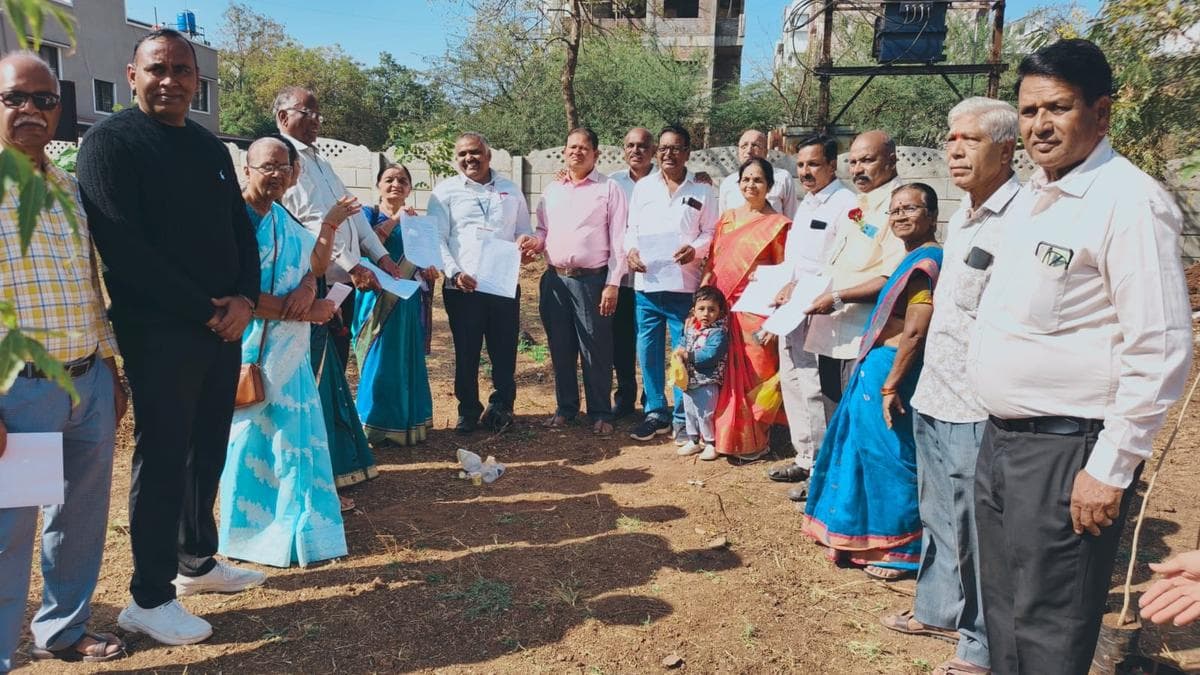
915 Nashik villages resolve to end discriminatory tradition of removing widows' ornaments.
Summary
915 villages in Maharashtra's Nashik district have passed a resolution to discontinue the age-old tradition of publicly removing ornaments from widows. This significant social reform aims to end discriminatory practices against women, promoting dignity and equality. It's crucial for competitive exams under social issues and women's empowerment topics, showcasing local-level initiatives for social change.
Key Points
- 1A total of 915 villages in Maharashtra's Nashik district have passed a resolution against the ill-treatment of widows.
- 2The resolution specifically targets the traditional practice of publicly removing ornaments considered symbols of marriage from widows.
- 3This discriminatory practice has been prevalent in Maharashtra for centuries, reflecting deeply entrenched social customs.
- 4The collective action by these villages represents a significant social reform movement aimed at promoting dignity and equality for widows.
- 5The initiative highlights local-level efforts to address social injustices, relevant for topics on women's empowerment and social reforms in competitive exams.
In-Depth Analysis
The resolution passed by 915 villages in Maharashtra's Nashik district to discontinue the age-old tradition of publicly removing ornaments from widows marks a significant step in India's ongoing journey towards social reform and gender equality. This local-level initiative, though seemingly focused on a symbolic act, carries profound implications for the dignity and rights of widows, challenging deeply entrenched patriarchal norms.
**Background and Historical Context:**
For centuries, Indian society, particularly in many rural pockets, has subjected widows to various forms of discrimination and ostracism. Widowhood has often been associated with inauspiciousness, bad luck, or even perceived as a consequence of past sins, sometimes leading to the widow being held responsible for her husband's demise. This regressive societal outlook has historically stripped widows of their social standing, economic independence, and even their identity. The practice of publicly removing ornaments like the *mangalsutra*, bangles, *bindi*, and toe rings is a symbolic act of stripping away her marital identity, often accompanied by enforced austere lifestyles, social isolation, and restrictions on participation in auspicious events. This practice is a stark reminder of how a woman's identity and social value were historically tied solely to her husband's existence, rather than her individual being. India has a long history of social reform movements, from Raja Ram Mohan Roy's efforts to abolish Sati in the 19th century (leading to the Bengal Sati Regulation, 1829) to Ishwar Chandra Vidyasagar's advocacy for widow remarriage (culminating in the Hindu Widows' Remarriage Act, 1856). These historical struggles highlight the persistent need to challenge and dismantle discriminatory practices against women.
**What Happened and Key Stakeholders:**
In a landmark move, 915 villages across Nashik district, Maharashtra, have passed a resolution through their respective Gram Panchayats, committing to end the practice of publicly removing ornaments from widows. This collective action is primarily driven by local communities and their elected representatives in the Gram Panchayats, who serve as crucial stakeholders. The primary beneficiaries are, of course, the widows themselves, whose dignity, respect, and right to self-expression are being restored. While not explicitly mentioned in the quick summary, such initiatives are often catalysed or supported by local social activists, women's groups, and non-governmental organizations (NGOs) who work tirelessly to raise awareness and advocate for social justice. The district administration and state government also play an indirect but vital role by acknowledging and potentially supporting such progressive local resolutions, thereby legitimizing and encouraging their wider adoption.
**Significance for India:**
This resolution holds immense significance for India on multiple fronts. Socially, it represents a powerful assertion of a woman's right to live with dignity, irrespective of her marital status. It challenges the deeply ingrained patriarchal notion that a woman's identity is subsumed by her husband's. Culturally, it encourages a re-evaluation of customs that are discriminatory and harmful. Politically, it showcases the immense potential of grassroots democracy and local self-governance (as enshrined in the 73rd and 74th Constitutional Amendments) to drive meaningful social change. When Gram Panchayats take such progressive stances, it empowers local communities to become agents of reform. Economically, while not directly addressed, ensuring dignity and social inclusion for widows can indirectly contribute to their economic empowerment by breaking down barriers to participation and preventing exploitation.
**Constitutional and Legal Framework:**
This initiative aligns perfectly with the fundamental principles enshrined in the Constitution of India. **Article 14** guarantees 'Equality before law and equal protection of laws,' implying that all individuals, including widows, must be treated equally without discrimination. **Article 15(1)** explicitly prohibits discrimination on grounds of 'sex,' among others, making any customary practice that discriminates against women based on their marital status unconstitutional in spirit. Most importantly, **Article 21**, which protects 'life and personal liberty,' has been interpreted by the Supreme Court to include the 'right to live with dignity.' Forcing a woman to undergo a public stripping of her identity and imposing social ostracism clearly violates her right to live with dignity. Furthermore, the **Preamble** of the Constitution pledges to secure 'Justice – social, economic and political' and 'Equality of status and of opportunity' and 'Dignity of the individual,' all of which are upheld by this resolution. The **Directive Principles of State Policy (DPSP)**, particularly **Article 38** and **Article 39(a)**, guide the state to secure a social order for the promotion of welfare of the people and ensure that citizens, men and women equally, have the right to an adequate means of livelihood, implicitly supporting the elimination of practices that undermine women's status.
**Future Implications:**
The Nashik resolution could serve as a powerful precedent for other villages, districts, and even states in India. It could inspire similar movements to challenge and abolish other regressive social practices affecting women. The success of this initiative depends on sustained community engagement, awareness campaigns, and the consistent enforcement of the resolution by local bodies. While a significant step, the broader challenges faced by widows, such as economic vulnerability, property rights issues (despite the **Hindu Succession Act, 1956**, as amended in 2005), and psychological trauma, still need comprehensive policy interventions. This local reform, however, lays a strong foundation for a more inclusive and equitable society, demonstrating that true change often begins at the grassroots level, transforming individual lives and societal norms one village at a time.
Exam Tips
This topic falls under GS Paper 1 (Indian Society, Social Issues, Women's Empowerment) and GS Paper 2 (Governance, Social Justice, Local Self-Governance) for UPSC. For State PSCs, SSC, and Railway exams, it's relevant for General Awareness, Social Issues, and Current Affairs sections.
When studying, connect this specific event to broader themes like the role of local self-governance (Panchayati Raj Institutions) in social reform, the evolution of women's rights in India, and the impact of traditional practices on gender equality. Related topics include the Hindu Succession Act, Sati abolition, and other social reform movements.
Common question patterns include direct questions on current social reforms (e.g., 'Discuss the significance of the Nashik resolution regarding widows'), essay questions on women's empowerment, or analytical questions on the role of Gram Panchayats in addressing social issues. You might also encounter questions asking you to link such initiatives to constitutional provisions like Articles 14, 15, and 21.
Related Topics to Study
Full Article
For centuries now, the tradition of publicly removing the ornaments considered to be the symbols of marriage for a woman has been prevalent in Maharashtra 915 villages in Nashik district have passed a resolution that they will not follow this evil tradition