



Relevant for Exams
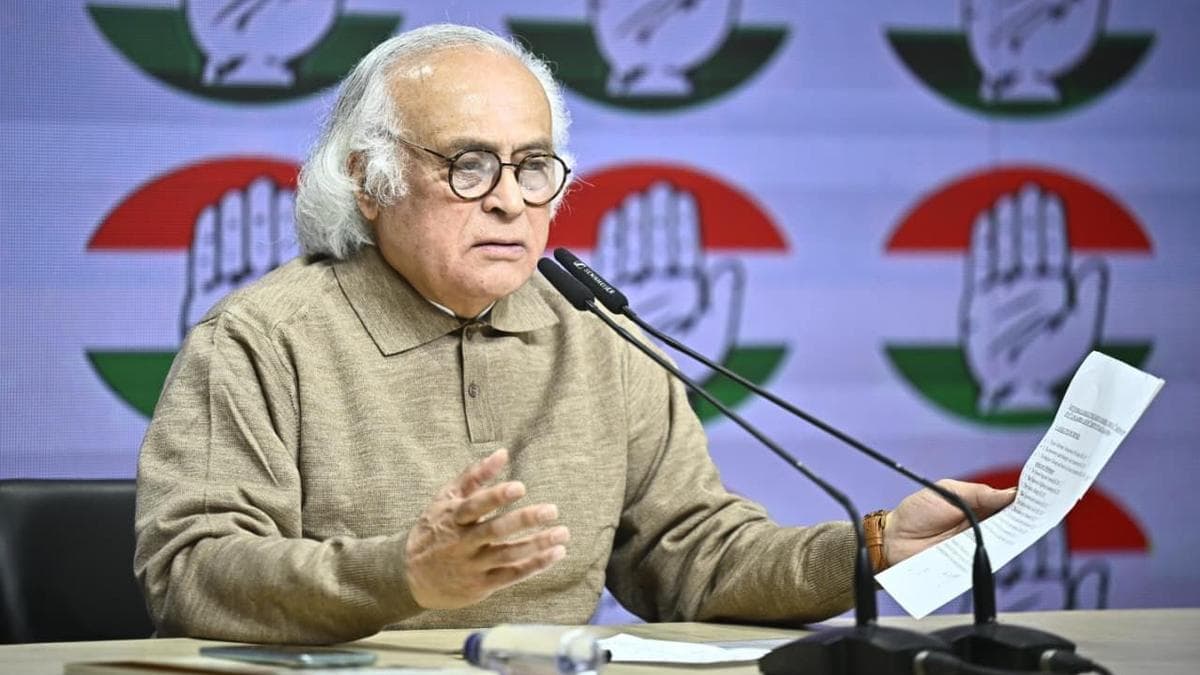
Congress slams "fatally flawed" Aravalli redefinition, citing Forest Survey opposition.
Summary
The Congress, led by Jairam Ramesh, has criticized the government's redefinition of the Aravallis, labeling it "fatally flawed" and noting opposition from the Forest Survey of India. This issue is critical for environmental governance, conservation efforts, and the protection of a vital ecological zone. For competitive exams, it highlights the significance of environmental policy, major geographical features, and the role of expert bodies in India.
Key Points
- 1Congress leader Jairam Ramesh voiced opposition to the government's proposed redefinition of the Aravalli mountain range.
- 2The redefinition was described by Congress as "fatally flawed," indicating serious concerns over its implications.
- 3The Forest Survey of India (FSI) reportedly opposed the government's move to redefine the Aravallis.
- 4The Aravalli Range is a crucial ecological corridor and one of the oldest fold mountain ranges in India, extending approximately 692 km.
- 5Environmental policy changes affecting the Aravallis are critical for biodiversity and ecological balance in states like Rajasthan, Haryana, and Gujarat.
In-Depth Analysis
The Aravalli Range, one of the world's oldest fold mountain systems, stretches approximately 692 kilometers across Gujarat, Rajasthan, Haryana, and Delhi. It stands as a vital ecological corridor, often referred to as the 'green lungs' of North India, playing an indispensable role in the region's environmental balance. This ancient range acts as a natural barrier against the eastward expansion of the Thar Desert, aids in groundwater recharge, influences climatic patterns, and is a significant biodiversity hotspot. Its dense forests and rocky terrain support a diverse array of flora and fauna, making it crucial for the ecological security of the states it traverses.
The recent controversy stems from the government's proposed redefinition of the Aravallis, a move that has drawn sharp criticism from various quarters, including the Congress party and the Forest Survey of India (FSI). Congress leader Jairam Ramesh labeled the redefinition 'fatally flawed,' indicating deep concerns over its potential implications. While the exact contours of the proposed redefinition are not fully public, such attempts typically aim to narrow the scope of what constitutes a 'forest' or 'Aravalli area' under existing legal protection, thereby potentially opening up previously protected lands for non-forest activities like mining, real estate development, and infrastructure projects.
Key stakeholders in this issue include the Central Government, particularly the Ministry of Environment, Forest and Climate Change (MoEFCC), and the respective state governments (Haryana, Rajasthan, Gujarat, Delhi) that often seek to balance conservation with developmental pressures. Opposition parties, led by Congress, act as a check, voicing concerns over environmental degradation and governance. Crucially, the Forest Survey of India (FSI), a premier national organization responsible for forest surveys and assessment, reportedly opposing the redefinition adds a significant scientific and technical dimension to the debate. Environmental activists, non-governmental organizations, and local communities dependent on the Aravallis for their livelihoods and resources are also critical stakeholders, often at the forefront of conservation efforts. On the other side, powerful real estate and mining lobbies exert pressure for policy changes that would facilitate commercial exploitation of the range.
This issue holds immense significance for India. Ecologically, altering the definition could lead to irreversible damage: accelerated deforestation, loss of biodiversity, increased air pollution (especially impacting the National Capital Region), depletion of groundwater tables, and the unchecked expansion of desertification. Economically, while it might offer short-term gains for specific industries, the long-term environmental costs, including climate change impacts, loss of ecosystem services, and reduced tourism potential, could be catastrophic. Socially, it threatens the livelihoods of tribal and local communities, potentially leading to displacement and resource conflicts. Politically, it tests the robustness of India's environmental governance framework, the independence of expert bodies like the FSI, and the balance between development and conservation.
Historically, the Aravallis have been a battleground for environmental conservation. The Supreme Court of India, in landmark judgments such as the *T.N. Godavarman Thirumulpad v. Union of India* case (1996), has significantly expanded the definition of 'forest' to include not just statutorily notified forest areas but also any area recorded as forest in government records, irrespective of ownership, and even areas that resemble forests. This broad interpretation has been a cornerstone of forest protection in India. Subsequent court orders have specifically addressed illegal mining and construction in the Aravallis, highlighting the judiciary's proactive role in safeguarding this critical ecological zone. Past attempts by state governments to dilute environmental regulations in the Aravallis have consistently met with legal challenges and public outcry.
The constitutional framework underpinning environmental protection in India is robust. Article 48A, a Directive Principle of State Policy, mandates that "The State shall endeavor to protect and improve the environment and to safeguard the forests and wild life of the country." Complementing this, Article 51A(g) enshrines as a Fundamental Duty for every citizen "to protect and improve the natural environment including forests, lakes, rivers and wild life, and to have compassion for living creatures." Key legislative instruments include the Environment (Protection) Act, 1986, which grants the central government wide powers for environmental protection; the Forest (Conservation) Act, 1980, regulating the diversion of forest land; and the Wildlife (Protection) Act, 1972, safeguarding biodiversity. The National Green Tribunal Act, 2010, established a specialized body for expeditious environmental justice. Any redefinition of the Aravallis would have to align with these constitutional provisions and statutory acts, and any perceived dilution is likely to face legal scrutiny.
The future implications of such a redefinition are profound. If allowed to proceed, it could set a dangerous precedent, weakening environmental safeguards across other ecologically sensitive regions in India. It signals a potential shift away from science-based conservation towards development-centric policies, possibly undermining India's commitments to climate change mitigation and biodiversity conservation under international agreements like the Convention on Biological Diversity (CBD) and the Paris Agreement. The controversy underscores the ongoing tension between economic growth and ecological preservation, demanding vigilant public discourse, robust institutional checks, and adherence to scientific advice to ensure sustainable development for India.
Exam Tips
This topic falls under GS Paper I (Geography - physical features, environmental geography) and GS Paper III (Environment and Ecology - conservation, environmental pollution & degradation, EIA). Be prepared for questions on the geographical significance of the Aravallis, environmental acts, and the role of various bodies like FSI and NGT.
Study related topics such as other major mountain ranges of India, major environmental protection acts (EPA 1986, FCA 1980, WPA 1972), the concept of 'forest' as defined by the Supreme Court, and the role of DPSP (Article 48A) and Fundamental Duties (Article 51A(g)) in environmental governance. Understand the difference between 'forest land' and 'recorded forest area'.
Common question patterns include: (a) Direct questions on the ecological significance of Aravallis or other mountain ranges. (b) Questions on specific environmental acts and their provisions. (c) Analytical questions on the conflict between development and conservation, often asking for solutions or implications. (d) Current affairs-based questions linking recent policy changes to constitutional provisions or environmental impact.
Related Topics to Study
Full Article
Congress leader Jairam Ramesh said the redefinition of the Aravallis was opposed by the Forest Survey