


Relevant for Exams
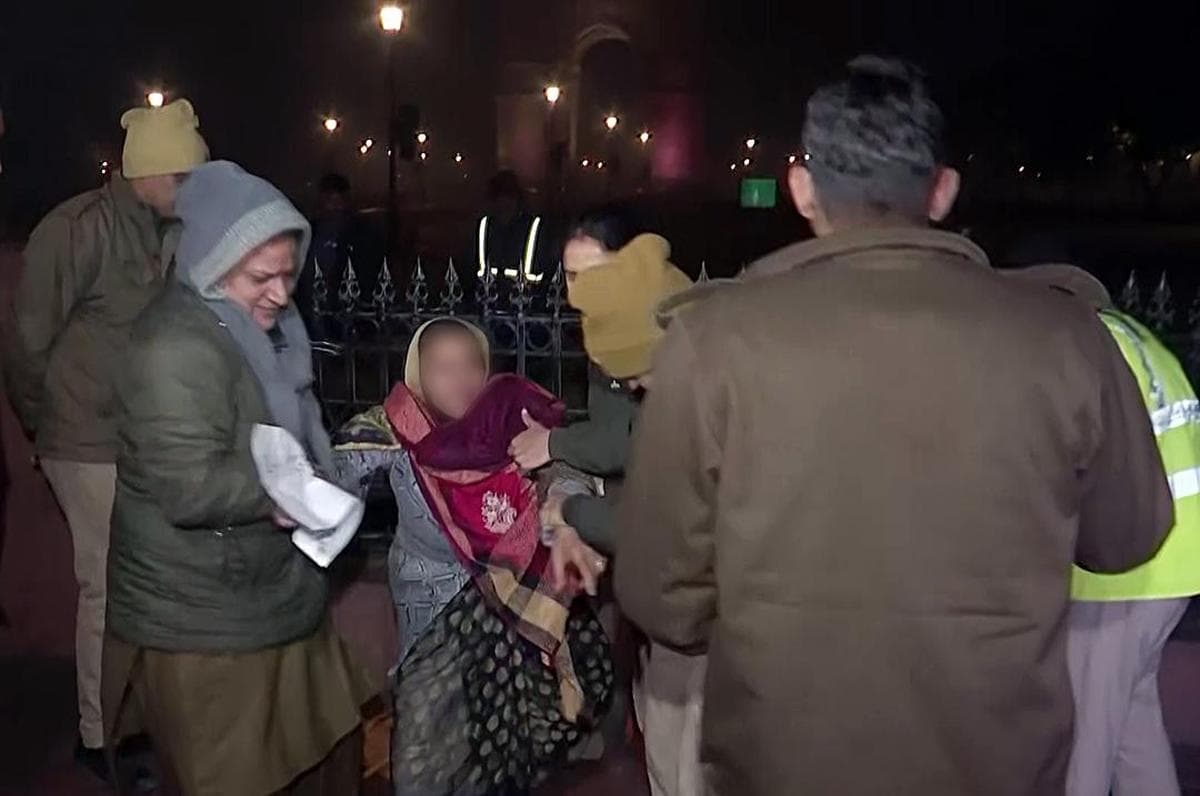
Unnao survivor fears for safety if Kuldeep Sengar is freed, prefers jail for protection.
Summary
The Unnao rape survivor expressed profound fear regarding the potential release of convicted former MLA Kuldeep Singh Sengar, stating she would feel safer in jail. This highlights critical concerns about victim safety, the efficacy of judicial protection mechanisms, and the long-term impact of high-profile criminal cases on survivors. This issue is relevant for understanding social justice, governance, and legal reform topics for competitive exams.
Key Points
- 1The statement pertains to the Unnao rape case, a prominent incident from Uttar Pradesh.
- 2Kuldeep Singh Sengar, a former BJP MLA, was convicted in the Unnao rape case.
- 3The survivor expressed fear about Sengar's potential release, indicating ongoing legal processes or appeals.
- 4Sengar was sentenced to life imprisonment by a Delhi court in December 2019 for the rape of the minor.
- 5The case underscores challenges in victim protection and the need for robust legal safeguards in India.
In-Depth Analysis
The harrowing statement by the Unnao rape survivor – that she would feel safer in jail if former MLA Kuldeep Singh Sengar were freed – starkly illuminates the profound challenges faced by victims of sexual violence in India, particularly when the perpetrators are politically powerful. This case, which unfolded over several years, has become a symbol of the struggle for justice against systemic hurdles, political influence, and the persistent fear that haunts survivors even after convictions.
**Background Context and What Happened:**
The Unnao rape case first came to public attention in 2017 when a then-minor girl from Unnao, Uttar Pradesh, accused Kuldeep Singh Sengar, a powerful four-time BJP MLA, of rape. The survivor alleged that Sengar raped her at his residence in June 2017. What followed was a protracted and terrifying ordeal for the survivor and her family. Instead of immediate justice, they faced immense pressure, intimidation, and violence. Her father was allegedly beaten by Sengar's brother and subsequently died in police custody in April 2018. Later, in July 2019, the survivor, her two aunts, and her lawyer were involved in a suspicious road accident, which resulted in the deaths of her two aunts and left her and her lawyer critically injured. These incidents, widely perceived as attempts to silence and eliminate the survivor and her family, drew national outrage and intervention from the Supreme Court, which transferred all related cases from Uttar Pradesh to Delhi.
After a thorough investigation, initially by the Uttar Pradesh Police and later by the Central Bureau of Investigation (CBI) following public outcry, Kuldeep Singh Sengar was finally convicted. A Delhi court, in December 2019, sentenced him to life imprisonment under Section 376 of the Indian Penal Code (IPC) and the Protection of Children from Sexual Offences (POCSO) Act, 2012, for the rape of the minor. The recent statement by the survivor reflects her ongoing fear, likely stemming from Sengar's appeal against his conviction in higher courts or the possibility of parole/furlough, which are standard legal provisions but can be terrifying for victims of powerful individuals.
**Key Stakeholders Involved:**
* **The Survivor:** The primary victim, whose relentless fight for justice, despite unimaginable odds and personal tragedies, has brought this case to national prominence. Her safety and well-being remain paramount.
* **Kuldeep Singh Sengar:** The convicted former MLA, whose political clout allegedly enabled him to evade justice and intimidate the victim's family for an extended period, highlighting the nexus between crime and politics.
* **The Judiciary (Trial Courts, High Courts, Supreme Court):** Played a crucial role in ensuring a fair trial, transferring cases, and delivering the conviction. The higher courts are now responsible for hearing appeals and upholding the rule of law.
* **Investigative Agencies (UP Police, CBI):** Initially criticized for inaction, the CBI later took over and built a strong case leading to conviction. Their efficiency and impartiality are vital.
* **State Government (Uttar Pradesh):** Responsible for law and order, victim protection, and ensuring a conducive environment for justice. The alleged initial lapses and political protection to Sengar raised serious questions about governance.
* **Media and Civil Society:** Instrumental in raising awareness, pressuring authorities, and advocating for the survivor, ensuring the case remained in the public eye.
**Why This Matters for India:**
This case underscores critical issues for India. Firstly, it exposes systemic weaknesses in victim protection, especially for those challenging powerful individuals. The survivor's fear, even after conviction, indicates a lack of faith in the state's ability to guarantee her safety outside of judicial custody. Secondly, it highlights the challenges to the 'Rule of Law' when political influence attempts to subvert justice. The long and arduous journey to conviction, marked by intimidation and violence, questions the efficacy of the criminal justice system. Thirdly, it is a stark reminder of the persistent issues of women's safety and gender justice in India. Such cases erode public trust in institutions and discourage other victims from coming forward. On a governance front, it raises questions about accountability of elected representatives and the need for stricter laws against criminalization of politics.
**Related Constitutional Articles, Acts, and Policies:**
Several legal frameworks are relevant: **Article 14** (Equality before law), **Article 21** (Protection of life and personal liberty, which includes the right to dignity and safety), and **Article 39A** (Equal justice and free legal aid). The core legal provisions applied were **Sections 375 and 376 of the Indian Penal Code (IPC)** dealing with rape, and the **Protection of Children from Sexual Offences (POCSO) Act, 2012**, as the survivor was a minor at the time of the incident. The **Criminal Law (Amendment) Acts of 2013 and 2018**, enacted post the Nirbhaya case, introduced stricter punishments and expedited trial procedures for sexual offenses. The **Witness Protection Scheme, 2018**, notified by the Ministry of Law and Justice, is crucial for ensuring the safety of witnesses and victims in such high-profile cases, which the survivor evidently feels is inadequate in her situation.
**Future Implications:**
The Unnao case demands robust reforms. There's an urgent need to strengthen victim and witness protection mechanisms, making them genuinely effective against powerful threats. This includes ensuring swift implementation of the Witness Protection Scheme. The judiciary must continue its vigilance to ensure appeals do not become tools for intimidation or delay. Furthermore, the case highlights the necessity of addressing the criminalization of politics, perhaps through electoral reforms that prevent individuals with serious criminal charges from holding public office. Ultimately, the Unnao case serves as a poignant reminder that true justice is not just about conviction, but also about ensuring the lasting safety, dignity, and peace of mind for survivors. The survivor's statement is a call to action for every pillar of Indian democracy to reinforce the faith of its most vulnerable citizens in the justice system.
Exam Tips
This topic falls under GS Paper II (Polity & Governance, Social Justice) and GS Paper I (Indian Society) for UPSC. Focus on constitutional provisions, legal reforms (e.g., POCSO Act, Criminal Law Amendments), and the role of institutions like the judiciary and investigative agencies.
Study related topics such as women's safety policies, judicial reforms (e.g., fast-track courts, victim compensation schemes), criminalization of politics, and the effectiveness of witness protection programs. Understand the evolution of laws pertaining to sexual offenses.
Common question patterns include essay questions on women's safety and justice, governance failures in protecting vulnerable sections, and direct questions on specific legal provisions (e.g., 'Discuss the key provisions of the POCSO Act and its impact'). Be prepared for case-study based questions on ethical dilemmas faced by public servants.
Analyze the role of civil society and media in bringing such cases to light and demanding justice. This can be relevant for Mains answers on the role of non-state actors in governance.
Understand the difference between parole, furlough, and remission, as these legal concepts often become relevant in discussions about convicted individuals' potential release and can be a source of confusion for aspirants.