
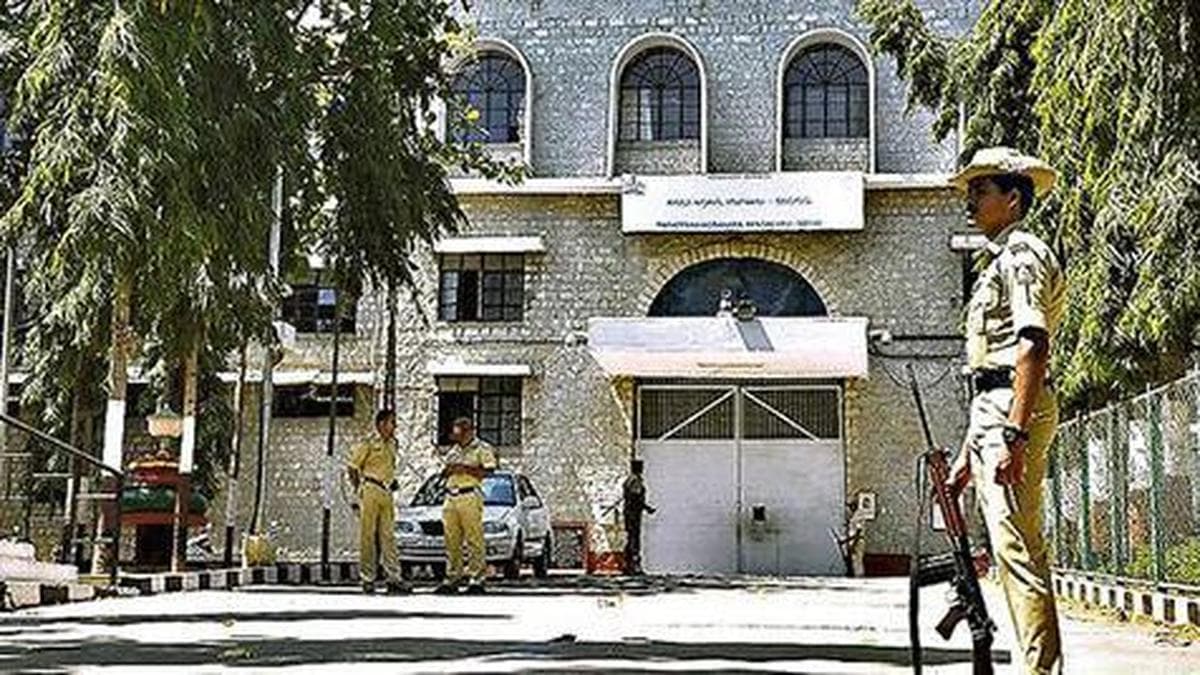


Content unavailable, preventing extraction of exam-relevant facts from Parappana Agrahara inspection news.
Summary
The provided article content is unavailable, making it impossible to extract specific exam-relevant facts such as dates, names, or numbers. While the title suggests a prison inspection at Parappana Agrahara and the seizure of prohibited items, no details are provided for competitive exam preparation. This limits its utility for any exam beyond general awareness of local news headlines.
Key Points
- 1The news article title indicates a 'surprise inspection' took place.
- 2The location mentioned in the title where the event occurred is 'Parappana Agrahara'.
- 3The inspection reportedly led to the 'seizure of prohibited items', though specifics are missing.
- 4No specific date or time for the event is provided in the available content.
- 5Details regarding the nature of seized items or involved authorities are absent from the article.
In-Depth Analysis
The news headline, "Surprise inspection leads to seizure of prohibited items at Parappana Agrahara," while lacking specific details due to content unavailability, serves as a significant prompt to delve into the critical issues plaguing India's prison system. Parappana Agrahara, the Bengaluru Central Prison, is one of the largest correctional facilities in India, making any incident there indicative of broader systemic challenges. Such inspections and seizures are not isolated events but rather symptoms of deep-rooted problems concerning prison administration, inmate welfare, and the effectiveness of the correctional system.
**Background Context:** Indian prisons, a legacy of the colonial era, were primarily designed for punitive detention rather than reform and rehabilitation. This historical design continues to influence their functioning. Today, they grapple with severe overcrowding, understaffing, dilapidated infrastructure, and a constant struggle to maintain order and security. Overcrowding, a pervasive issue, leads to a host of problems including poor sanitation, increased violence, and difficulties in managing inmates effectively. The National Crime Records Bureau (NCRB) 'Prison Statistics India' report consistently highlights occupancy rates far exceeding sanctioned capacities, with some states showing rates over 150%. This environment inadvertently creates fertile ground for the entry and circulation of prohibited items such as mobile phones, drugs, weapons, and even luxury goods. These items not only compromise security but also facilitate criminal activities from within prison walls, undermining the very purpose of incarceration.
**What Happened (General Nature of Such Events):** A 'surprise inspection' typically involves a sudden, unannounced raid by senior prison officials, often accompanied by local police forces, and sometimes even judicial magistrates or human rights commissions. The objective is to detect and seize contraband, identify security lapses, and ensure adherence to prison rules. These inspections usually involve thorough searches of cells, common areas, and sometimes even inmates. The seizure of prohibited items like mobile phones (used for communicating with external criminal networks, extortion, or planning escapes), drugs (leading to addiction, violence, and health crises), and makeshift weapons (posing severe threats to inmates and staff) points to failures in regular security checks, perimeter control, and potentially, corruption among staff members.
**Key Stakeholders Involved:** Several entities play crucial roles in the context of prison management and such inspections. The **Prison Department** of the respective State Government is directly responsible for the administration, security, and welfare of inmates. The **State Government** itself holds the ultimate policy-making and financial authority, as 'Prisons' is explicitly listed under Entry 4 of List II (State List) of the Seventh Schedule of the Indian Constitution. The **Judiciary** plays a vital oversight role, ensuring inmate rights are protected and issuing directives regarding prison conditions. The **Police** are often involved in conducting raids, investigating the origins of contraband, and maintaining external security. **Inmates** are directly impacted, both as users/possessors of prohibited items and as victims of the power dynamics and violence fostered by their presence. Lastly, **Civil Society Organizations and Human Rights Bodies** act as watchdogs, advocating for prison reform and monitoring the treatment of prisoners, often bringing deficiencies to public and judicial notice.
**Why This Matters for India:** The prevalence of prohibited items in prisons has profound implications for India. Firstly, it poses a significant **law and order** challenge, as incarcerated criminals can continue to operate and orchestrate crimes from inside. Secondly, it severely undermines the **human rights** of inmates and staff, creating an unsafe and undignified environment, which is a violation of the spirit of Article 21 (Right to Life and Personal Liberty). Thirdly, it reflects poorly on **governance and public administration**, indicating systemic corruption and inefficiency within the correctional system. Fourthly, it sabotages the **rehabilitative goals** of prisons, turning them into breeding grounds for further criminality rather than places of reform. Finally, the financial and social costs associated with managing a dysfunctional prison system are immense, impacting public resources that could be better utilized for development.
**Historical Context:** India's prison system largely operates under the antiquated **Prisons Act, 1894**, a colonial-era legislation focused more on punishment and custody than rehabilitation. While various committees, such as the **Mulla Committee (1983)** and more recently the **Justice Amitava Roy Committee (2018)**, have recommended comprehensive reforms, including a new All-India Prisons Act, a Model Prison Manual, and improved infrastructure and staff training, implementation has been slow and inconsistent. The **Model Prison Manual, 2016**, issued by the Ministry of Home Affairs, aims to standardize and modernize prison administration, but being advisory in nature, its adoption by states varies.
**Future Implications:** The persistent issue of prohibited items necessitates urgent and comprehensive prison reform. This includes upgrading physical infrastructure, deploying advanced surveillance technology (CCTV, body scanners, drone surveillance), implementing mobile phone jamming solutions, and regular, intelligence-based inspections. More importantly, there's a need for significant investment in **staff training and welfare** to curb corruption and improve professional standards. Rehabilitation programs, legal aid (Article 39A), and mental health support for inmates are crucial for reducing recidivism. Ultimately, a modern, humane, and effective prison system is vital for upholding the rule of law, protecting human rights, and fostering a safer society in India.
Exam Tips
This topic falls under GS Paper II (Governance, Social Justice) and GS Paper III (Internal Security) of the UPSC Civil Services Mains Syllabus. Specifically, focus on 'Government policies and interventions for development in various sectors and issues arising out of their design and implementation' and 'Linkages between development and spread of extremism. Role of external state and non-state actors in creating challenges to internal security. Challenges to internal security through communication networks, role of media and social networking sites in internal security challenges, basics of cyber security; money-laundering and its prevention. Security challenges and their management in border areas – linkages of organized crime with terrorism.'
Study related topics like prison reforms in India, overcrowding in jails, judicial activism regarding prisoner rights, the role of human rights commissions, and the challenges of internal security. Understand the recommendations of committees like the Mulla Committee and the Justice Amitava Roy Committee.
Common question patterns include: 'Discuss the challenges faced by the Indian prison system and suggest measures for reform.' 'To what extent does the Prisons Act, 1894, remain relevant in contemporary India? Elaborate on the need for a new prison law.' 'Analyze the impact of prison overcrowding and the prevalence of contraband on the rehabilitative goals of correctional facilities.'
Pay attention to constitutional articles like Article 21 (Right to Life and Personal Liberty) and Article 39A (Free Legal Aid), as well as the Seventh Schedule (State List - Prisons). Also, know key statistics from NCRB's 'Prison Statistics India' report.
Understand the distinction between the Prisons Act, 1894, and the Model Prison Manual, 2016, and why states have autonomy in prison administration.