


Relevant for Exams
Hemant Soren's govt challenged by liquor scam allegations, ex-Principal Secretary arrested.
Summary
Hemant Soren's government faces significant challenges, including continuous opposition attacks and alleged involvement in a liquor scam. The situation escalated with the arrest of senior IAS officer Vinay Kumar Chaubey, who previously served as his Principal Secretary. This development underscores ongoing scrutiny into governance and potential corruption at the state level, crucial for competitive exams focusing on public administration and current affairs.
Key Points
- 1Jharkhand Chief Minister Hemant Soren's government faces continuous attacks from the Opposition.
- 2A key challenge for the government is Mr. Soren’s alleged involvement in a liquor scam.
- 3Senior IAS officer Vinay Kumar Chaubey has been arrested in connection with the ongoing scrutiny.
- 4Vinay Kumar Chaubey previously served as the Principal Secretary to Hemant Soren.
- 5The arrest of a high-ranking official like a former Principal Secretary highlights issues of administrative accountability.
In-Depth Analysis
The political landscape of Jharkhand, a state known for its rich mineral resources and significant tribal population, has frequently been characterized by instability and allegations of corruption. The recent developments surrounding Chief Minister Hemant Soren's government, specifically the continuous attacks from the Opposition and his alleged involvement in a liquor scam, underscore these persistent challenges. The situation escalated significantly with the arrest of senior Indian Administrative Service (IAS) officer Vinay Kumar Chaubey, who previously served as Principal Secretary to the Chief Minister. This event brings to the forefront critical issues of governance, administrative accountability, and the integrity of public service in India.
**Background Context and What Happened:**
Jharkhand, carved out of Bihar in 2000, has a history of political fluidity. Its resource-rich status, particularly in coal and iron ore, has often made it a focal point for economic interests, sometimes leading to illicit activities and corruption. Hemant Soren, a prominent figure from the Jharkhand Mukti Morcha (JMM) party, leads a coalition government. For some time, his administration has been under intense scrutiny from opposition parties, primarily the Bharatiya Janata Party (BJP), concerning various policy decisions and alleged irregularities. The 'liquor scam' refers to allegations of corruption in the formulation and implementation of the state's excise policy, purportedly favouring certain individuals or groups in exchange for kickbacks. Such scams often involve manipulation of tenders, licensing, and revenue collection processes, leading to significant financial losses for the state exchequer and illicit gains for those involved. The arrest of Vinay Kumar Chaubey, a high-ranking IAS officer, is a crucial development. As a Principal Secretary, he would have been privy to, and potentially instrumental in, the formulation and execution of key government policies. His arrest signals that investigative agencies have found substantial grounds to suspect his involvement, potentially linking the alleged scam directly to the highest levels of state administration.
**Key Stakeholders Involved:**
1. **Hemant Soren and the Jharkhand Government:** As the head of the state government, Soren and his administration are the primary subjects of these allegations. Their ability to govern effectively and maintain public trust is directly challenged.
2. **Opposition Parties (e.g., BJP):** They are the primary accusers, leveraging these allegations to exert political pressure, demand accountability, and potentially gain electoral advantage.
3. **Investigative Agencies (e.g., Enforcement Directorate - ED, Central Bureau of Investigation - CBI):** While the article doesn't specify, arrests in such high-profile corruption cases are typically carried out by central agencies like the ED (investigating money laundering aspects) or the CBI (investigating corruption). These agencies play a crucial role in uncovering and prosecuting financial crimes and corruption.
4. **Vinay Kumar Chaubey (IAS Officer):** His arrest places the spotlight on the integrity of the civil services and the potential nexus between political leadership and bureaucracy in corrupt practices.
5. **Citizens of Jharkhand:** Ultimately, they are the most affected, as corruption diverts funds meant for public welfare, erodes faith in democratic institutions, and hinders the state's development.
**Significance for India and Broader Themes:**
The incident holds significant implications for India. Firstly, it highlights the persistent challenge of **corruption in public administration**, a recurring theme in Indian governance. Such cases undermine the principles of good governance, transparency, and accountability. Secondly, it raises questions about the **integrity of the All India Services**, particularly the IAS. These officers are considered the steel frame of India's administration, and their alleged involvement in corruption erodes public trust in the bureaucracy. This matter also touches upon **federalism and centre-state relations**, especially if central investigative agencies are involved, leading to potential political friction between the state government and the Union government. Economically, corruption in resource-rich states like Jharkhand can deter investment, lead to inefficient resource allocation, and perpetuate poverty, especially among vulnerable tribal populations. Socially, it fuels cynicism about political processes and democratic institutions.
**Historical Context and Future Implications:**
India has a long history of battling corruption, with significant movements and legislative reforms aimed at curbing it. Landmark cases like the Bofors scam, 2G spectrum scam, and Coalgate have shaped public discourse and led to the establishment or strengthening of anti-corruption bodies. The Prevention of Corruption Act, 1988, and later the Lokpal and Lokayuktas Act, 2013, are legislative responses to this challenge. The current situation in Jharkhand mirrors these historical struggles. Looking ahead, this development could lead to significant political instability in Jharkhand, potentially impacting the state's upcoming assembly elections. Further investigations might uncover more details, leading to additional arrests or charges against other officials or politicians. The case will serve as a test for the effectiveness of India's anti-corruption mechanisms and the judiciary's ability to deliver justice in high-profile cases. It also reinforces the need for continuous administrative reforms to enhance transparency and accountability within the civil services.
**Related Constitutional Articles, Acts, or Policies:**
* **Article 311 of the Constitution of India:** Provides safeguards to civil servants against arbitrary dismissal, removal, or reduction in rank. While not directly preventing arrest for criminal charges, it governs their service conditions and disciplinary actions.
* **Prevention of Corruption Act, 1988:** This is the primary legislation dealing with corruption in India, defining various offences related to public servants and providing for their investigation and prosecution.
* **All India Services (Conduct) Rules, 1968:** These rules govern the conduct of IAS officers, laying down ethical standards and prohibiting corrupt practices.
* **Central Vigilance Commission (CVC) Act, 2003:** Establishes the CVC to inquire or cause inquiries to be conducted into offences alleged to have been committed under the Prevention of Corruption Act, 1988.
* **Lokpal and Lokayuktas Act, 2013:** Provides for the establishment of a Lokpal for the Union and Lokayuktas for states to inquire into allegations of corruption against public functionaries, including high-ranking officials and politicians.
Exam Tips
This topic primarily falls under GS Paper II (Polity & Governance) and Current Affairs for UPSC, State PSC, and other competitive exams. Focus on the institutional mechanisms to combat corruption and the role of civil services.
Study related topics like the powers and functions of central investigative agencies (ED, CBI), the legal framework for anti-corruption (Prevention of Corruption Act, Lokpal), and the principles of ethical governance and public accountability. Understand the difference between various types of corruption (e.g., grand vs. petty).
Common question patterns include factual questions on specific acts or articles (e.g., 'Which act deals with corruption involving public servants?'), analytical questions on the impact of corruption on development and governance, and essay questions on administrative reforms or the role of bureaucracy in a democracy.
Pay attention to the role of the IAS in governance – their powers, responsibilities, and accountability. Questions might also probe the challenges faced by civil servants, including political interference and ethical dilemmas.
Be prepared for questions on federalism, particularly how centre-state relations can be strained during investigations involving central agencies probing state functionaries.
Related Topics to Study
Full Article
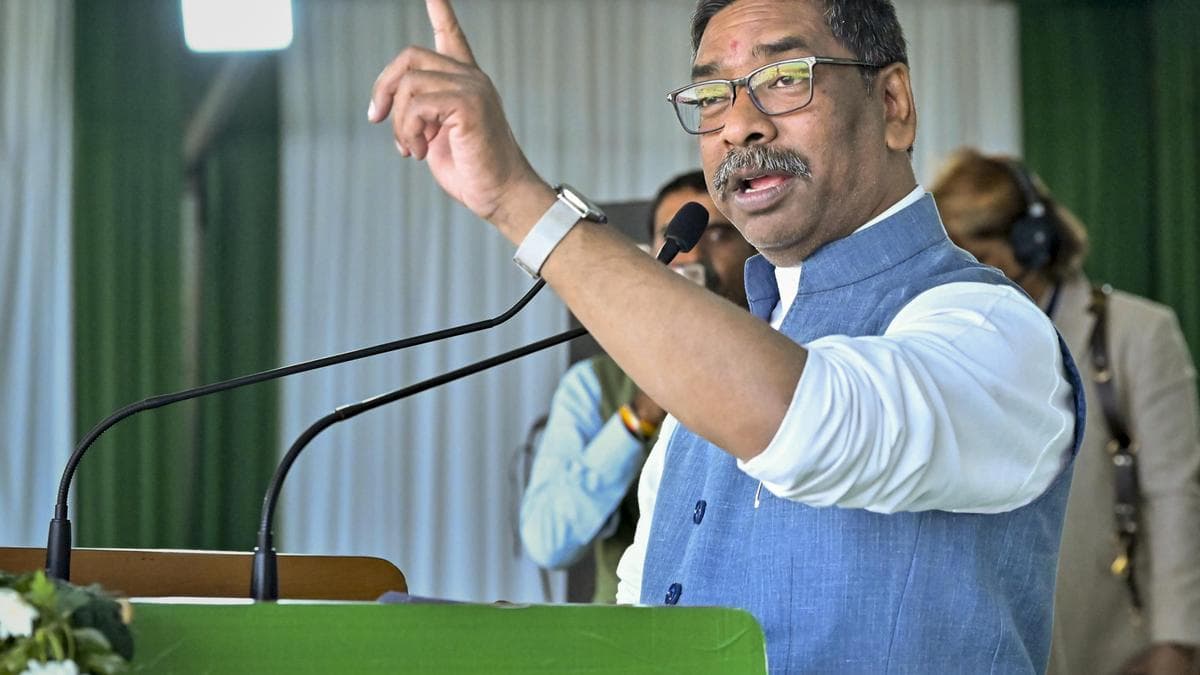
Continuous attacks from the Opposition and Mr. Soren’s alleged involvement in the liquor scam would be a challenge ahead for the government after the arrest of senior IAS officer Vinay Kumar Chaubey who once served as his Principal Secretary