



Relevant for Exams
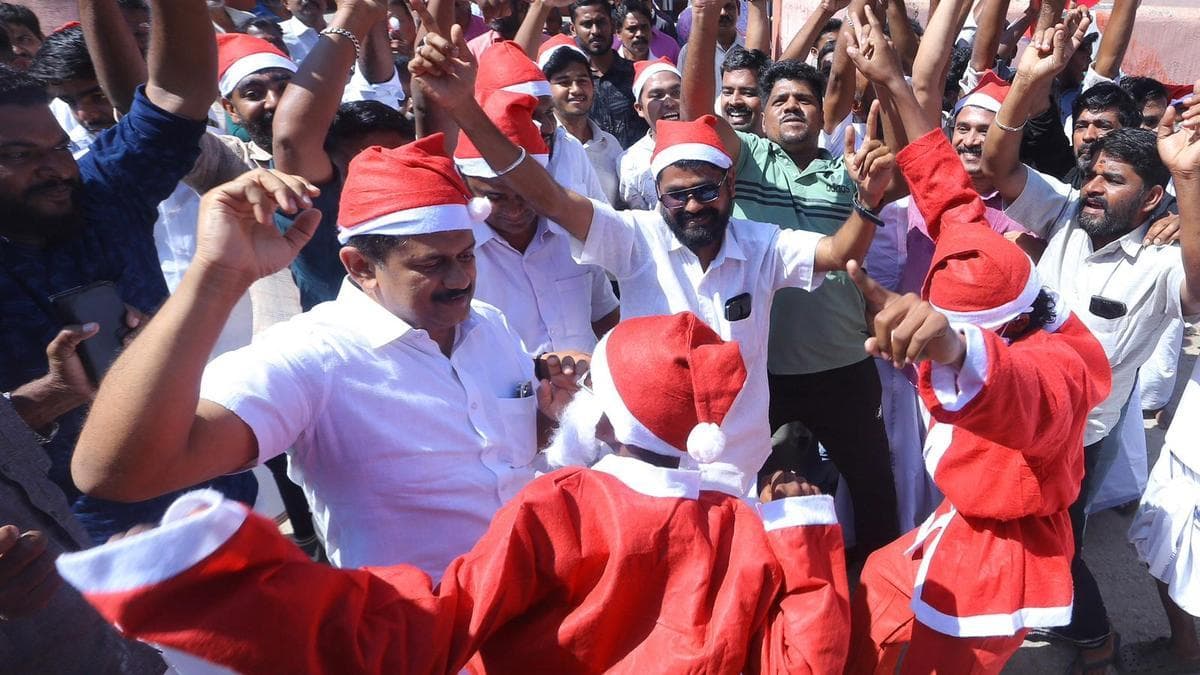
RSS-BJP worker arrested in Kerala's Palakkad for allegedly attacking children's Christmas carol group.
Summary
Protests erupted in Palakkad, Kerala, following the alleged assault by RSS-BJP worker Aswin Raj on a children's Christmas carol group. The incident involved the alleged attack on children and damage to their musical instrument, leading to Raj's arrest. This localized law and order event highlights social tensions, offering minimal direct relevance for national competitive exams, but serves as a regional current affairs point.
Key Points
- 1The alleged assault occurred in Palakkad, a district in Kerala.
- 2The accused individual has been identified as Aswin Raj.
- 3Aswin Raj is reportedly an RSS-BJP worker.
- 4The target of the alleged attack was a children's Christmas carol group.
- 5The Kerala police have arrested Aswin Raj in connection with the incident.
In-Depth Analysis
The alleged assault on a children's Christmas carol group in Palakkad, Kerala, by an individual identified as an RSS-BJP worker, Aswin Raj, is more than just a localized law and order incident. While seemingly minor on the surface, it opens a window into deeper socio-political currents, challenges to India's secular fabric, and the delicate balance of religious freedom and communal harmony. For competitive exam aspirants, understanding such events requires connecting them to broader constitutional principles, societal dynamics, and governance.
**Background Context and What Happened:**
Kerala, often lauded for its high literacy rates and unique socio-cultural milieu, boasts a vibrant tapestry of religious diversity, with significant Christian, Muslim, and Hindu populations coexisting. This pluralism has historically fostered a culture where festivals of one community are often celebrated by others, symbolizing communal harmony. Christmas carol groups, a common sight during the festive season, embody this spirit of shared cultural spaces. The incident in Palakkad, where a group of children engaged in caroling was allegedly attacked and their musical instruments damaged, thus strikes at the heart of this syncretic tradition. The alleged perpetrator, Aswin Raj, identified as an RSS-BJP worker, was subsequently arrested by the Kerala police, bringing the incident to national attention and sparking protests.
**Key Stakeholders Involved:**
At the forefront are the **children's carol group**, who are the direct victims, representing the vulnerability of individuals, especially minors, to acts of intolerance. Their right to practice their cultural and religious traditions freely is paramount. **Aswin Raj**, the alleged assailant, represents an individual whose actions are perceived to be driven by a specific ideological affiliation (RSS-BJP), bringing into focus the role of political and cultural organizations in fostering or hindering communal relations. The **Kerala Police** is a crucial stakeholder, responsible for maintaining law and order, conducting a fair investigation, and ensuring justice. Their swift action in arresting the accused is vital for upholding public trust. Beyond these, **religious leaders** (Christian and others) and **civil society groups** often play a role in condemning such acts and advocating for peace and justice. **Political parties**, both the ruling LDF in Kerala and the opposition BJP, also become stakeholders as they respond to the incident, potentially shaping public discourse and inter-community relations.
**Significance for India:**
This incident, though regional, carries significant weight for India's constitutional values. Firstly, it highlights potential threats to **religious freedom and pluralism**. India, as a secular republic, guarantees all citizens the right to practice and propagate their religion peacefully. Such alleged attacks on religious practices, particularly those involving children, raise concerns about increasing intolerance. Secondly, it tests the **state's ability to maintain law and order impartially** and protect minority rights. The response of the police and the judiciary is critical in reinforcing faith in democratic institutions. Thirdly, it underscores the ongoing **political polarization** in the country, where even cultural events can become flashpoints for ideological clashes. Incidents like these often get politicized, exacerbating existing social divisions. Lastly, the involvement of children brings into focus **child protection** and the creation of a safe environment for their holistic development, free from fear and discrimination.
**Constitutional Provisions and Legal Framework:**
Several constitutional articles are directly relevant. **Article 25** of the Indian Constitution guarantees freedom of conscience and the right to freely profess, practice, and propagate religion, subject to public order, morality, and health. The carol group's activity falls under this right. **Article 14** ensures equality before the law and equal protection of the laws, while **Article 15** prohibits discrimination on grounds of religion, race, caste, sex, or place of birth. Any act targeting a group based on their religious identity violates these principles. Furthermore, **Article 21** protects the right to life and personal liberty, which includes the right to live with dignity and safety. For children, **Article 39(f)**, a Directive Principle of State Policy, mandates the state to ensure that children are given opportunities and facilities to develop in a healthy manner and in conditions of freedom and dignity. The alleged assailant's actions would likely fall under various sections of the **Indian Penal Code (IPC)**, such as those related to assault, voluntarily causing hurt, mischief, and potentially sections dealing with promoting enmity between different groups if the investigation reveals such intent.
**Broader Themes and Future Implications:**
This incident connects to the broader theme of **challenges to India's secular fabric**. It reflects the tension between India's constitutional commitment to secularism and the rise of communal narratives. It also highlights the importance of **governance** in maintaining communal harmony and ensuring justice. The future implications include the **legal trajectory** of the case, which will be closely watched. A fair trial and appropriate justice are essential to deter similar incidents. Socially, the incident could either lead to increased communal tensions in the region or, conversely, prompt greater inter-faith dialogue and solidarity to counter such divisive acts. Politically, how state and national parties address this incident could influence their standing, particularly in a state like Kerala known for its active political landscape. The incident serves as a stark reminder of the continuous need to uphold constitutional values and foster an inclusive society.
Exam Tips
This topic primarily falls under 'Indian Polity' and 'Social Justice' in the UPSC/State PSC syllabus, and 'General Awareness' for SSC/Railway exams. Focus on Fundamental Rights (especially Articles 14, 15, 21, 25-28) and the concept of Secularism.
Study related topics like 'Communalism in India', 'Minority Rights and Safeguards', 'Role of Law Enforcement Agencies', and 'Child Rights' alongside this. Understand how these concepts interlink.
Expect questions on the constitutional provisions guaranteeing religious freedom (e.g., 'Which Article protects the right to freely practice religion?'), analytical questions on challenges to India's secularism, or case-study based questions on maintaining communal harmony and law and order.
Pay attention to the role of the state in protecting fundamental rights and maintaining public order. Understand the difference between 'secular' as interpreted in India versus Western models.
For State PSCs, be aware of specific state-level policies or historical context related to communal harmony and law enforcement in Kerala.
Related Topics to Study
Full Article
RSS-BJP worker Aswin Raj allegedly assaulted the children and damaged their musical instrument. The police have arrested him