



Relevant for Exams
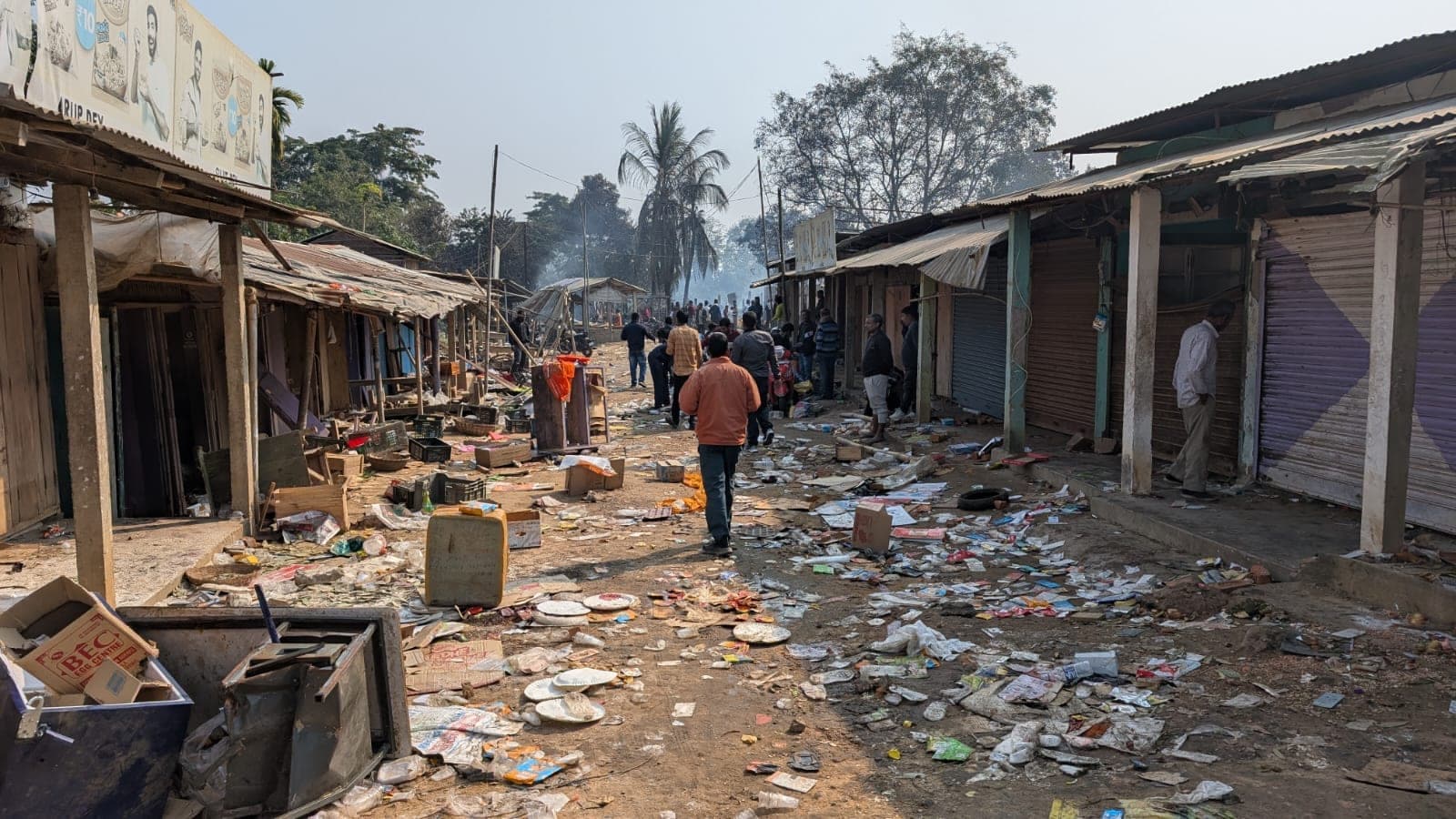
Arson and rioting erupt in Karbi Anglong, Assam, due to anger against 'settlers', raising internal security concerns.
Summary
The news title indicates widespread arson and rioting in Karbi Anglong, Assam, reportedly fueled by intense local anger against 'settlers'. This event signifies a serious breakdown of law and order, highlighting critical internal security challenges and inter-community tensions in India's Northeast, which is a significant topic for competitive exam preparation, especially for UPSC and State PSCs.
Key Points
- 1The incident involves widespread arson and rioting, indicating severe public disorder and property damage.
- 2The geographical location of the unrest is Karbi Anglong, a district situated in the state of Assam.
- 3The primary catalyst for the violence is reported as 'anger against settlers', suggesting underlying ethnic or demographic tensions.
- 4The intensity of the situation is conveyed by residents stating, 'Our home burnt, we jumped into river to escape.'
- 5This event is relevant for understanding internal security, ethnic conflicts, and regional administration in India's Northeast for competitive exams.
In-Depth Analysis
The recent reports of widespread arson and rioting in Karbi Anglong, Assam, fueled by intense anger against 'settlers,' underscore a critical and recurring challenge in India's Northeast: the complex interplay of ethnic identity, land rights, demographic shifts, and governance. This incident is not an isolated event but rather a symptom of deeper historical grievances and contemporary pressures.
**Background Context and What Happened:**
Karbi Anglong is one of the largest districts in Assam, predominantly inhabited by the Karbi tribe, an indigenous community. It falls under the Sixth Schedule of the Constitution, which grants significant autonomy to Autonomous District Councils (ADCs) to protect the rights of tribal populations over land, forest, and cultural identity. The Karbi Anglong Autonomous Council (KAAC) governs the region. Historically, the Northeast has witnessed a continuous struggle for identity, resources, and political autonomy. The term 'settlers' often refers to non-indigenous communities, who, over decades, have migrated into these areas, leading to demographic changes and perceived encroachment on tribal lands and resources. This migration can be internal (from other parts of Assam or India) or external (illegal immigration, particularly from Bangladesh). The immediate trigger for the recent violence, as indicated by the news, was a boiling point of this long-standing anger, resulting in widespread arson and rioting, forcing residents to flee their homes, highlighting a severe breakdown of law and order and immense human suffering.
**Key Stakeholders Involved:**
1. **Karbi Community:** As the indigenous inhabitants, they are the primary aggrieved party, fearing loss of land, culture, and political dominance due to the influx of 'settlers.' Their demand for greater autonomy, protection of land rights, and recognition of their unique identity is central.
2. **'Settlers':** This diverse group includes people who have migrated for economic opportunities, those displaced from other areas, or even illegal immigrants. They represent a demographic shift that is often perceived as a threat by indigenous communities. Their presence creates competition for resources and jobs.
3. **Assam State Government:** Responsible for maintaining law and order, ensuring justice, and facilitating development. The state government faces the arduous task of balancing the rights and aspirations of indigenous communities with those of the settler populations, alongside managing internal security threats.
4. **Central Government:** Plays a crucial role in internal security, border management (especially concerning illegal immigration), and providing financial and administrative support to the state and ADCs. Its policies on citizenship (e.g., CAA, NRC) and development initiatives significantly impact the region.
5. **Local Administration and Police:** The frontline responders, often challenged by the complexity of ethnic conflicts, resource limitations, and political pressures.
**Why This Matters for India:**
This incident has profound implications for India. Firstly, it poses a grave **internal security challenge**. The Northeast, already sensitive due to various insurgencies and border issues, can see such ethnic tensions escalating into organized militancy if left unaddressed. Secondly, it threatens **national integration and social harmony**, as conflicts between communities undermine the fabric of a diverse nation. Economically, such unrest disrupts development activities, deters investment, and leads to significant loss of property and livelihoods, further marginalizing an already underdeveloped region. Politically, it tests the efficacy of **federalism and autonomous governance** models like the Sixth Schedule, raising questions about the state's capacity to protect its citizens and manage ethnic diversity. The human rights aspect, with displacement and violence, is also a serious concern.
**Historical Context and Constitutional Provisions:**
The roots of such conflicts lie deep in post-independence history. The partition of India and the creation of Bangladesh led to significant demographic changes in Assam. The Assam Movement (1979-1985) against illegal immigration highlighted these fears. The establishment of Autonomous District Councils under the **Sixth Schedule** (Articles 244(2) and 275(1)) was a constitutional response to protect the distinct identity, land, and cultural rights of tribal populations in Assam, Meghalaya, Tripura, and Mizoram, granting them legislative, executive, and judicial powers within their defined areas. However, the implementation has not always been smooth, and fears of land alienation persist. Policies like the **Citizenship Amendment Act (CAA)** and the ongoing efforts for the **National Register of Citizens (NRC)** in Assam directly address the issue of 'settlers' and citizenship, albeit with significant controversy and varied impacts on different communities. The **Inner Line Permit (ILP)** system, though not directly applicable to Karbi Anglong for Indian citizens, reflects a similar sentiment of controlling external influx.
**Future Implications:**
The Karbi Anglong incident demands immediate and long-term attention. Failure to address the root causes – primarily land rights, resource competition, and identity fears – could lead to further radicalization and instability. Future implications include potential for renewed demands for separate statehood or greater autonomy, increased ethnic polarization, and a setback to the region's development aspirations. Effective governance, robust law enforcement, equitable development policies, and transparent mechanisms for resolving land disputes are crucial. Dialogue between communities, coupled with strict enforcement against illegal immigration and protection of constitutional rights for indigenous people, will be essential for fostering lasting peace and stability in Karbi Anglong and the broader Northeast region.
Exam Tips
This topic primarily falls under **GS Paper I (Indian Society, Geography of India)** for understanding demographic changes and regional issues, **GS Paper II (Polity & Governance, Federalism, Centre-State Relations, Constitutional Bodies)** for the Sixth Schedule and autonomous councils, and **GS Paper III (Internal Security, Economy of Northeast India)** for ethnic conflicts and development challenges. Be prepared for analytical questions on the effectiveness of the Sixth Schedule.
Study related topics like the history of insurgency in Northeast India, the Assam Accord, the Citizenship Amendment Act (CAA), National Register of Citizens (NRC), and the concept of 'indigenous rights' versus 'settler rights'. Understand the role of various ethnic groups and their historical grievances.
Common question patterns include essay-type questions on internal security challenges in the Northeast, analytical questions on the constitutional provisions for tribal areas (e.g., Sixth Schedule's pros and cons), case studies on ethnic conflicts, and questions linking demographic changes to socio-political instability. Be ready to discuss policy solutions.
Pay attention to the geographical context of Karbi Anglong within Assam and its significance as a tribal-dominated region. Understand the difference between Autonomous District Councils (ADCs) and Autonomous Regional Councils (ARCs) and their powers.