



Relevant for Exams
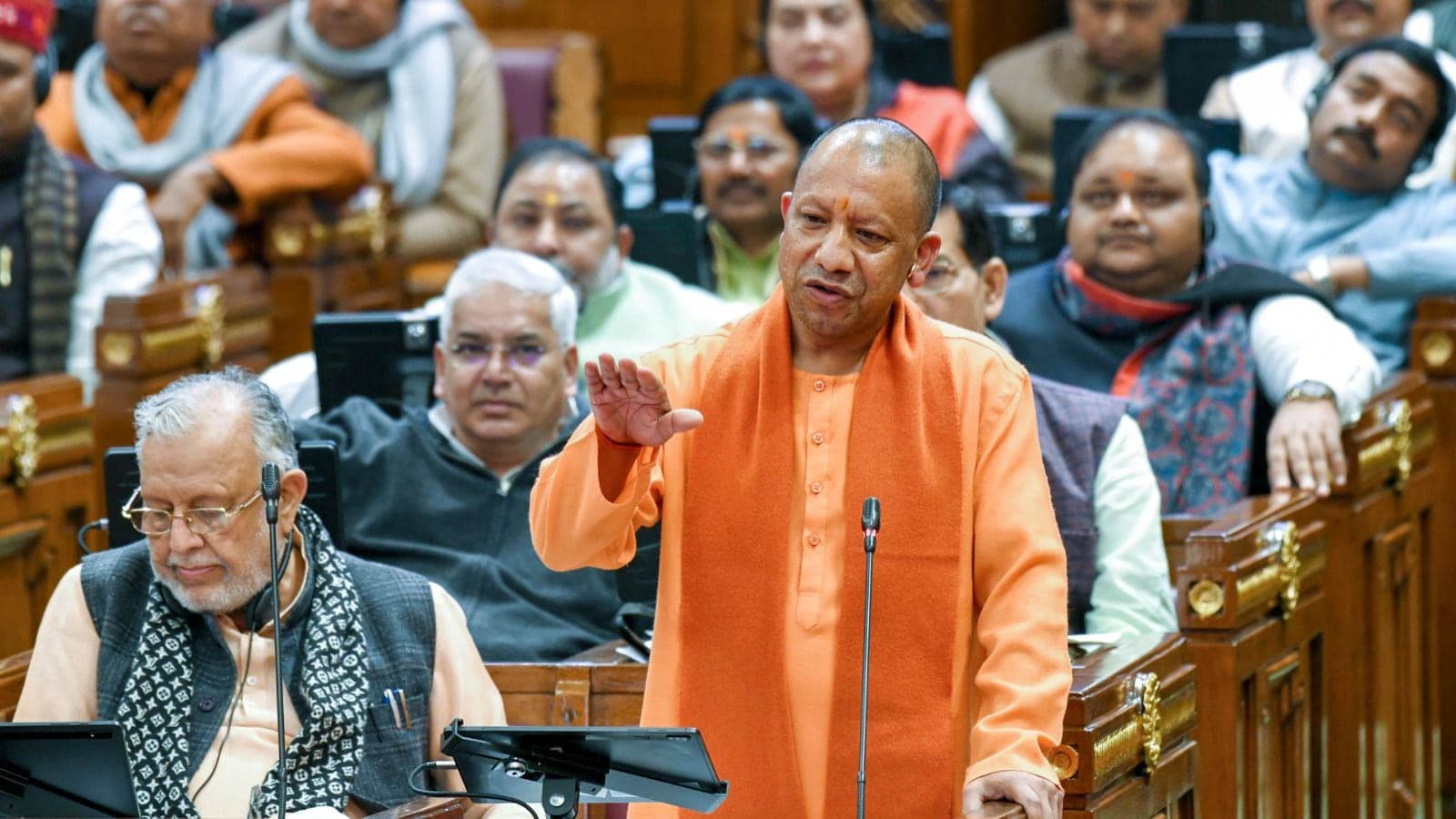
CM Adityanath announces Noida International Airport inauguration next month in Assembly.
Summary
Uttar Pradesh Chief Minister Yogi Adityanath announced in the State Assembly that the Noida International Airport, also known as Jewar Airport, is slated for inauguration next month. This major infrastructure project is crucial for enhancing air connectivity in the National Capital Region and Uttar Pradesh, boosting economic development, and creating employment opportunities. Its completion and operationalization are significant for regional growth and logistics.
Key Points
- 1Uttar Pradesh Chief Minister Yogi Adityanath made the announcement.
- 2The announcement regarding the Noida International Airport (Jewar Airport) was made in the State Assembly.
- 3The airport is scheduled for inauguration 'next month' from the date of the announcement.
- 4The Noida International Airport is located in Jewar, Gautam Buddh Nagar district, Uttar Pradesh.
- 5The project aims to significantly boost air connectivity and economic development in Uttar Pradesh.
In-Depth Analysis
The announcement by Uttar Pradesh Chief Minister Yogi Adityanath regarding the imminent inauguration of the Noida International Airport, also known as Jewar Airport, marks a significant milestone in India's infrastructure development journey. This project is not merely about building an airport; it's a strategic initiative designed to reshape regional connectivity, boost economic growth, and position Uttar Pradesh as a pivotal logistics and industrial hub.
**Background and Necessity:**
For decades, the National Capital Region (NCR) has primarily relied on the Indira Gandhi International (IGI) Airport in Delhi. With India's rapidly expanding aviation sector and increasing passenger traffic, IGI Airport, despite its continuous upgrades, faced immense pressure, leading to congestion and capacity constraints. The need for a second international airport in the NCR became increasingly evident to cater to future demand, enhance operational efficiency, and provide better connectivity to the vast and populous state of Uttar Pradesh. The idea for an airport in Jewar, Gautam Buddh Nagar district, first gained traction in the early 2000s but faced various delays. The project received a significant push in 2017 when the Uttar Pradesh government, under Chief Minister Adityanath, revived and accelerated its development, envisioning it as a catalyst for the state's economic transformation.
**What Happened and Key Stakeholders:**
Chief Minister Yogi Adityanath's announcement in the State Assembly confirmed that the first phase of the Noida International Airport is set for inauguration next month, indicating its readiness for operationalization. This project is a testament to a public-private partnership model. The primary stakeholders include:
* **Government of Uttar Pradesh (GoUP):** The driving force behind the project, responsible for land acquisition, providing necessary approvals, and ensuring infrastructure support (like road and rail connectivity).
* **Central Government:** Through the Ministry of Civil Aviation, it provides policy framework, regulatory oversight, and crucial clearances.
* **Yamuna International Airport Private Limited (YIAPL):** A 100% subsidiary of Zurich Airport International AG, which won the bid in 2019 to develop and operate the airport for a 40-year concession period. They are the private concessionaire responsible for the design, financing, construction, and operation of the airport.
* **Local Population:** Farmers and residents in Jewar and surrounding areas whose land was acquired, and who stand to benefit from employment opportunities and improved infrastructure.
**Significance for India and Uttar Pradesh:**
Noida International Airport holds immense significance. Economically, it is poised to become a major growth engine. It will complement the existing industrial corridors in Noida, Greater Noida, and Yamuna Expressway, attracting further investment in manufacturing, logistics, and allied industries. The airport's strategic location near key expressways (Yamuna Expressway, Eastern Peripheral Expressway) and proposed multi-modal logistics hubs will facilitate faster movement of goods, boosting cargo operations and making Uttar Pradesh a significant logistics gateway. This will directly contribute to the state's ambitious goal of becoming a trillion-dollar economy.
Socially, the airport is expected to generate significant direct and indirect employment opportunities, from construction to airport operations, hospitality, and ancillary services, thereby improving livelihoods in the region. Environmentally, the project has incorporated sustainable design principles, aiming to be India's first net-zero emissions airport, setting a benchmark for future infrastructure projects.
**Historical Context and Broader Themes:**
The development of Jewar Airport aligns with India's broader focus on infrastructure-led growth, exemplified by initiatives like the National Infrastructure Pipeline and PM Gati Shakti National Master Plan. Historically, India's aviation sector has seen rapid expansion, especially after economic liberalization in the 1990s. The National Civil Aviation Policy (NCAP) 2016 further aimed to make India the 3rd largest aviation market globally, enhance regional connectivity through schemes like UDAN (Ude Desh ka Aam Nagrik), and promote the ease of doing business. Jewar airport is a direct manifestation of these policy objectives, seeking to decentralize air traffic and foster balanced regional development.
**Constitutional and Policy References:**
The development of airports falls under the **Union List (Entry 29)** of the Seventh Schedule of the Indian Constitution, which covers "Airways; air navigation, air traffic and aerodromes; provision for aeronautical education and training and regulation of air traffic for the safety thereof." While the Central Government sets the overarching policy, state governments play a crucial role in land acquisition and facilitating local infrastructure. The **Land Acquisition, Rehabilitation and Resettlement Act, 2013**, is particularly relevant for the processes involved in securing land for such large-scale projects, ensuring fair compensation and rehabilitation for affected communities. The project also aligns with the **National Civil Aviation Policy 2016**, which encourages the development of greenfield airports to meet growing demand.
**Future Implications:**
The operationalization of Noida International Airport will significantly alter the aviation landscape of the NCR. It will not only decongest IGI Airport but also potentially create a dual-hub system, offering greater choice and efficiency for passengers and cargo operators. It is expected to spur further industrial and residential development along the Yamuna Expressway corridor, transforming the region into a major economic zone. The airport's focus on cargo will integrate seamlessly with the Dedicated Freight Corridors (DFCs) and other logistics initiatives, positioning it as a multimodal logistics gateway. This landmark project underscores India's commitment to building world-class infrastructure to support its economic aspirations and enhance global connectivity.
Exam Tips
This topic falls under 'Indian Economy' (Infrastructure, Aviation Sector) and 'Current Affairs' (National Importance) in UPSC CSE and State PSCs. For SSC, Banking, and Railways, focus on factual aspects like location, name, and developer.
Study related topics such as the National Civil Aviation Policy (NCAP) 2016, UDAN Scheme, PM Gati Shakti National Master Plan, and the role of Public-Private Partnerships (PPPs) in infrastructure development. Understand the concept of greenfield airports.
Common question patterns include: (a) Factual questions: 'Noida International Airport is located in which district?' or 'Which company is developing the Jewar Airport?' (b) Analytical questions for Mains: 'Discuss the economic significance of the Noida International Airport for Uttar Pradesh and the National Capital Region.' or 'How does the Jewar Airport project align with India's broader infrastructure development goals?'
Be prepared for questions on the constitutional provisions related to aviation (Seventh Schedule, Union List Entry 29) and relevant acts like the Land Acquisition, Rehabilitation and Resettlement Act, 2013.
Understand the 'hub-and-spoke' model in aviation and how new airports like Jewar contribute to expanding this network and improving regional connectivity.