


Relevant for Exams
Centre directs Haryana, Rajasthan, Gujarat to enforce SC ban on new mine leases.
Summary
The Union Government has directed Haryana, Rajasthan, and Gujarat to strictly adhere to a Supreme Court order prohibiting new mine leases. This directive underscores the Centre's role in enforcing judicial pronouncements on environmental governance and resource management. It highlights the interplay between the judiciary, Centre, and states in implementing crucial environmental policies, making it significant for competitive exams focusing on Indian polity and environmental law.
Key Points
- 1The Union Government (Centre) issued a directive to state governments.
- 2The directive was specifically sent to the states of Haryana, Rajasthan, and Gujarat.
- 3It mandated compliance with an existing order from the Supreme Court (SC).
- 4The Supreme Court's order specifically prohibits the issuance of 'new mine leases'.
- 5This action highlights the Centre's role in ensuring judicial orders are implemented by state governments.
In-Depth Analysis
The Union Government's directive to Haryana, Rajasthan, and Gujarat to halt new mine leases, strictly adhering to a Supreme Court order, is a significant development in India's environmental governance and federal structure. This action underscores the complex interplay between judicial pronouncements, central authority, and state implementation, particularly in crucial sectors like resource management and environmental protection.
**Background Context: The Aravalli Saga and Environmental Imperatives**
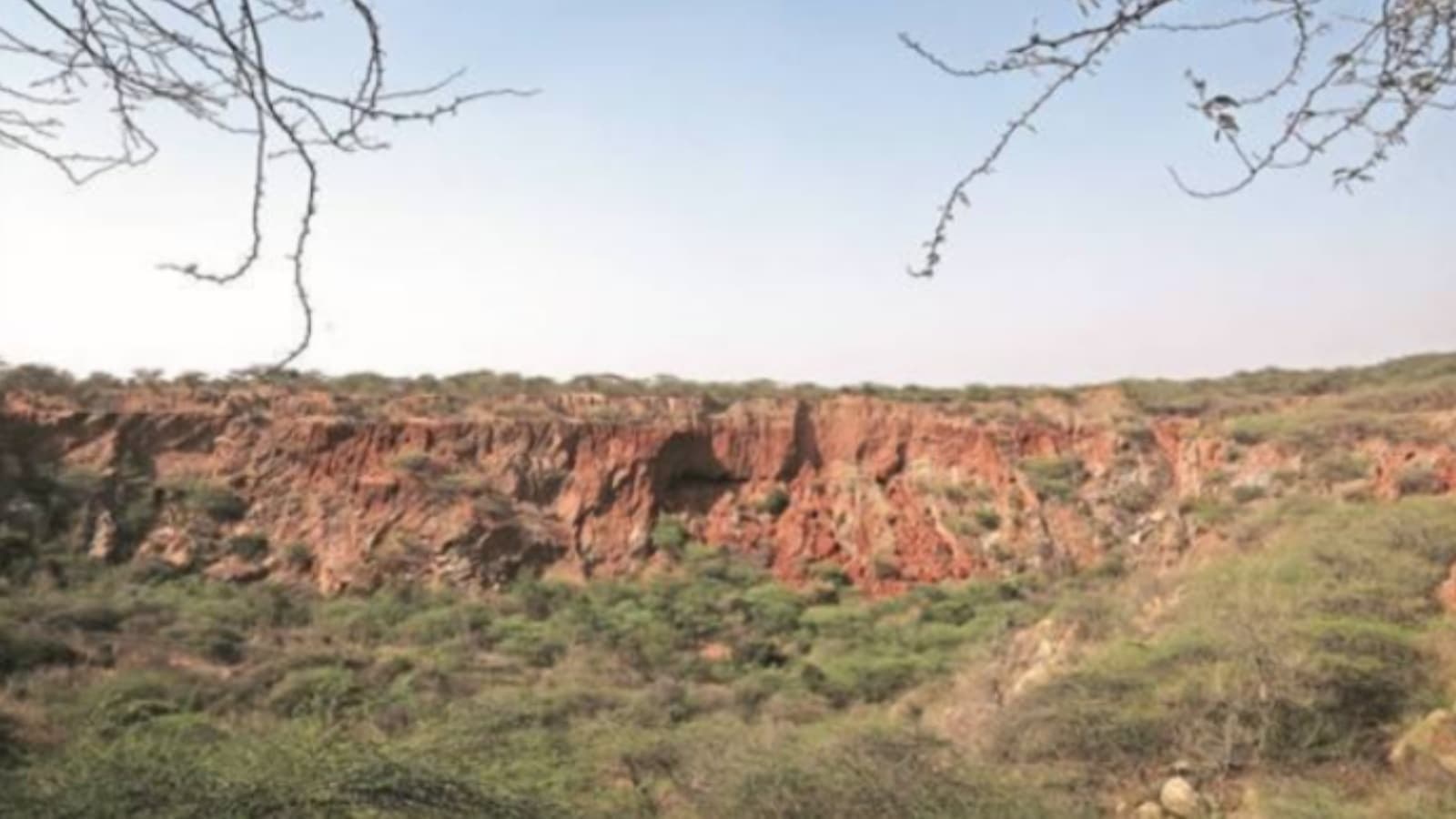
This directive is deeply rooted in the long-standing struggle to protect the Aravalli mountain range, one of the oldest fold mountains in the world, which spans across Gujarat, Rajasthan, Haryana, and Delhi. The Aravallis are a vital ecological corridor, acting as a natural barrier against desertification from the Thar Desert, recharging groundwater, and supporting rich biodiversity. However, for decades, these hills have been subjected to intense and often unregulated mining activities for minerals like granite, marble, sandstone, and quartz. This extensive mining has led to severe environmental degradation, including deforestation, soil erosion, groundwater depletion, air pollution, and loss of wildlife habitats. The ecological damage has direct implications for the climate and water security of the region, including the National Capital Region (NCR).
Environmental activists and concerned citizens have repeatedly approached the judiciary to curb this destruction. The Supreme Court has, over the years, issued numerous orders to regulate and restrict mining in ecologically sensitive zones, especially in the Aravallis. A landmark judgment in 2009 by the Supreme Court banned mining in a 448 sq km area of the Aravalli hills in Haryana, citing severe environmental damage. Subsequent judgments, including a significant one in 2018 concerning illegal mining in Rajasthan's Aravalli hills, reinforced the need for strict compliance with environmental norms and reclamation plans. These judicial interventions highlighted the failure of state governments to effectively monitor and control mining operations.
**The Centre's Intervention and Key Stakeholders**
What happened is that the Union Government, through its relevant ministries (likely the Ministry of Mines and Ministry of Environment, Forest and Climate Change), has stepped in to ensure the enforcement of an existing Supreme Court order prohibiting new mine leases. This move signifies the Centre's role in upholding the rule of law and enforcing judicial pronouncements, especially when state actions are perceived as insufficient or non-compliant.
Key stakeholders in this issue include:
* **The Supreme Court**: As the highest judicial authority, it acts as the guardian of the Constitution and environmental laws, issuing directives to protect ecological balance and fundamental rights (like the right to a clean environment under Article 21).
* **The Union Government**: It plays a supervisory and regulatory role, ensuring national policies and judicial orders are implemented across states. Its intervention reflects a commitment to environmental protection and sustainable resource management.
* **State Governments (Haryana, Rajasthan, Gujarat)**: These states are directly responsible for granting mining leases and regulating operations within their territories. They also derive significant revenue from mining. Their compliance is crucial, though often challenging due to economic pressures and local interests.
* **Mining Industry**: Companies involved in extraction and processing of minerals are directly impacted by such bans. They represent economic interests and often lobby for expansion of mining activities.
* **Local Communities and Environmental Activists**: These groups are often at the forefront of advocating for environmental protection, bearing the direct consequences of mining, and playing a critical role in bringing issues to judicial and public attention.
**Significance for India and Constitutional Framework**
This directive holds immense significance for India. Firstly, it strengthens **environmental governance** by emphasizing that environmental protection is paramount and judicial orders cannot be circumvented. It pushes for a more sustainable approach to resource extraction, aligning with India's commitments to Sustainable Development Goals (SDG 12: Responsible Consumption and Production, and SDG 15: Life on Land).
Secondly, it highlights the dynamics of **Indian federalism**. While states have powers over mineral development (Entry 23, State List, Seventh Schedule), the Union Government also has overriding powers for the regulation of mines and mineral development when it's deemed 'expedient in the public interest' (Entry 54, Union List, Seventh Schedule), as exercised through the Mines and Minerals (Development and Regulation) Act, 1957 (MMDR Act). The Centre's directive showcases its role in ensuring national environmental standards and judicial mandates are met, even if it means intervening in state affairs.
Thirdly, it underscores the role of **judicial activism** in India. The Supreme Court, through its expansive interpretation of Article 21 (Right to Life and Personal Liberty, which includes the right to a healthy environment), and through Public Interest Litigations (PILs), has often stepped in to fill policy gaps or address executive inaction in environmental protection. The Centre's directive is a direct consequence of such judicial oversight.
Constitutionally, beyond Article 21 and the Seventh Schedule entries, **Article 48A** (Directive Principle of State Policy) mandates that
Exam Tips
This topic falls under GS Paper II (Polity & Governance - Judiciary, Federalism, Centre-State Relations) and GS Paper III (Environment & Ecology - Environmental Governance, Resource Management, Sustainable Development) for UPSC Civil Services Exam. For State PSCs, it's relevant for General Studies sections covering Indian Polity and Environment.
When studying, link this event to broader themes like judicial activism, environmental jurisprudence, the concept of sustainable development, and the division of powers between the Centre and states regarding natural resources. Also, understand the role of specific environmental laws like the Environment (Protection) Act, 1986, and the Mines and Minerals (Development and Regulation) Act, 1957.
Common question patterns include: 'Discuss the role of the judiciary in environmental protection in India, citing relevant examples.' 'Analyze the Centre-State dynamics in regulating mining activities.' 'Examine the conflict between development and environmental conservation in the context of mineral extraction, with reference to constitutional provisions.'
Prepare short notes on key terms like 'Aravalli Range ecological significance,' 'Sustainable Mining,' and 'Environmental Impact Assessment (EIA),' as these are frequently asked in objective and subjective papers.
Understand the difference between the Union List (Entry 54) and State List (Entry 23) regarding mines and minerals in the Seventh Schedule, and how the MMDR Act, 1957, derives its authority.