



Relevant for Exams
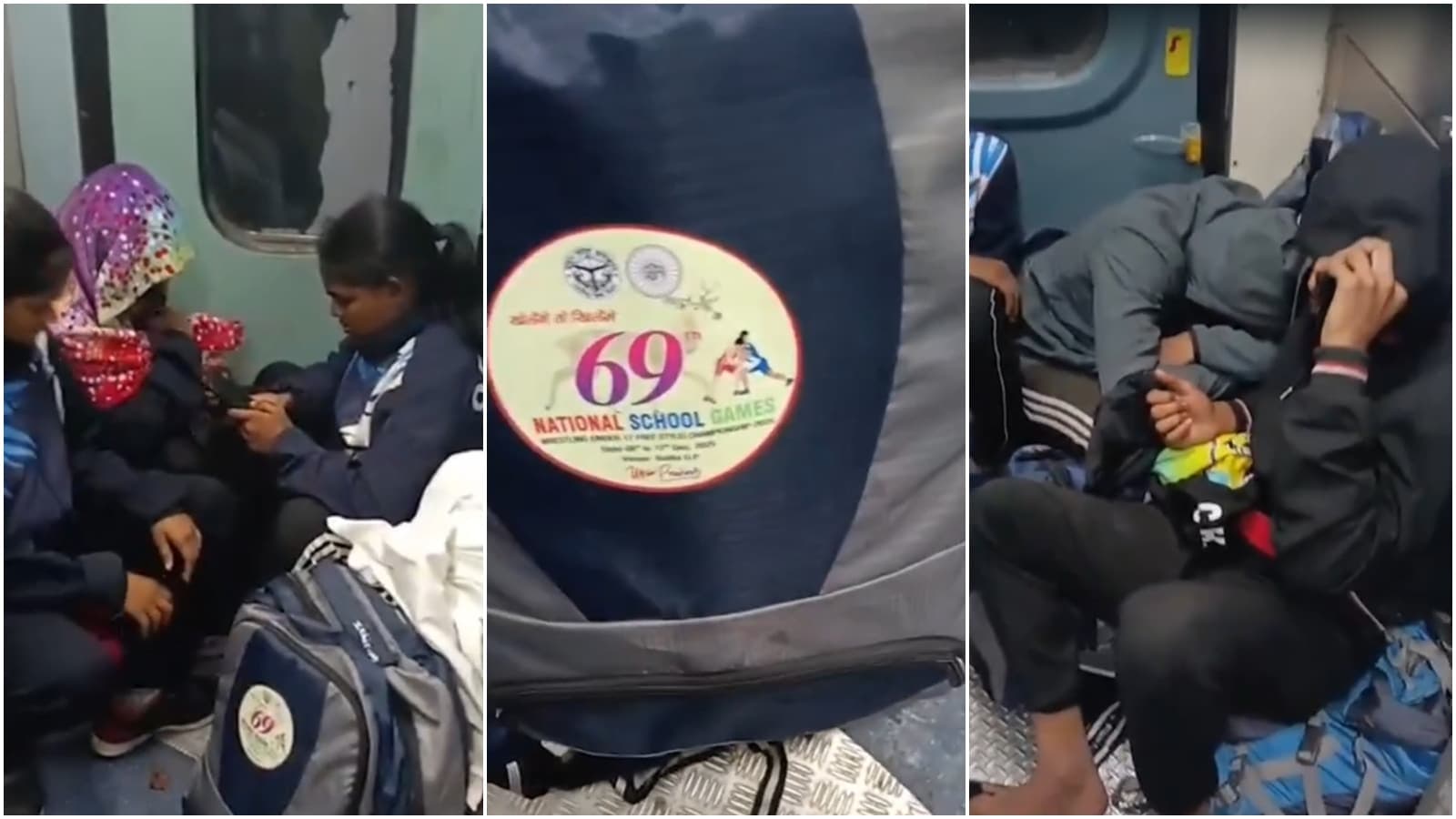
18 Odisha wrestlers travel without confirmed tickets, sitting near toilets for national event.
Summary
Eighteen young wrestlers from Odisha faced significant travel hardships, compelled to sit near train toilets due to unconfirmed tickets while en route to a national event. This incident highlights critical issues in sports management and athlete welfare, underscoring the need for better logistical support and accountability from sports federations. For competitive exams, it serves as an example of governance failures in sports and social issues related to infrastructure and support for athletes.
Key Points
- 118 young wrestlers from Odisha were involved in the incident.
- 2The athletes were traveling to participate in a national-level sporting event.
- 3The primary issue was the lack of confirmed train tickets for the traveling contingent.
- 4The wrestlers were forced to travel sitting near train toilets due to the ticketing issue.
- 5The incident highlights concerns regarding logistical support and management for athletes in India.
In-Depth Analysis
The distressing incident involving 18 young wrestlers from Odisha, who were compelled to travel sitting near train toilets due to unconfirmed tickets while en route to a national event, serves as a stark illustration of the systemic challenges plaguing sports administration and athlete welfare in India. This event, while seemingly isolated, reflects deeper issues of governance, resource allocation, and accountability within the country's sporting ecosystem.
**Background Context and The Incident:**
India, a nation with immense sporting potential, often struggles with providing basic logistical support to its budding athletes. The incident in question highlights a recurring problem: the lack of confirmed travel arrangements for sports contingents, particularly those from financially constrained backgrounds or less developed regions. These young wrestlers, full of dreams and dedication, were traveling to a national-level competition, a crucial step in their athletic careers. Instead of focusing on their performance, they faced humiliation and discomfort, a direct consequence of administrative oversight or negligence. Such incidents are not new; stories of athletes lacking proper equipment, nutrition, or travel facilities have surfaced periodically, painting a grim picture of grassroots sports development.
**Key Stakeholders Involved:**
Several entities bear responsibility and are impacted by such an incident. Foremost are the **young wrestlers** themselves, whose morale, health, and perception of the sports system are severely affected. Their **coaches and accompanying staff** are also stakeholders, often caught between limited resources and the welfare of their wards. The **Odisha Sports Department** and the **state wrestling association** are directly accountable for the logistical arrangements and ensuring the well-being of their athletes. At the national level, the **Wrestling Federation of India (WFI)**, as the apex body for the sport, has a supervisory role in ensuring state units adhere to proper protocols and provide adequate support. The **Ministry of Youth Affairs and Sports** and the **Sports Authority of India (SAI)**, which formulate national sports policies and disburse funds, are also crucial stakeholders, responsible for creating an enabling environment for athletes. Finally, **Indian Railways**, while not directly responsible for the booking error, is the service provider whose infrastructure was used for the arduous journey.
**Why This Matters for India: Governance, Equity, and National Image:**
This incident carries significant implications for India. Firstly, it exposes critical **governance failures** within sports federations and state sports bodies. It points to a lack of transparency, poor planning, and a deficit in athlete-centric administration. Secondly, it underscores issues of **social equity and access**. Often, athletes from rural areas or economically weaker sections face disproportionate challenges, and such incidents further marginalize them, potentially deterring future talent. India aims to be a global sporting power, and such events tarnish its image, signaling a failure to prioritize the welfare of its athletes, especially at the foundational level. It impacts the 'soft power' projection and the national spirit of sportsmanship.
**Historical Context and Policy Frameworks:**
Historically, Indian sports have struggled with a 'top-down' approach, often neglecting grassroots development. While initiatives like the **Khelo India Programme (launched in 2017)** aim to promote sports at the grassroots and identify talent, and the **National Sports Policy (2001)** emphasizes broad-basing sports and achieving excellence, the implementation often falls short. The Sports Authority of India (SAI) plays a pivotal role in training and infrastructure, yet incidents like this suggest gaps in the execution of its mandate, particularly regarding oversight of state-level bodies and federations.
**Constitutional Dimensions and State's Duty:**
While there isn't a specific constitutional article dedicated to sports, the broader principles enshrined in the **Directive Principles of State Policy (DPSP)** are highly relevant. **Article 38** mandates the State to secure a social order for the promotion of welfare of the people, striving to minimize inequalities. **Article 39** directs the State to ensure that citizens have the right to an adequate means of livelihood, and **Article 47** speaks of raising the level of nutrition and the standard of living and improving public health. Ensuring proper facilities and dignified travel for athletes falls under the State's welfare obligations. Furthermore, **Article 51A(j)**, a Fundamental Duty, exhorts every citizen to strive towards excellence in all spheres of individual and collective activity, so that the nation constantly rises to higher levels of endeavour and achievement. This duty implicitly places a reciprocal responsibility on the State to provide the necessary support for citizens to achieve such excellence.
**Future Implications: Reforms and Accountability:**
To prevent recurrence, significant reforms are imperative. These include establishing clearer guidelines for athlete travel and accommodation, ensuring transparent allocation and utilization of funds, and implementing robust accountability mechanisms for sports federations and state departments. There's a need for enhanced financial support for grassroots sports, better training for sports administrators, and a culture that prioritizes athlete welfare above all else. Future policies must focus on strengthening the capacity of state sports bodies and ensuring strict adherence to ethical governance standards. The incident should prompt a thorough review of existing protocols and a commitment to creating a respectful and supportive environment for all aspiring athletes across India.
Exam Tips
This topic falls under the 'Governance', 'Social Issues', and 'Current Events of National Importance' sections of competitive exam syllabi (e.g., UPSC GS Paper II, State PSCs, SSC). Questions can range from direct inquiries about government sports schemes to analytical questions on governance failures in public administration.
When studying, link this incident to broader themes such as athlete welfare, sports infrastructure development, the role of national sports federations, and the challenges of grassroots sports in India. Understand the difference between central and state responsibilities in sports promotion.
Be prepared for essay questions or descriptive answers on 'Sports and Development in India', 'Challenges to India's Sporting Ambitions', or 'The Role of Government in Promoting Sports'. Objective questions might test your knowledge of specific sports policies like Khelo India, the National Sports Policy, or the functions of SAI.
Familiarize yourself with relevant constitutional provisions like Directive Principles of State Policy (Articles 38, 39, 47) and Fundamental Duties (Article 51A(j)) to articulate how such incidents reflect a failure to uphold constitutional ideals related to welfare and excellence.
Analyze similar past incidents and the remedial actions taken, if any. This helps in understanding the pattern of issues and the effectiveness of policy responses. Focus on the 'why' behind such events, not just the 'what'.